




How Xinjiang Became The Testing Ground For China’s Surveillance State
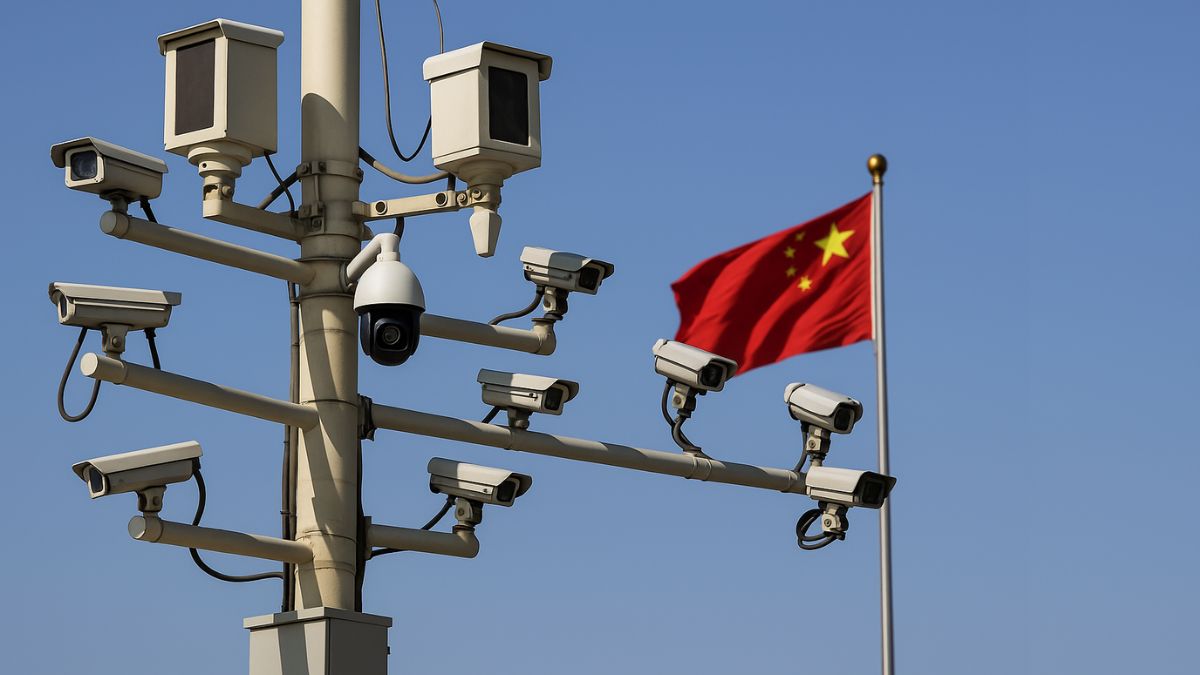
Image courtesy: AI-generated picture via DALL-E

Xinjiang has undergone a transformation driven by security-led governance and advanced monitoring technology. While surveillance exists across China, the region has been used to pilot tools and methods that are more extensive, data-driven and intrusive. This system affects movement, daily routines and communication, shaping how people interact with one another and with the state.
For observers, Xinjiang offers insight into how technology can be deployed to regulate identity, behaviour and thought. It reflects a shift from traditional policing to a model where algorithms and databases influence decisions once made by community officials.
What technologies define the surveillance system in Xinjiang?
Xinjiang’s surveillance architecture combines several layers. High-definition cameras with facial recognition line streets, markets and transport hubs. These devices feed into systems that identify individuals, track movement and flag patterns considered unusual.
Biometric data collection is a key component. In many locations, residents have undergone mandatory scans, including iris, DNA and voice samples. This information is linked to national identification systems and used to verify identity at checkpoints.
Digital surveillance extends the monitoring into private communication. Messaging apps require real-name registration, and public Wi-Fi networks are regulated. Authorities can examine online behaviour for what they classify as “extremism indicators”. This includes patterns that may appear benign to outsiders but are treated as markers of risk.
Together, these technologies create an environment where public and private behaviour is recorded and analysed.
How does this surveillance affect daily life in the region?
Movement across Xinjiang involves regular checkpoints, where identity documents and facial recognition systems confirm individuals’ details. Travel may require additional approval depending on local assessments. This limits the ability of residents to move freely between towns or visit relatives.
In public spaces, people adapt their behaviour to avoid drawing attention. The knowledge that cameras and digital systems monitor daily activity encourages caution. Many prefer to limit discussions about culture or community issues to avoid misinterpretation by authorities.
Surveillance also influences social interaction. People may avoid associating with neighbours or relatives who have been identified for questioning, fearing that proximity may result in additional scrutiny.
Why is Xinjiang significant for understanding China’s broader security policies?
Xinjiang’s system serves as a model for how advanced monitoring can be integrated into governance. Elements of the region’s technology— such as facial recognition, data aggregation and predictive policing tools— have been adapted for use in other parts of China. The region illustrates how surveillance can be scaled to manage large populations and diverse communities.
For analysts, Xinjiang demonstrates the long-term effects of continuous observation. Surveillance reduces the willingness of residents to express concerns openly, participate in cultural activities or engage in civic life. It shifts the relationship between individuals and the state, with technology mediating interactions that once relied on community structures.
Xinjiang’s experience suggests how similar systems may be applied elsewhere under the broad goal of maintaining stability.