




How China Uses Surveillance Technologies To Police Civilian Life in Shanghai And Beyond
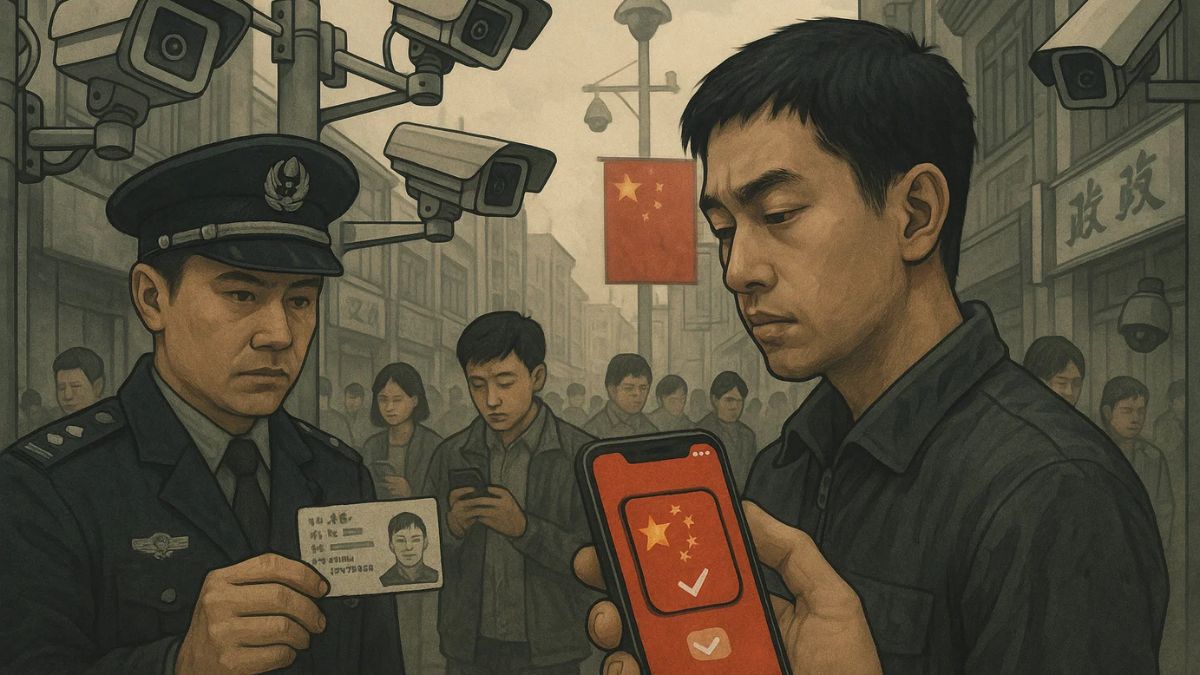
Image courtesy: AI-generated image via Sora

China’s surveillance infrastructure is one of the most extensive in the world, and its application in cities such as Shanghai offers a clear view of how the state manages everyday behaviour. While Shanghai is known internationally for its economic dynamism, its security architecture is equally notable. Dense camera networks, real-name digital systems and integrated data platforms enable authorities to monitor residents at a granular level, narrowing the scope for unsanctioned public expression.
This system is designed to detect not only organised dissent but also minor civic frustrations before they evolve into collective action. The result is a city where movement, communication and even routine activity can be tracked, assessed and acted upon with remarkable precision.
How extensive is Shanghai’s surveillance network?
Shanghai’s public-security grid combines several layers of monitoring. High-definition cameras cover intersections, residential areas, public transport hubs and commercial districts. Many of these cameras are equipped with facial-recognition capabilities that can match images with national databases.
In addition to physical monitoring, digital systems extend this visibility into online behaviour. Real-name registration for mobile phones and internet services ensures that online activity can be linked to individuals. When combined with location data from transport cards, mobile apps and public Wi-Fi networks, this creates a comprehensive picture of movement and association.
These systems are not unique to Shanghai, but the city’s size and economic significance make its network one of the most advanced in the country.
How do authorities use these technologies to manage public behaviour?
Surveillance systems in Shanghai function as early-warning mechanisms. When several individuals gather in the same location, cameras can flag the cluster. If the gathering appears unstructured or unusual, nearby police units may be dispatched to assess the situation.
Digital platforms complement this process. When online discussions concerning local governance or civic issues begin trending, automated systems highlight them for review. Authorities can then cross-reference online activity with offline movement patterns, identifying individuals who may have been present at specific locations.
This integrated approach allows authorities to intervene quietly. People may be contacted for questioning, asked to delete content or warned against participating in further discussions. By acting early, authorities minimise the chance of public gatherings gaining visibility.
What does this surveillance model mean for ordinary residents?
For most residents, surveillance is an accepted part of urban life. It is framed as a measure that supports safety and efficiency. However, the same infrastructure limits the scope for spontaneous civic expression. Individuals are aware that their movements and digital interactions are monitored, which encourages caution in public and private settings.
The psychological impact is significant. People adjust their routines to avoid attention, refrain from discussing sensitive topics online and avoid assembling even for benign reasons. Over time, this shapes the social environment, making public engagement less likely and collective action more difficult.
Shanghai demonstrates how surveillance influences behaviour not through overt force but through constant visibility. The result is a steady narrowing of civic space across the city.