US–China Defence Talks Resume In Washington As Both Sides Push To Stabilise Military Ties
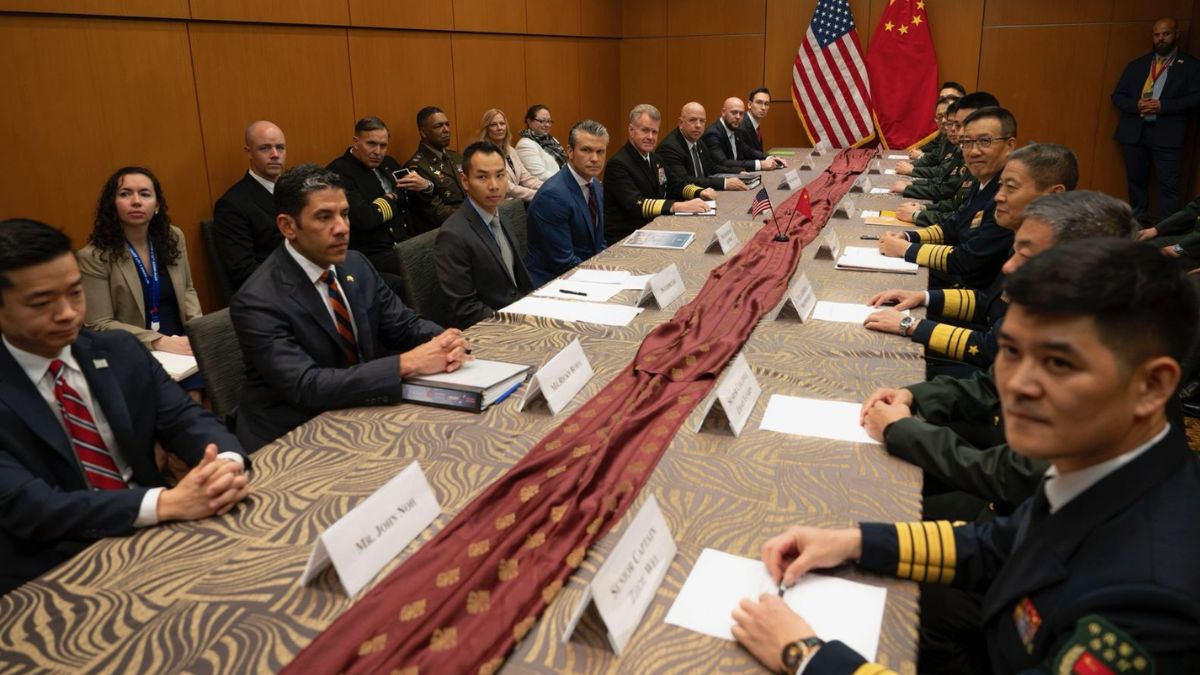
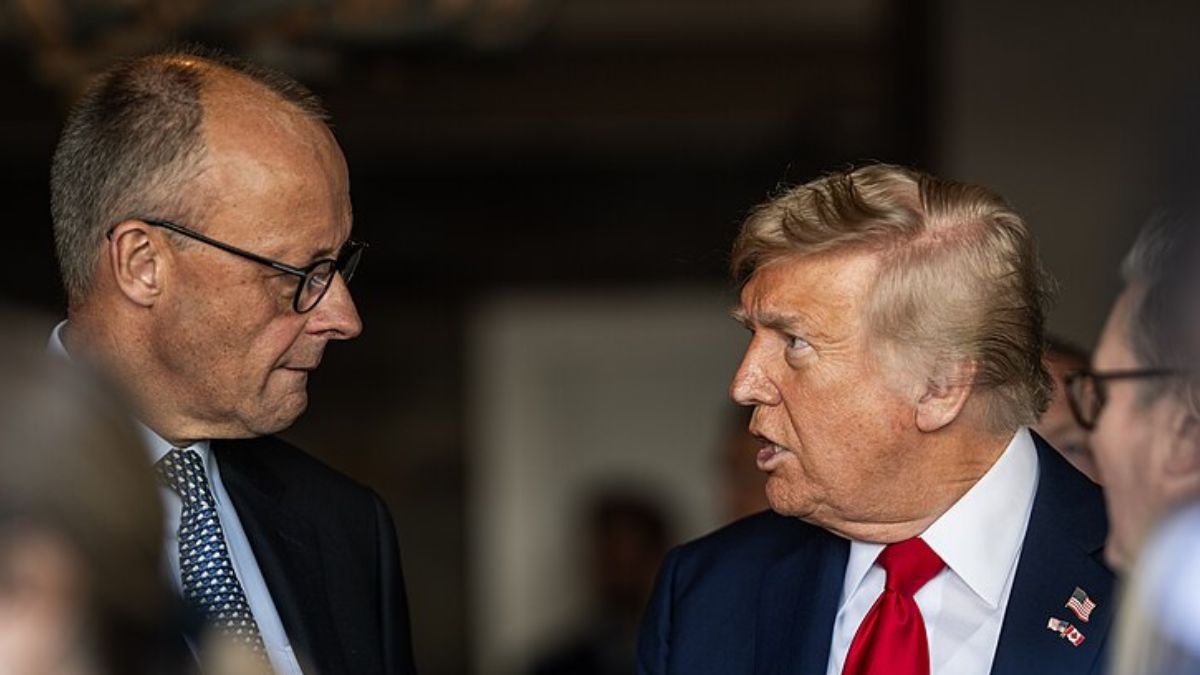
Senior defence officials from the United States and China meet in Washington as both sides seek to restore military communication and reduce the risk of miscalculation amid ongoing strategic tensions. Image courtesy: X.com/@SecWar

Senior defence officials from the United States and China met in Washington this week for high-level talks aimed at restoring and stabilising military-to-military communication between the two strategic rivals, signalling a cautious thaw after years of strained defence engagement.
According to the Pentagon, Alvaro Smith, the US Deputy Assistant Secretary of Defence for China, Taiwan, and Mongolia, held talks with China’s Major General Ye Jiang, Deputy Director of the Central Military Commission Office for International Military Cooperation, during the 19th annual US–China Defence Policy Coordination Talks held from December 15 to 16, 2025.
The meeting marks the latest step by both sides to rebuild communication channels designed to prevent miscalculation and manage crises.
How do these talks carry forward the earlier meeting in Malaysia?
The Washington talks follow an earlier breakthrough on October 31, when US Defence Secretary Pete Hegseth met Chinese Defence Minister Admiral Dong Jun on the sidelines of the ASEAN Defence Ministers’ Meeting Plus in Malaysia.
That encounter was the first face-to-face meeting between defence chiefs from the two countries during US President Donald Trump’s second term. A subsequent phone call between the two officials reinforced commitments to resume dialogue.
After those engagements, Hegseth said Washington and Beijing had agreed to establish military-to-military mechanisms to “deconflict and de-escalate any problems that arise.”
How did the US follow up on the Malaysia messaging?
Smith echoed that message this week, with the Pentagon stating that the US supports “a wider range of military-to-military communications” with the People’s Liberation Army to enhance strategic stability and enable crisis de-escalation.
Smith also underscored that such engagement aligns with President Trump’s broader goal of achieving “stable peace and respectful relations” with China, while emphasising that US interests in the Indo-Pacific remain “significant, but also scoped and reasonable.” He added that the Pentagon stands ready to defend those interests if necessary.
What are the Defence Policy Coordination Talks?
The Defence Policy Coordination Talks are traditionally held annually, alternating between Beijing and Washington, and serve as a key forum for addressing security concerns and planning further engagement.
The dialogue had been frozen for several years after Beijing cut off military contacts following former US House Speaker Nancy Pelosi’s visit to Taiwan in August 2022. Talks resumed only last year, with meetings held in January and September.
How are Taiwan ties the most sensitive issue between the US and China?
Taiwan remains the most sensitive issue in US–China relations. Beijing considers the self-governed island part of its territory and has not ruled out the use of force to achieve reunification.
While the United States does not recognise Taiwan as an independent state, it opposes any attempt to change the status quo by force and continues to supply defensive weapons to Taipei.
How do the recent talks emphasise the stabilisation of ties?
Despite persistent disagreements over regional security, recent messaging from both capitals has emphasised stabilisation.
Chinese Defence Minister Dong Jun has also called for expanded dialogue, urging Washington to match words with action.
“The two countries should strengthen decision-making level communication to increase trust and eliminate suspicion,” Dong said, while reaffirming Beijing’s commitment to safeguarding its national security interests.
In November, Hegseth described an October summit between Trump and Chinese President Xi Jinping in South Korea as a historic “G2 meeting” that set the tone for improved relations, remarks that marked a softer shift from earlier rhetoric but drew criticism from some US lawmakers wary of framing China as a peer power.