

HAL’s Dhruv NG Makes Maiden Flight in Bengaluru, Marking Major Boost to India’s Indigenous Civil Helicopter Programme
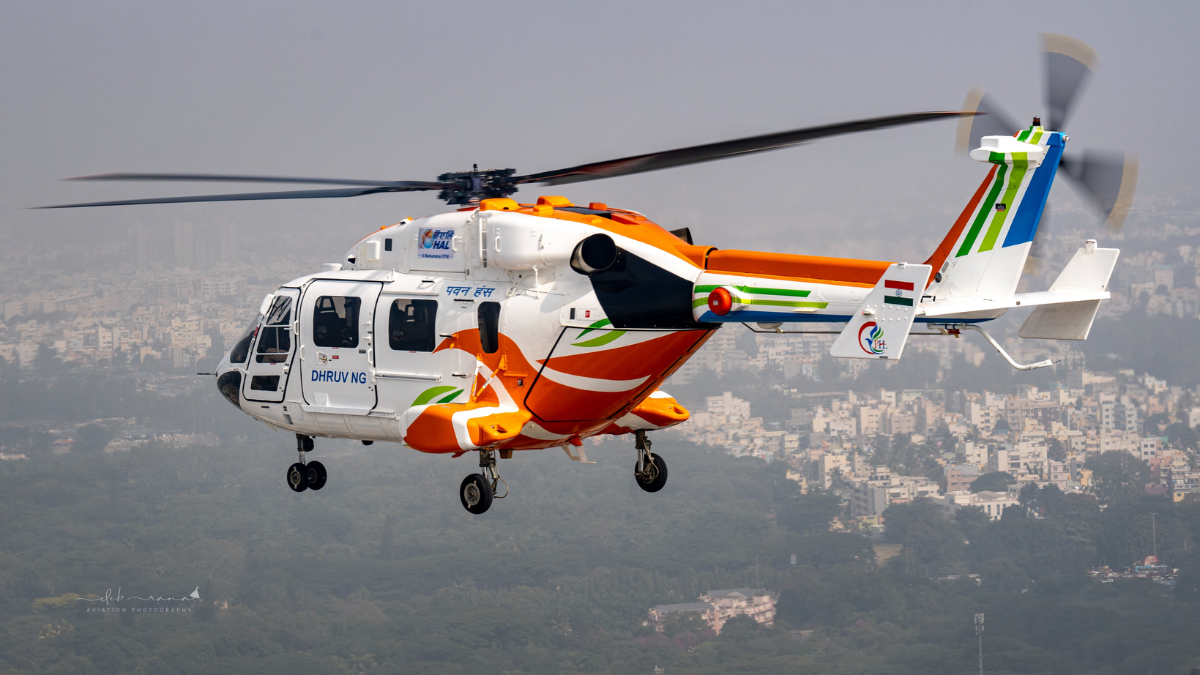
Image Courtesy: X/@HALHQBLR

Hindustan Aeronautics Limited (HAL) on Tuesday (December 30, 2025) achieved a significant milestone for India’s civil and defence aviation ecosystem as the Dhruv NG multi-role helicopter successfully completed its maiden flight in Bengaluru, reinforcing the country’s push for indigenous rotary-wing capability.
The inaugural sortie was flagged off by Union Civil Aviation Minister K. Ram Mohan Naidu, underscoring the government’s focus on self-reliance and expansion of India’s civil helicopter fleet.
What are Dhruv-NG’s specifications?
Designed and manufactured by Bengaluru-headquartered HAL, the Dhruv NG is a 5.5-tonne, light twin-engine helicopter developed to meet the demanding operational conditions of India’s diverse terrain while also catering to global civil aviation standards.
HAL said the next-generation platform has been upgraded for enhanced safety, performance and passenger comfort, positioning it as a versatile solution for both domestic and international civil markets.
Why is Dhruv-NG meant for civilian use?
Powered by twin Shakti 1H1C engines, the Dhruv NG features a civil-certified glass cockpit compliant with AS4 requirements and a modern avionics suite that offers superior situational awareness.
The helicopter has a maximum take-off weight of 5,500 kg, a top speed of around 285 kmph, a range of approximately 630 km with reserves, and an endurance of over three and a half hours. It is capable of operating at service ceilings of up to 6,000 metres, making it suitable for high-altitude missions.
Why safety has been the focus of Dhruv-NG design?
Safety and reliability have been key design priorities, with features such as crashworthy seats, self-sealing fuel tanks and a proven twin-engine configuration providing high levels of redundancy.
With an internal payload capacity of about 1,000 kg, the Dhruv NG is intended for a wide range of roles including VIP transport, passenger utility, air ambulance services (HEMS), law enforcement, disaster relief and search-and-rescue operations.
How HAL obtained certification for Shakti engine?
In a parallel milestone, HAL also received certification from the Directorate General of Civil Aviation (DGCA) for the indigenous manufacture of the Shakti civil engine, marking the first time an aero engine has been certified by the regulator for domestic production.
Ram Mohan Naidu described the twin developments as defining moments for Indian aviation, noting that India’s helicopter fleet is expected to cross 1,000 aircraft over the next 10–15 years.
What are the civil aviation plans for the near future?
Highlighting policy support, he said helicopters have been included under the UDAN 5.1 scheme, significantly reducing costs for regional connectivity.
HAL Chairman and Managing Director D. K. Sunil said full civil certification of the Dhruv NG is expected in the coming months, with 130 test flights planned using two prototypes.
He added that eight Dhruv-NG helicopters will be deployed by Pawan Hans for logistics operations at the Bombay High, signalling early operational induction of the platform.