
With Afghanistan Unwilling To Accept Pakistan’s Core Demands, Turkey Steps Back From Mediation Talks
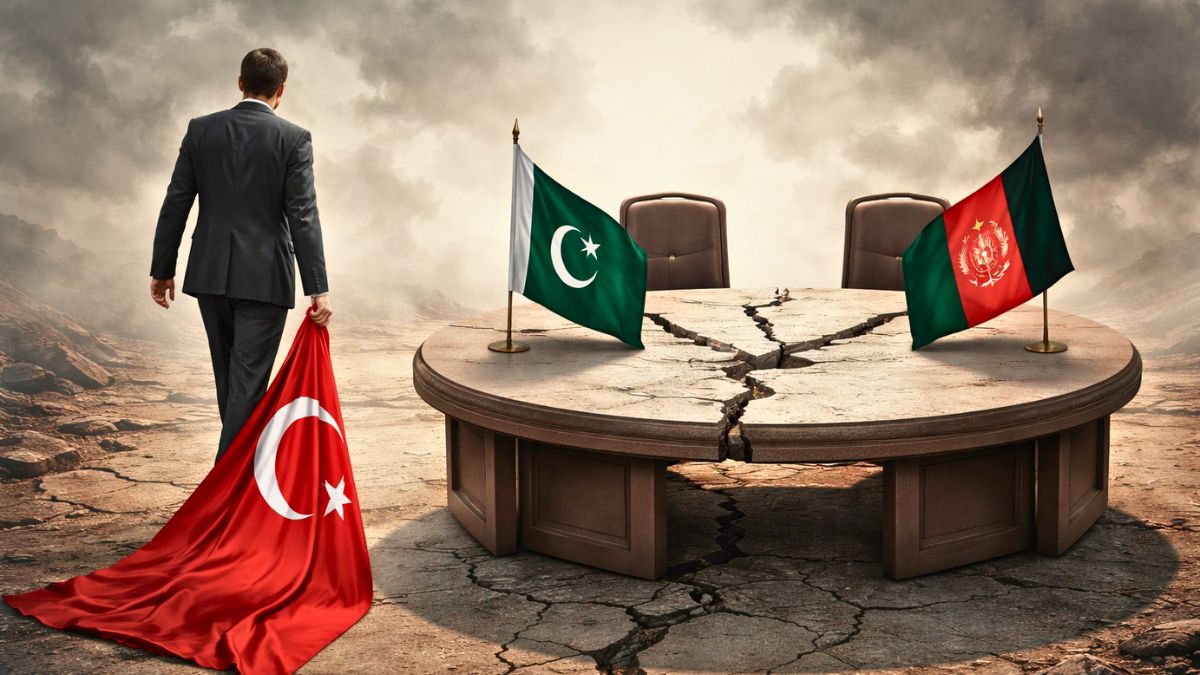
Multiple rounds of talks facilitated by Turkey, along with Qatar and Saudi Arabia, have remained inconclusive. Image courtesy: AI-generated picture via Sora

What started with airstrikes in Kabul escalated into an intense situation between neighbouring nations Pakistan and Afghanistan. Both the countries have been engaged in serios border conflict for the past two months, with several failed attemps at restoring peace. In yet another blow to their mediation, Turkey has withdrawn as a mediator.
Turkey’s decision to pull out from its role as a mediator signals a major setback to international efforts aimed at de-escalating tensions between Islamabad and the Afghan Taliban. The move comes after repeated ceasefire and dialogue attempts failed, exposing deep and seemingly irreconcilable fault lines between the two neighbours.
According to senior security and diplomatic sources quoted by News18, Ankara formally informed Pakistan that further mediation would be unproductive, as Kabul remains unwilling to meet Islamabad’s core security demands.
Pakistan-Afghanistan mediation: Why did Turkey withdrew?
Turkey’s decision follows multiple inconclusive rounds of talks facilitated jointly with Qatar and Saudi Arabia, none of which produced a breakthrough. Turkish officials concluded that the Afghan Taliban were not prepared to compromise on key issues and had categorically rejected Pakistan’s conditions for a broader peace framework.
Sources further told News18 that Ankara conveyed to Islamabad that Kabul views Pakistan’s demands as infringing on Afghan sovereignty, making any negotiated settlement under the current framework highly unlikely.
What core disputes are blocking Pak-Afghanistan ceasefire?
At the heart of the impasse are Pakistan’s security demands, which include handing over Tehreek-e-Taliban Pakistan (TTP) militants operating from Afghan soil; establishing a 5-kilometre buffer zone along the Durand Line; tightening controls on Afghan transit trade and goods movement; recognition of Pakistan’s security primacy in bilateral matters.
In addition to these, Islamabad also seeks an immediate repatriation of Afghan refugees from Pakistan.
The Afghan Taliban have rejected these proposals outright, arguing that such conditions amount to external pressure and erosion of Afghanistan’s independence.
What was Afghan Taliban’s response to mediation efforts?
During talks with Turkey, Qatar and Saudi Arabia, the Afghan Taliban reportedly made it clear that Kabul would not accept pressure-driven security arrangements or provide written guarantees against militant activity demanded by Pakistan. Despite sustained diplomatic engagement by Ankara, Islamabad failed to secure any firm commitments.
This eventually led Turkey to conclude that its mediation role had reached a dead end.
Are cracks emerging among the mediators?
Diplomatic differences have also surfaced among the mediating countries. Pakistani officials have expressed growing mistrust toward Qatar, alleging that Doha has increasingly aligned with the Afghan Taliban’s position.
Saudi Arabia, according to sources, is now viewed by Islamabad as the last viable channel for potential de-escalation, even as confidence in mediation efforts continues to erode.
Why Are Tensions Escalating Instead of Easing?
With diplomacy faltering, Pakistan has also hardened its stance. Security sources say Islamabad has delivered a clear warning to Ankara and other interlocutors that any major terrorist attack originating from Afghan soil will be treated as Kabul’s responsibility.
Pakistan has reiterated that it will protect its sovereignty and citizens “by all means necessary,” signalling a shift away from dialogue toward coercive options.
Could the Pak-Afghan conflict turn military?
According to the News18 report, citing top security sources, Pakistan has conveyed that if cross-border terrorism is not curbed, it is prepared to carry out strikes inside Afghanistan. The warning marks a sharp escalation in rhetoric and reflects the collapse of ceasefire mechanisms and diplomatic engagement.
Turkey’s withdrawal underscores a growing international concern: without effective mediation, Pakistan–Afghanistan tensions risk sliding into direct confrontation.