



Indian Navy Eyes Major Air Power Boost As Defence Ministry Moves To Lease 4 Amphibious Planes
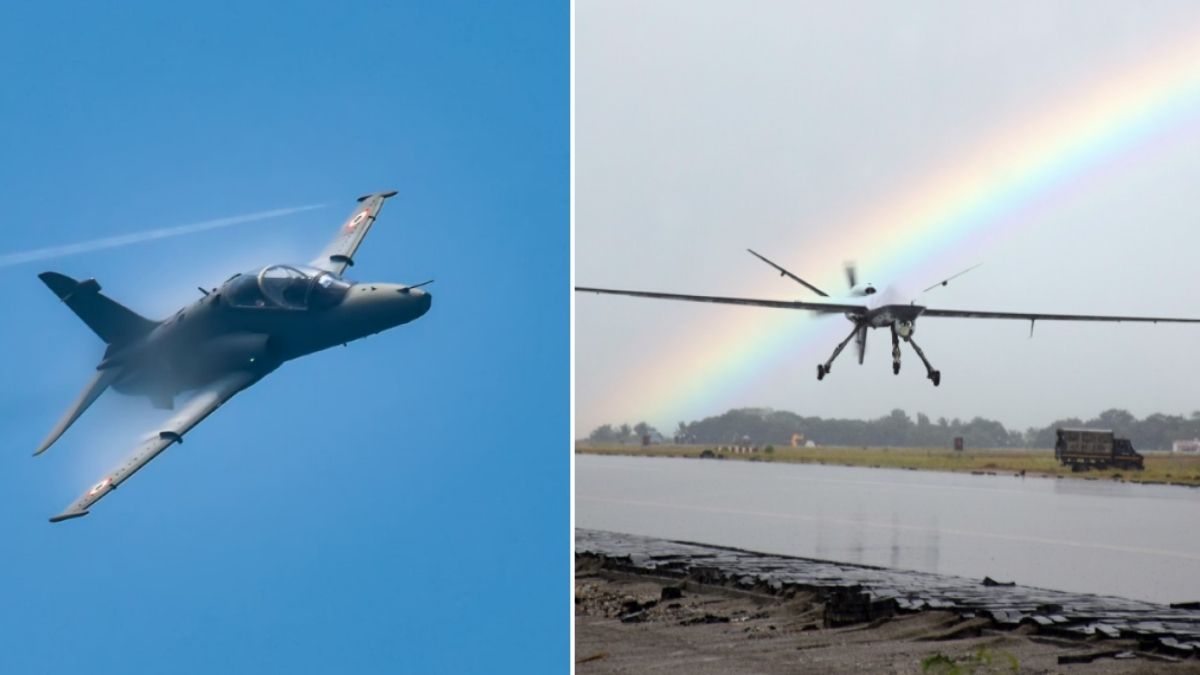
Amphibious fixed-wing aircraft are versatile and can operate from water bodies or conventional airstrips. Image courtesy: Indian Navy

To cater better to island territories like Andaman & Nicobar and Lakshadweep in fighting maritime threats like terrorism, piracy, and smuggling, Indian Navy is eyeing more amphibious aircraft to join its fleet. The Defence Ministery has initiated steps to lease four specialised amphibious planes.
These planes will be capable of taking off and landing on the sea as well as conventional runways, giving a major capability-enhancing boost to the Indian Navy. For this, the ministry has issued a Request for Information (RFI) to international manufacturers, seeking details on available platforms, their payload capacity, endurance and operational roles.
The aircraft are proposed to be taken on a wet lease to boost reconnaissance, surveillance, and search-and-rescue capabilities, for a four-year period, according to a report in The Tribune.
Why amphibious aircraft matter for Indian Navy
As they itself signifies, amphibious aircraft offer a unique operational advantage by combining air mobility with maritime access. Further, their ability to operate without runways enables rapid response in remote oceanic regions and during emergencies at sea, thereby significantly expanding the Navy’s reach and flexibility.
For India, with its vast coastline and island territories, such platforms are seen as critical force multipliers.
Boost to maritime logistics and search & rescue
According to the defence ministry, the primary roles of the amphibious aircraft will include operational logistics support, long-range search and rescue (SAR), special operations, in addition to humanitarian assistance and disaster relief (HADR), casualty evacuation.
These capabilities will allow the Navy to directly deploy troops, medical teams, relief supplies and critical equipment to areas inaccessible to conventional aircraft.
Amphibious aircraft: What is the Navy seeking?
According to a report in Asianet, the lessors are required to fill out a specified response form and submit it by March 5, 2026. The defence ministry has sought responses only from Original Equipment Manufacturers (OEMs) or authorised lessors.
On the design part, the aircraft needs to have a corrosion-resistant design to withstand the salty, humid maritime environment and should be equipped with advanced navigation, communication, and safety systems for long-range operations. In addition, it should feature advanced avionics, secure communication, satellite-based navigation, survival equipment, sensors, and visual aids for long-range search-and-rescue missions.
Security missions at sea: How amphibious aircraft would help
Beyond humanitarian and logistics roles, the aircraft will also support secondary missions such as anti-piracy operations, anti-narcotics missions, maritime patrol and surveillance. This will strengthen India’s ability to counter non-traditional maritime threats, including smuggling, terrorism and piracy across key sea lanes.
How are they a critical Asset for island territories
In strategically sensitive and geographically dispersed regions like the Andaman and Nicobar Islands and the Lakshadweep Islands, amphibious aircraft can dramatically cut response times during maritime accidents, shipwrecks or natural disasters. Their capability to land directly on water near the incident site ensures faster rescue and evacuation compared to conventional air and naval platforms.
Worth noting here is that India’s renewed push comes nearly a decade after it first explored inducting amphibious aircraft. The ShinMaywa US-2 seaplane from Japan had earlier been shortlisted, and in 2018, Japanese manufacturer ShinMaywa Industries signed a pact with Mahindra Defence Systems to manufacture and assemble the aircraft in India.
That deal, however, did not materialise, leaving a critical capability gap unaddressed.
Navy opts for leasing model to fast-track induction
By opting for a leasing route, the defence ministry aims to quickly bridge operational gaps while evaluating long-term requirements. The RFI seeks to identify probable lessors capable of meeting the Navy’s demanding operational profile without the delays associated with outright procurement.
The induction of amphibious aircraft is expected to significantly enhance the Indian Navy’s blue-water capabilities, improve maritime domain awareness, and bolster India’s preparedness for both military contingencies and humanitarian missions across the Indian Ocean Region.