

Pakistan Divided Over Trump’s Board Of Peace? Khyber Pakhtunkhwa Assembly Rejects Gaza Initiative
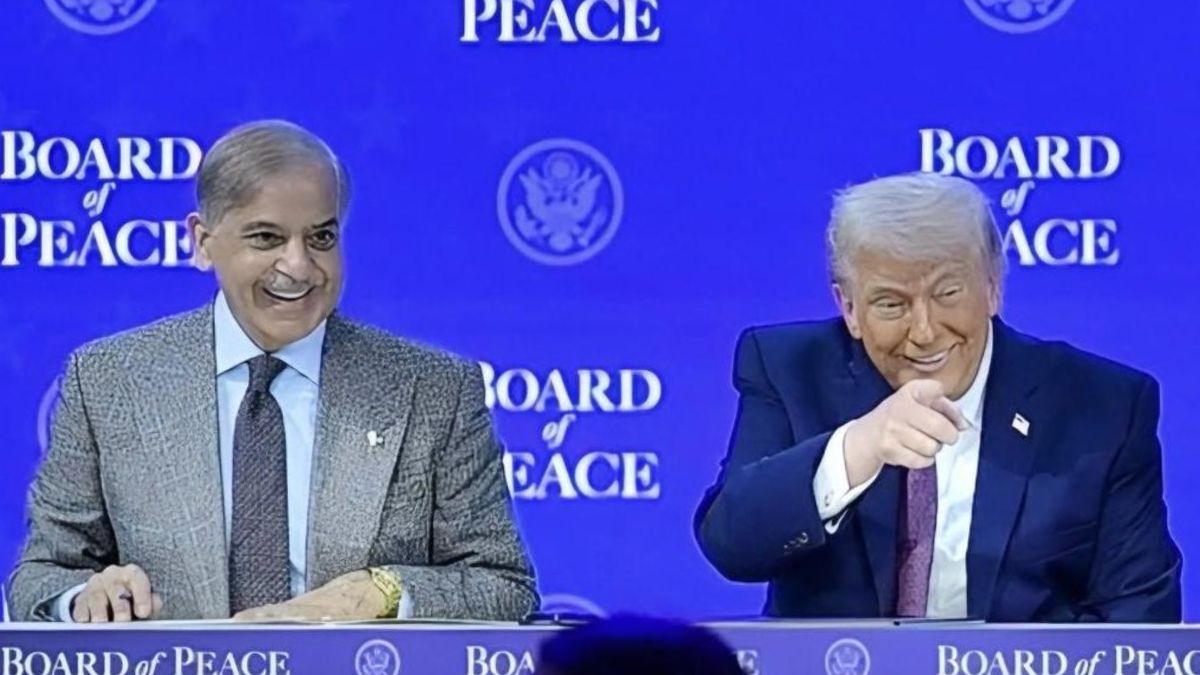
The provincial assembly of Khyber Pakhtunkhwa has unanimously passed a resolution rejecting Pakistan's decision to join the Board of Peace. Image courtesy: X.com

Shehbaz Sharif might have joined a group of world leaders in signing the charter for the Board of Peace for Gaza last week, but it seems to now have exposed internal fault lines over the conflict. These cracks over the Gaza conflict became visible after the Khyber Pakhtunkhwa (KPK) provincial assembly unanimously rejected Islamabad’s decision to join US President Donald Trump’s Board of Peace for Gaza.
Trump hosted the Board of Peace launch ceremony on the margins of the annual World Economic Forum in Davos, Switzerland. Pakistan had received the invitation from Trump to join the Board, which was later accepted. Washington is projecting this initiative as a cornerstone of its renewed Middle East peace push.
While Pakistan has backed Trump’s board of peace, it is now facing resistance on the same internally. KPK’s latest resolution throws a spotlight on growing domestic opposition to Pakistan’s participation in a US-led framework that critics say undermines Palestinian self-determination.
What is Trump’s Board of Peace for Gaza?
Unveiled by US President Trump during the World Economic Forum in Davos last week, the Board of Peace for Gaza is being positioned by Washington as part of the second phase of a ceasefire agreement between Israel and Hamas. He projects the body as a new international forum aimed at promoting peace and stability in Gaza, and potentially responding to other global conflicts.
Pakistan PM Shehbaz Sharif joined a group of world leaders in signing the Board’s charter last week after Pakistan received a formal invitation from Trump.
However, the move has sparked sharp criticism from opposition parties and now outright rejection from Pakistan’s northwestern province of Khyber Pakhtunkhwa, where Imran Khan’s Pakistan Tehreek-e-Insaf (PTI) has been in power since 2013.
What did the Khyber Pakhtunkhwa assembly decide?
Chaired by Speaker Babar Saleem Swati, the KPK assembly unanimously adopted a resolution on Monday (January 26, 2026) rejecting Pakistan’s participation in the Board. The motion, moved by Law Minister Aftab Alam of the PTI and supported by Jamiat Ulema-e-Islam (F), declared that joining the Board contradicts Pakistan’s “historic and principled stance” on Palestine.
The resolution argued that the Board of Peace is inconsistent with UN resolutions, it undermines the right to self-determination of the Palestinian people, and could strengthen what the assembly described as Israeli atrocities in Gaza. Lawmakers characterised the Board as a political forum operating under the patronage of the US and Israel.
In addition to this, there also are fears about Pakistan’s own national interests. The resolution has warned that sub-committees formed under the Board could potentially act against Pakistan’s national interests, adding to concerns about long-term political and diplomatic costs.
The House demanded that the federal government adopt a clear, sovereign and principled stance in support of Palestinian freedom and refrain from actions that could dilute that position.
What about Pakistan’s long held position on Israel?
Rejecting the proposal to join Trump’s board of peace, the KPK assembly also reminded Pakistan of the position articulated by the country’s founder Muhammad Ali Jinnah, reiterating that Islamabad has never recognised Israel and continues to oppose what it calls the illegal occupation of Palestinian territory.
The resolution urged the federal government to remain aligned with this legacy.
However, Pakistan’s opposition does not seem united on this issue as Pakistan Muslim League–Nawaz (PML-N) leader Ibadullah, who heads the opposition in the provincial assembly, said his party did not vote in favour of the resolution, along with the Pakistan Peoples Party Parliamentarians (PPPP) and the Awami National Party (ANP).
Despite that, the resolution was passed unanimously, reflecting broad consensus within the House on rejecting the Board.