



Kalari Leap In Lakshadweep And Minicoy Archipelago: Army’s Southern Command Flexes Air-Maritime-Special Ops
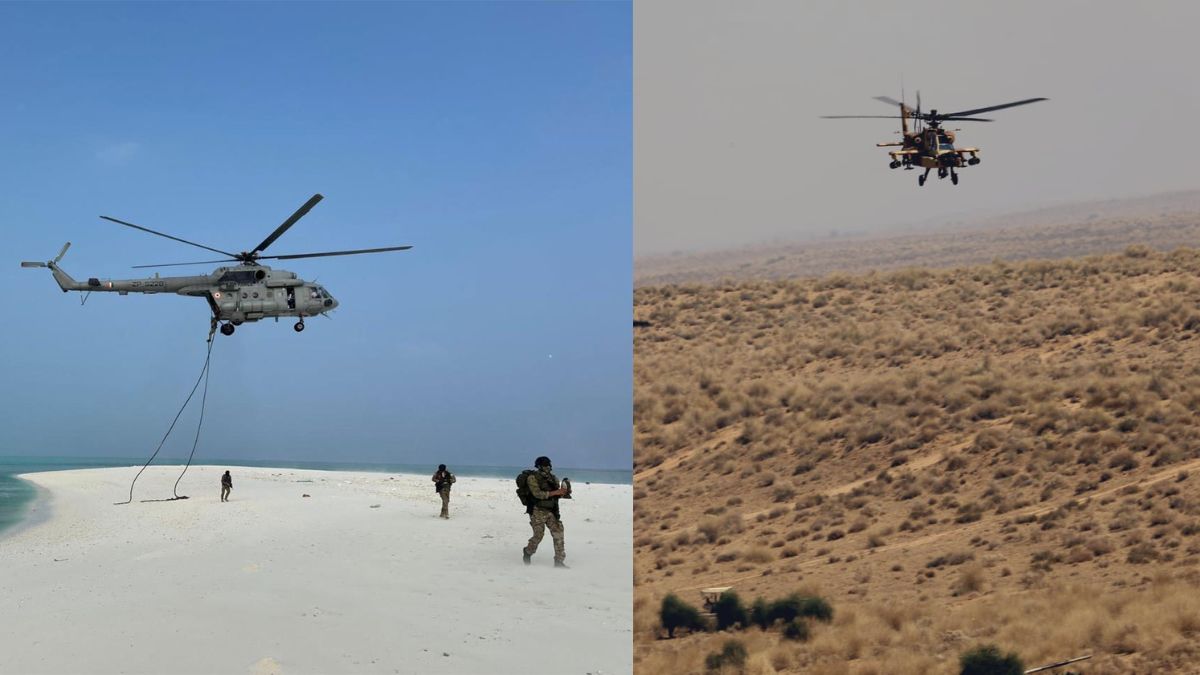
The exercise was designed to validate joint planning, rapid force projection & precision execution in a challenging maritime environment. Image courtesy: RNA

In a sweeping display of integrated military capability, India’s armed forces have executed high-intensity exercises spanning the island territories of Lakshadweep. The Southern Air Command recently spearheaded a complex tri-service maritime drill titled Exercise Kalari Leap in the Arabian Sea.
Set against the strategic backdrop of the Lakshadweep and Minicoy archipelago, Exercise Kalari Leap was designed to rehearse swift and decisive responses in a challenging maritime environment.
Led by the Southern Air Command (SAC) and conducted in close coordination with the Armed Forces Special Operations Division (AFSOD) and the Indian Coast Guard (ICG), the exercise focused on validating joint planning, precision execution and seamless air-maritime integration.
Kalari Leap: Testing combat power in India’s island frontier
The drills simulated a spectrum of operational scenarios that India could face in its island territories, from hostile maritime threats to special operations contingencies. Airborne and air-landed insertions were executed with precision, including combat free fall operations by AFSOD Special Forces.
Special heliborne missions and amphibious assaults were rehearsed to demonstrate the ability to rapidly secure critical island objectives. “The exercise was designed to validate joint planning, rapid force projection & precision execution in a challenging maritime environment,” Defence PRO said.
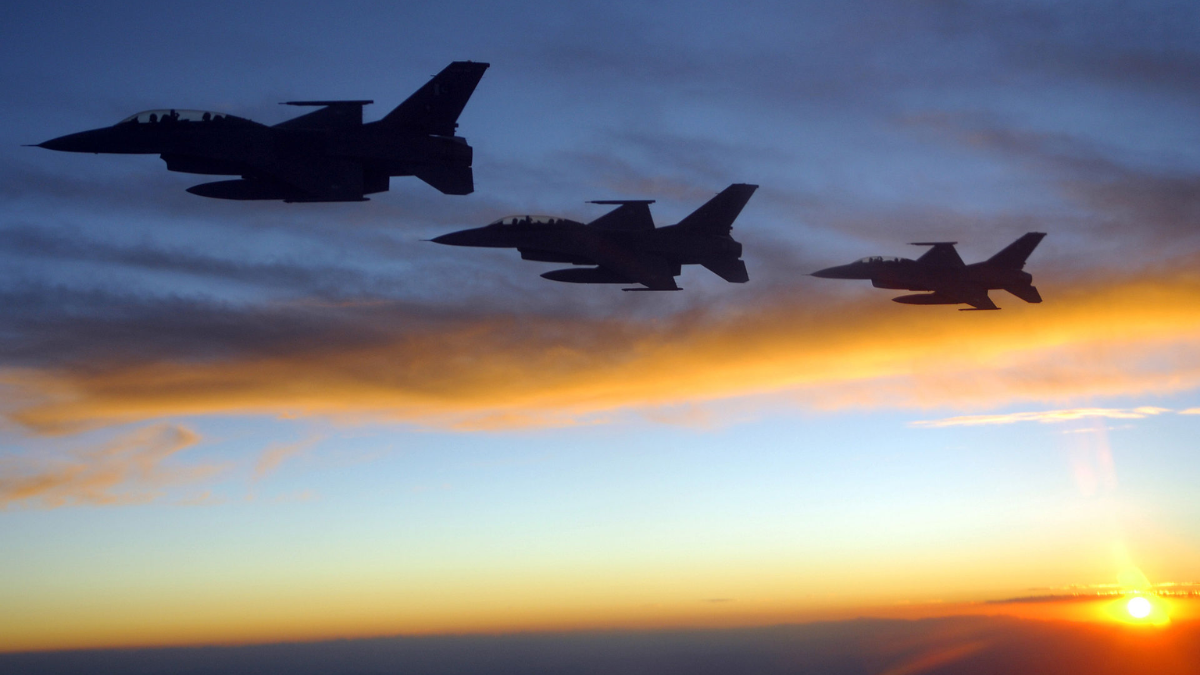
The operations encompassed airborne & air-landed insertions, special heliborne missions, amphibious assault, anti-ship strike & maritime search & rescue. Air power formed the backbone of the operation. AN-32 transport aircraft, Mi-17V5 helicopters and frontline Su-30MKI fighters were deployed to support insertion missions and maritime strike roles.
The Indian Coast Guard contributed ships, Gemini boats and Dornier 228 aircraft, which undertook search-and-rescue tasks and provided aerial shepherding support to fighter aircraft during simulated anti-ship strikes.
Why the maritime drill matters
India’s island territories are not only geographically dispersed but strategically vital. Lakshadweep’s proximity to key sea lanes of communication in the Arabian Sea makes it a crucial maritime outpost. Kalari Leap was not merely a demonstration of capability but a validation of readiness, ensuring that joint forces can rapidly deploy, dominate the battlespace and neutralise threats across dispersed island chains.
The drill reinforced the Southern Air Command’s ability to integrate air power with maritime and special operations forces in real-time, a capability critical in modern network-centric warfare. Kalari Leap showcased jointmanship, Operations readiness & validated HQ SAC’s ability to execute integrated air-maritime-special Ops across the full spectrum of conflict in India’s island domains.
Agni Varsha: Desert combat power on full display
While joint forces manoeuvred in the Arabian Sea, the Indian Army was showcasing its own integrated combat strength in Rajasthan’s desert sector, by simultaneously validating its desert warfare punch during Exercise Agni Varsha at Pokhran. Together, the exercises underline India’s sharpened focus on jointmanship, rapid force projection and technology-driven warfare.
Under the aegis of Headquarters Southern Command, Exercise Agni Varsha unfolded at the Pokhran Field Firing Ranges, testing operational preparedness and high-tempo combined arms warfare in a realistic battlefield environment.
The integrated fire and manoeuvre exercise brought together mechanised forces, artillery, aviation assets and advanced surveillance systems in synchronised combat drills. The scenario focused on coordinated employment of long-range precision fires, rapid manoeuvre and network-enabled command and control systems.
Army vehicles on display during Agni Varsha
Main Battle Tanks including the T-90 rolled across the desert terrain alongside Infantry Combat Vehicles, supported by K-9 Vajra, Sharang and Bofors artillery systems. Precision rocket platforms delivered simulated long-range strikes, while Apache attack helicopters and indigenous ALH Weapon System Integrated helicopters provided aerial firepower.
Unmanned aerial systems and counter-drone technologies were integrated into the battlespace, reflecting the Army’s increasing reliance on modern surveillance and precision strike capabilities. The exercise underscored how digital networks and real-time intelligence now shape battlefield decision-making.
Foreign defence journalists from 25 nations witnessed the demonstration, gaining first-hand exposure to the speed, coordination and firepower of India’s combined arms forces in desert warfare conditions.
Both Kalari Leap and Agni Varsha reflect a broader transformation underway within India’s armed forces, one centred on indigenisation, technological infusion and joint operational synergy. From indigenous helicopters and artillery systems to precision rockets and networked surveillance platforms, the exercises showcased India’s push towards self-reliance in defence manufacturing while enhancing operational capability.


