Fresh US-Israel Airstrikes Hit Natanz Nuclear Plant, Iran Retaliates As Trump Warns Tehran
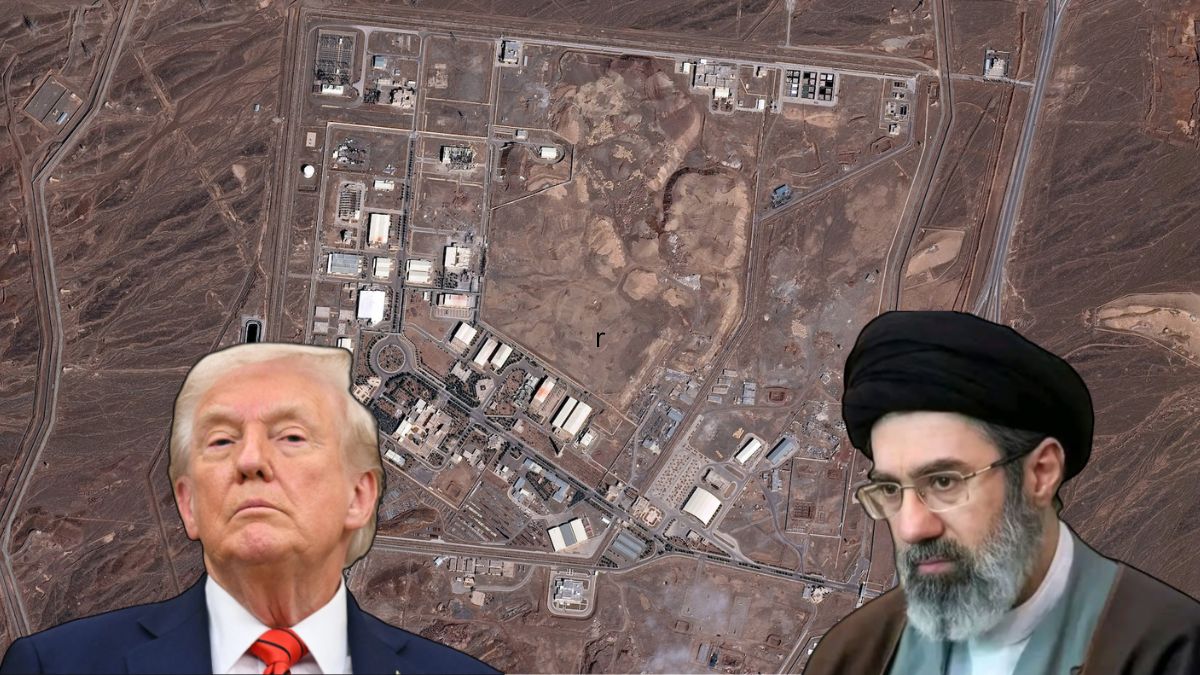
Fresh strikes on Iran’s Natanz nuclear facility and retaliatory missile attacks on Israel’s Dimona site have sharply escalated tensions, as Washington warns of further action if the Hormuz Strait blockade is not lifted. Image courtesy: RNA

In fresh airstrikes on Iran, the US and Israel hit the Natanz Uranian enrichment facility on Saturday (March 21, 2026), with Tehran retaliating with its own missile attack on the Israeli nuclear plant at Dimona, even as Washington threatened to target Iranian power plants if Tehran does not lift the Hormuz Strait blockade.
Iranian state media reported that its Natanz facility was hit by a joint US-Israeli airstrike, adding that no immediate signs of radioactive leakage were recorded at the site. Israel immediately distanced itself from the attack on Natanz, with its military denying it had a role in that airstrike on the Iranian nuclear facility.
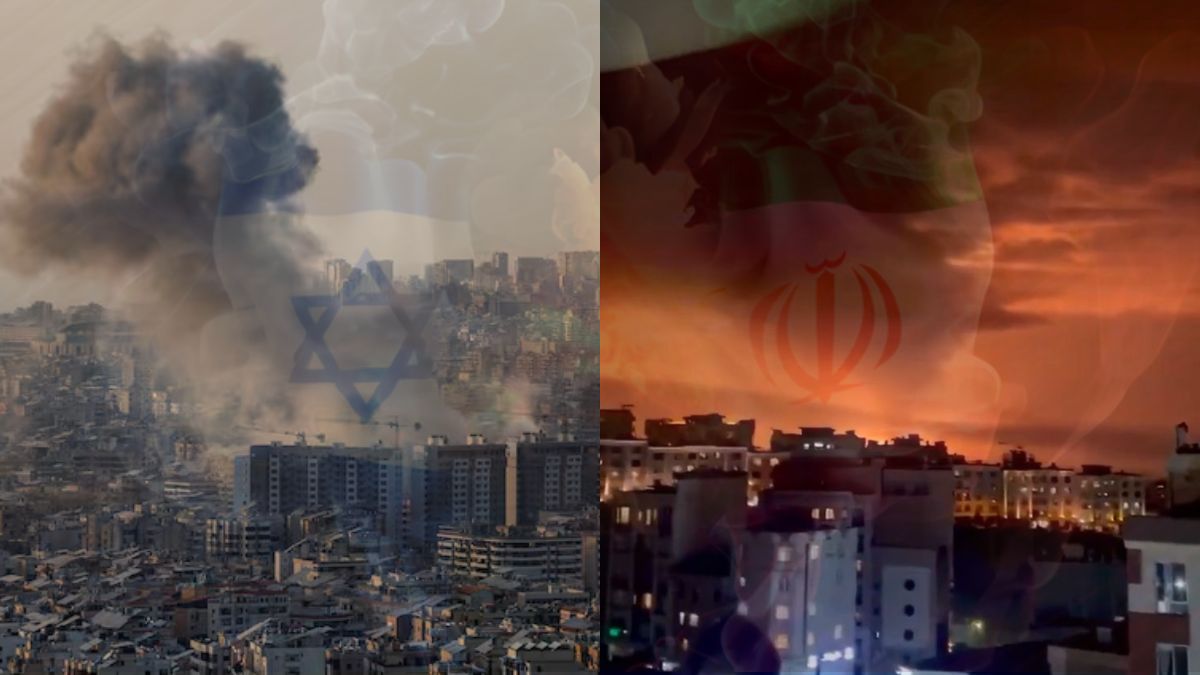
The Tasnim news agency quoted Iranian officials as saying the Natanz attack marked a major escalation of hostilities by the US and Israel and vowed to retaliate immediately. Soon after, the Dimona nuclear facility of Israel came under an attack from Iranian missiles.
Iran’s atomic energy organisation also confirmed the attack on the Natanz nuclear facility, calling it a part of continued attacks on Iranian infrastructure.
“Following the criminal attacks by the United States and the usurping Zionist regime against our country, the… Natanz enrichment complex was targeted this morning,” the organisation said in a statement. There was “no leakage of radioactive materials reported” in the central Iranian region where Natanz is located.
Natanz had previously come under the US-Israel airstrikes earlier this month, and seemed to be a bid to cripple Iran’s nuclear capabilities, one of the aims of the American-Israeli war this time around.
“Destroying buildings and factories will not create a problem for us, we will rebuild and with greater strength,” Iranian President Masoud Pezeshkian had then said, asserting that Iran’s nuclear programme is aimed at civilian use.
Tehran consistently denies pursuing nuclear weapons, maintaining that its activities are focused on energy and medical applications.
The International Atomic Energy Agency (IAEA) raised concerns over potential radiation risks following the Natanz attack earlier this month. Its Director General, Rafael Mariano Grossi, had said the “possibility of radiological release cannot be ruled out”.
Following the Saturday strike on Natanz and the Iranian threat to retaliate, Israel denied it was responsible for the hit on Iran’s nuclear facility. Israel’s Defence Minister Israel Katz said, in a video statement, next week, “the intensity of the attacks” by Israel and the United States against Iran’s ruling theocracy will “increase significantly.”
Meanwhile, Iran carried out its threat to target Israel’s nuclear capabilities by hitting the Dimona facility and Arad, where over 100 people, including children, were injured in the missile strike.
The Iranian strikes on the Shimon Peres Negev Nuclear Research Center in Dimona and Arad came in “response” to the airstrikes on Natanz earlier in the day.
But the IAEA said it neither got any information on the damage in Dimona nor any abnormal radiation levels were detected in the area.
However, international media reports said some residential buildings in Dimona and Arad were hit. At least 88 people were wounded in Arad, including 10 in serious condition, while 33 were wounded in nearby Dimona, the report said.
Israel Foreign Ministry called the Iranian strike on Dimona and Arad “pure terrorism and a war crime” as the missile attacks claimed civilian casualties, as Prime Minister Benjamin Netanyahu spoke with mayors of the two towns.
“This is a very difficult evening in the battle for our future. Just a short while ago, I spoke with the Mayor of Arad, Yair Maayan, and asked him to convey, on behalf of all Israeli citizens, our prayers for the peace of the injured,” Netanyahu said.
“I have instructed the Director General of my office to provide all the necessary assistance together with all government ministries,” he added.
Meanwhile, Trump issued a threat to Iran, warning that the US would “obliterate” Iranian power plants if Tehran didn’t lift the blockade of the maritime traffic through the Hormuz Strait within 48 hours.
“If Iran doesn’t FULLY OPEN, WITHOUT THREAT, the Strait of Hormuz, within 48 HOURS from this exact point in time, the United States of America will hit and obliterate their various POWER PLANTS, STARTING WITH THE BIGGEST ONE FIRST!” Trump said in a Truth Social post.
This came just a day after Trump had said he would be “winding down” the West Asia war. On Friday (March 20), Trump had posted on Truth Social that the US was “getting very close to meeting our objectives as we consider winding down our great Military efforts in the Middle East.”
He earlier told reporters at the White House South Lawn, “We could have dialogue, but I don’t want to do a ceasefire.” Trump said, “You know you don’t do a ceasefire when you’re literally obliterating the other side. They don’t have a navy. They don’t have an air force. They don’t have any equipment.”
These mutual attacks on each other’s nuclear facility and Trump’s rhetoric came even as the West Asian conflict entered its fourth week, with maritime traffic disruptions continuing in the Hormuz Strait and both sides targeting their energy facilities in missile and drone strikes.