
A Pre-Planned Massacre: Bangladesh PM Tarique Rahman Revives 1971 Horror, Targets Pakistan On Genocide Day
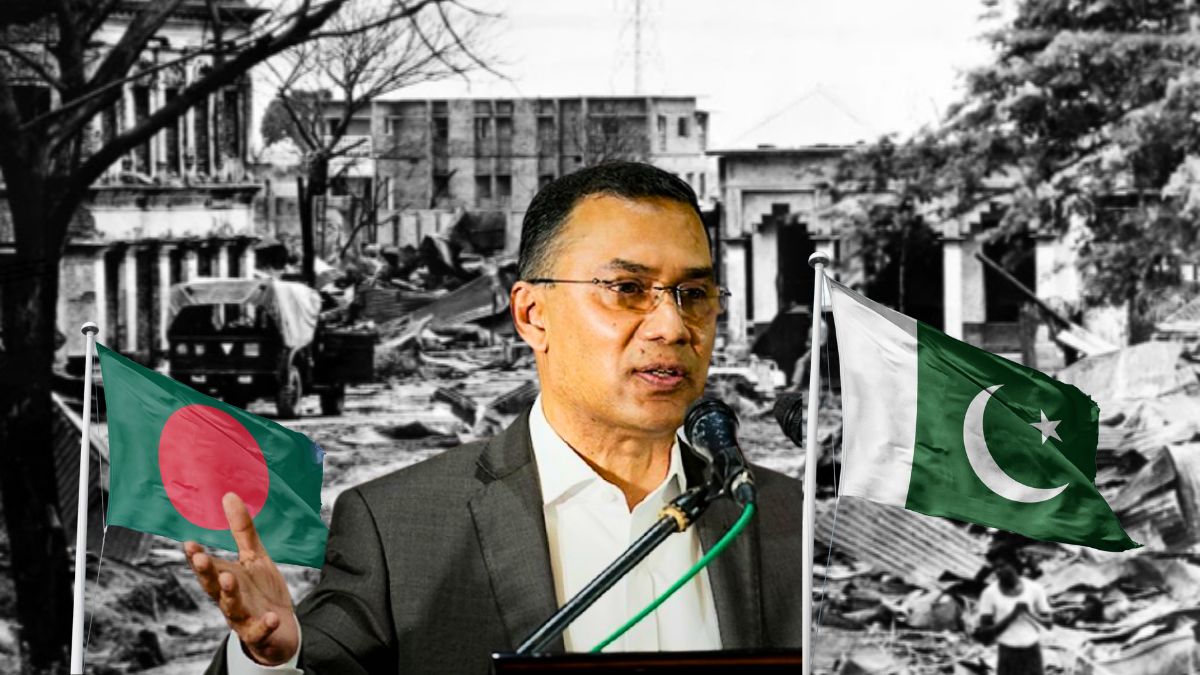
Tarique Rahman said 25 March 1971 remains one of the most disgraceful and brutal days in the history of freedom-loving Bangladesh. Image courtesy: RNA

55 years ago today, Bangladesh witnessed one of the darkest chapters in the country’s history, when unarmed Bengalis – including students, teachers and civilians – were killed across the then East Pakistan, particularly in Dhaka, triggering widespread atrocities during the Liberation War. Even institutions like Dhaka University were among the main targets.
Recalling the brutal events of the night in 1971, Bangladesh Prime Minister Tarique Rahman issued a strongly worded Genocide Day messageand directly called out Pakistan for what he described as “one of the most heinous genocides in history.” The statement, widely circulated on social media, notes how the Pakistani occupation forces carried out one of the most heinous genocides in history.
Bangladesh Genocide Day: PM Rahman’s strongly worded message
Marking Genocide Day, Rahman did not mince words in describing the events that unfolded under Pakistan’s military rule in 1971. He called the crackdown “one of the most disgraceful and brutal crimes ever inflicted” on the Bengali people, stressing that the atrocities were not incidental to war but part of a deliberate campaign of mass violence.
The message underscored a long-standing position of Dhaka: that the events of 1971 constitute genocide, a claim Bangladesh continues to push for wider international recognition.
What happened on March 25, 1971?
The date marks the launch of Operation Searchlight, a military offensive by the Pakistan Army aimed at crushing Bengali demands for democracy following the Awami League’s victory in Pakistan’s 1970 general elections. Instead of transferring power, the Pakistani establishment responded with overwhelming force.
Dhaka University was attacked; students, professors, and intellectuals were targeted; Rajarbagh Police Lines and Pilkhana were assaulted as security personnel resisted; and civilians across Dhaka were indiscriminately killed as neighbourhoods were set ablaze.
What unfolded that night was not a conventional military action, but a systematic campaign of terror, widely seen in Bangladesh as the beginning of a broader extermination drive during the nine-month Liberation War.
A war born out of genocide
Rahman’s message emphasised that Bangladesh’s independence was not merely the outcome of a war, but the result of resistance against mass atrocities. Pakistani forces, he noted, “indiscriminately opened fire on teachers, intellectuals and innocent civilians,” highlighting what Bangladesh views as a calculated attempt to dismantle its intellectual and social fabric.
The violence of March 25, 1971 soon triggered organised resistance, including by units such as the 8th East Bengal Regiment in Chattogram, transforming shock into a full-scale liberation struggle. “The genocide of 25 March was a pre-planned massacre. Why this organised killing spree could not be resisted remains a matter of historical research,” he noted.
An unresolved chapter in South Asian politics
More than five decades later, the events of 1971 remain a deeply sensitive and unresolved issue in regional geopolitics. Bangladesh continues to assert that the atrocities of March 25, 1971 amount to genocide. Pakistan has not fully acknowledged or taken responsibility while international recognition remains incomplete.
Bangladesh PM Rahman’s remarks reflect growing efforts to keep the issue alive on the global stage, particularly among younger generations. Beyond remembrance, his statement carried a clear political and diplomatic signal, that historical accountability cannot be separated from present-day relations.
For Bangladesh, March 25 is not just a day of mourning, it is a reaffirmation of truth and national memory. Rahman urged younger generations to preserve the ideals of equality, dignity, and justice, while ensuring that the events of 1971 are neither forgotten nor diluted. His message makes one point clear: the killings of 1971 were not collateral damage of conflict, but a calculated act of mass violence.