


IAF To Arm MiG-29 Fleet With ASRAAM Missiles In Major Air Combat Boost To Counter China, Pakistan Threat
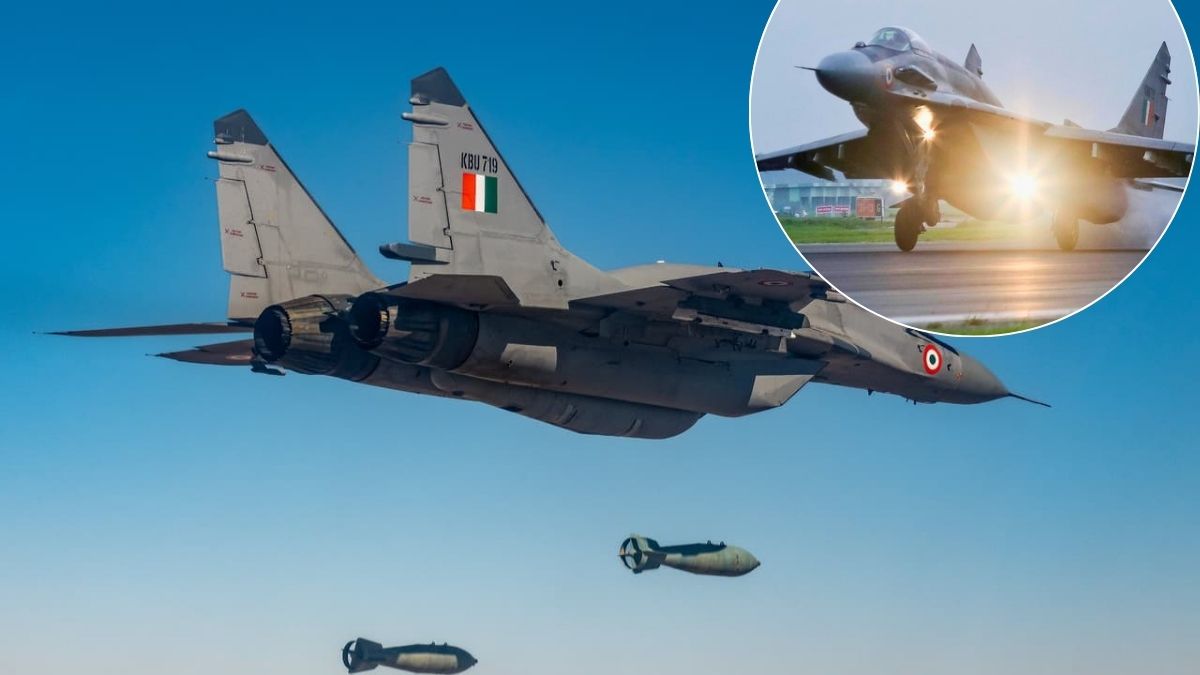
ASRAAM, a European-designed short-range air-to-air missile, has already been integrated on the indigenous LCA Tejas and Jaguar aircraft. Image courtesy: RNA

In a decisive upgrade to its air combat arsenal, the Indian Air Force is moving to equip its frontline MiG-29 fighter jets with the advanced ASRAAM (Advanced Short Range Air-to-Air Missile), a step that is set to dramatically enhance the aircraft’s lethality in close combat and strengthen India’s aerial edge in a contested neighbourhood.
The Ministry of Defence has issued a Request for Proposal (RFP) for the integration and testing of the missile on the MiG-29 UPG variant, covering not just the weapon but also launch systems, associated equipment, and training for both pilots and ground crews. Recently, IAF Chief Air Marshal AP Singh took a sortie in the aircraft.
Why is the ASRAAM upgrade crucial for the IAF?
The induction of ASRAAM marks a generational leap in close-range air combat capability for the MiG-29 fleet. Currently armed with the legacy R-73 missile from the 1980s, the aircraft’s short-range strike capability has been increasingly outpaced by modern aerial threats. The ASRAAM, with a range exceeding 25 kilometres, more than doubles the engagement envelope, allowing pilots to strike enemy aircraft well before entering traditional dogfight distances.
This shift effectively redefines the close-combat battle space, giving Indian pilots a decisive first-shot advantage.
Designed by European missile major MBDA, ASRAAM is a fourth-generation, heat-seeking missile built for high-speed, high-precision engagements.
Capable of speeds exceeding Mach 3, the missile operates on a fire-and-forget principle, meaning once launched, it autonomously tracks and destroys its target without further pilot input. This significantly reduces pilot workload in high-intensity combat scenarios. Its advanced seeker technology and larger rocket motor provide superior range and accuracy, enabling it to engage fast-moving enemy fighters with pinpoint precision.
How will this transform MiG-29’s combat role?
The MiG-29, long regarded as a backbone of India’s air defence, will see a sharp boost in its operational relevance.
With over 55 aircraft in service, including trainer variants, the platform continues to play a critical role in maintaining air superiority, particularly along India’s western frontier. The aircraft has also demonstrated its combat utility in recent operations, including Operation Sindoor in 2025.
With ASRAAM integration, the MiG-29 UPG will evolve into a far more lethal dogfighter, capable of engaging adversaries earlier, faster, and with greater confidence.
How does this stack up against China and Pakistan?
The upgrade comes amid a rapidly evolving regional air combat environment. China’s PL-10 missile, deployed on advanced platforms like the J-20 and J-16, and Pakistan’s integration of the PL-10E on the JF-17 Block III, have already raised the bar in short-range air combat.
However, defence sources, quoted by NDTV, indicate that ASRAAM’s larger propulsion system and proven performance offer a competitive edge in range and engagement capability, helping India maintain parity and potentially superiority, in close-in aerial warfare.
Boost to ‘Make in India’ and indigenous ecosystem
The ASRAAM programme also aligns with India’s push for defence indigenisation.
Under a 2021 agreement, Bharat Dynamics Limited (BDL) is partnering with MBDA for local assembly and testing, with a dedicated facility coming up in Hyderabad. This move is expected to strengthen India’s missile manufacturing ecosystem and reduce long-term dependency on imports.
The timing of this upgrade is significant. With rising tensions and increasing air power competition in the region, enhancing the combat survivability and strike capability of legacy platforms like the MiG-29 has become a priority. The recent flight by Air Chief Marshal Singh on a MiG-29 underscores the aircraft’s continued importance in India’s defence posture.