


IAF Eyes Indigenous Hydrogen Airship In A Push For 10-Day Surveillance Platform To Carry Payloads Of Up To 5000 Kg
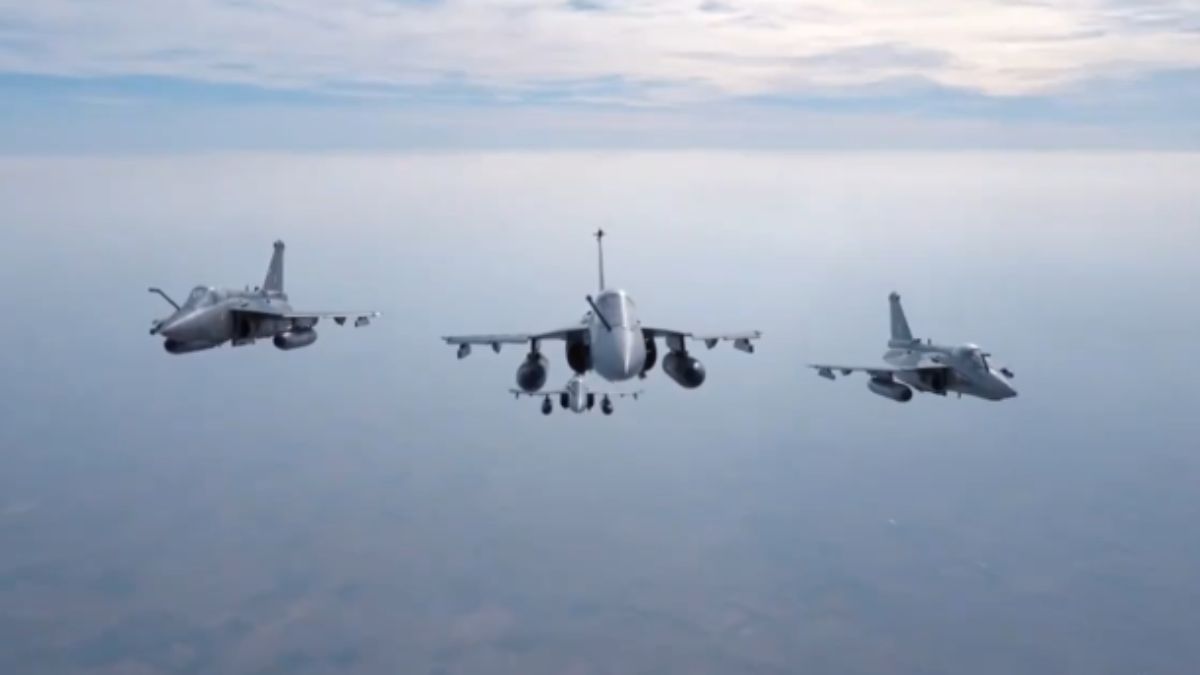
The platform, termed a 'Medium Altitude Heavy Lift Airship', will be unmanned. Image courtesy: IAF

In a significant step towards next-generation military capability, the Indian Air Force (IAF) is exploring the development of a hydrogen-powered, autonomous airship designed for long-endurance surveillance and multi-role operations. The move comes at a time of heightened global instability, where persistent monitoring, rapid response, and technological superiority are becoming central to modern warfare.
The IAF has invited bids from Indian companies to design, develop, and manufacture a “Medium Altitude Heavy Lift Airship”, a high-tech unmanned platform capable of operating at 30,000 feet and carrying payloads of up to 5,000 kg.
What would make this airship a game-changer?
With conflicts across regions, from West Asia to Russia-Ukraine, highlighting the importance of real-time intelligence and persistent ISR (Intelligence, Surveillance, Reconnaissance), the IAF is aiming to plug a critical operational gap.
Unlike conventional aircraft or drones, this airship now being sought by the Indian Air Force will be designed for extended missions lasting up to 10 days, offering near-continuous monitoring over sensitive areas. It would, moreover, be required to carry specialised payloads and function as a launch platform for missiles and drones during flight, according to a report in The Tribune.
Some of the hydrogen-powered airship’s key capabilities include persistent ISR missions with minimal operational interruption, acting as a communication node, similar to airborne radar platforms, potential to serve as a launch platform for missiles and drones mid-air, along with autonomous operations, including launch and recovery from varied terrains.
This effectively turns the platform into a floating aerial command and surveillance hub, significantly enhancing situational awareness.
Why is the IAF betting on hydrogen technology?
The choice of hydrogen is both strategic and futuristic. The IAF has identified hydrogen as a preferred fuel due to its lighter-than-air properties, which would enhance lift efficiency; non-toxic and clean emissions, producing only water vapour; and availability and sustainability, aligning with future energy goals.
The airship may also use hybrid propulsion systems, combining hydrogen with solar power, batteries, fuel cells. This combination is expected to ensure ultra-long endurance and reduced operational costs, a key advantage over fuel-intensive aircraft.
How will this boost India’s defence capabilities?
If successfully developed, the airship could provide India with continuous border and maritime surveillance, especially in high-risk zones, enhanced monitoring over remote and contested regions, a cost-effective alternative to deploying multiple aircraft or satellites, and iImproved electronic warfare and communication support.
With a communication range of at least 250 km line-of-sight, extendable via satellite links, the platform could play a crucial role in network-centric warfare.
Additionally, the project also aligns strongly with the Aatmanirbhar Bharat (self-reliance) push in defence manufacturing. As per the bids invited by the IAF, some of the key requirements include a minimum 50% indigenous content, participation of Indian private and public sector companies, and emphasis on in-house design, manufacturing, and project management capabilities.
While foreign collaboration is allowed, the focus remains on building a domestic ecosystem for advanced aerospace technologies. Bidders have been asked to submit proposals by April 30, 2026, after which multiple firms will be shortlisted before selecting a final production partner.