


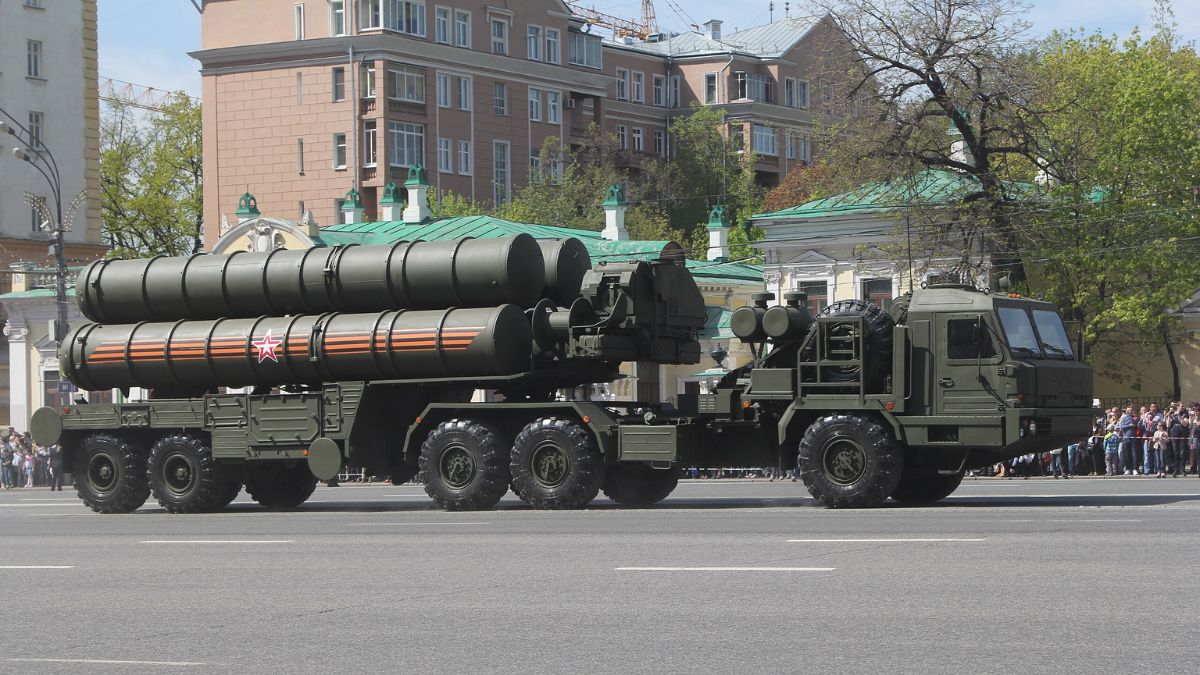
During May 2025’s Operation Sindoor, India’s retaliatory response to Pakistan following the April 2025 Pahalgam terror attack, Russia’s S-400 air defence system came handy as they ensured that Pakistani fighters did not take to the skies when our armed forces blasted enemy airbases.
Now, India is looking to add more S-400 systems to their arsenal, giving a major filip to India’s multi-layered air defence architecture. Taking a step in this direction, the Defence Procurement Board (DPB) has cleared the Indian Air Force’s proposal to acquire five additional S-400 Triumf air defence systems from Russia.
Worth noting here is that the move comes amid a global resurgence of ballistic missile and drone warfare. The proposal, approved by the board headed by Defence Secretary Rajesh Kumar Singh, will now move to the Defence Acquisition Council (DAC) under Defence Minister Rajnath Singh for Acceptance of Necessity (AoN), the crucial next step before price negotiations and final Cabinet approval.
If cleared, the purchase will expand India’s S-400 fleet to ten systems, significantly strengthening the country’s air and missile shield, according to a Hindustan Times report.
Why is India expanding its S-400 fleet now?
The timing is strategic. West Asia is currently witnessing intense missile and drone exchanges, with ballistic missiles and kamikaze drones dominating battlefields. The ongoing Iran-US conflict has underlined the centrality of anti-ballistic missile (ABM) systems in modern warfare.
For India, facing adversaries on both western and northern borders, and safeguarding an 11,000-km coastline, the requirement for advanced long-range air defence systems is no longer optional but structural. Defence planners believe that expanding the S-400 fleet will enhance protection against ballistic missiles.
Adding more S-400 to its fleet would give India an edge in countering enemy fighter jets and bombers beyond visual range. Our forces will also be able to neutralise airborne early warning and electronic warfare aircraft, along with creating a layered deterrence grid across critical military and civilian assets.
How capable is the S-400 system?
The Russian-origin S-400 Triumf is widely regarded as one of the world’s most advanced long-range air defence systems. It’s key capabilities include engagement range of up to 400 km (depending on missile type), ability to track and engage multiple targets simultaneously, capability to intercept aircraft, cruise missiles, UAVs and ballistic missiles, multi-layered missile options for varied threat profiles.
India currently operates three S-400 systems, with two more expected to be inducted this year under the earlier contract. The additional five systems would effectively double India’s strategic air defence coverage.
How did the S-400 perform in combat?
The S-400 reportedly played a critical role during Operation Sindoor in May 2025. According to officials familiar with operations, the system prevented Pakistani fighters and airborne surveillance aircraft from taking to the skies. It secured air superiority corridors during Indian precision strikes, and provided protective cover during the BrahMos missile strike on Chaklala Airbase.
On May 10, 2025, an Indian BrahMos strike reportedly destroyed Pakistan Air Force’s Northern Command and Control network at Chaklala. Islamabad sought de-escalation soon after.
The performance during this operation appears to have strengthened the IAF’s case for expanding the S-400 inventory.
What is the procurement process ahead?
With the DPB clearance in place, the proposal will go to the DAC for AoN. A Cost Negotiation Committee will be formed, and final approval will require Cabinet Committee on Security (CCS) clearance. Sources told HT that all five new systems are likely to be purchased outright.
However, maintenance, overhaul and repair are expected to be handled by Indian private sector players — aligning with the government’s push for defence indigenisation.
Why is India also eyeing the Pantsir system?
In parallel, the defence ministry is awaiting proposals from the IAF and Army to procure 13 Russian Pantsir S-1 self-propelled air defence systems. The plan reportedly includes 10 systems for the IAF to protect S-400 batteries, 3 systems for the Army to guard border assets. The Pantsir is designed to counter cruise missiles, loitering munitions, Kamikaze drones, attack helicopters, short-range rockets.
The system has demonstrated operational effectiveness in the Gulf, including intercepting Iranian-origin drones.
Unlike the S-400, the Pantsir deal may include a phased “Buy and Make in India” model, with some units manufactured domestically due to urgent operational needs. If the deal moves forward, India will possess one of the most formidable ground-based air defence networks in Asia.