


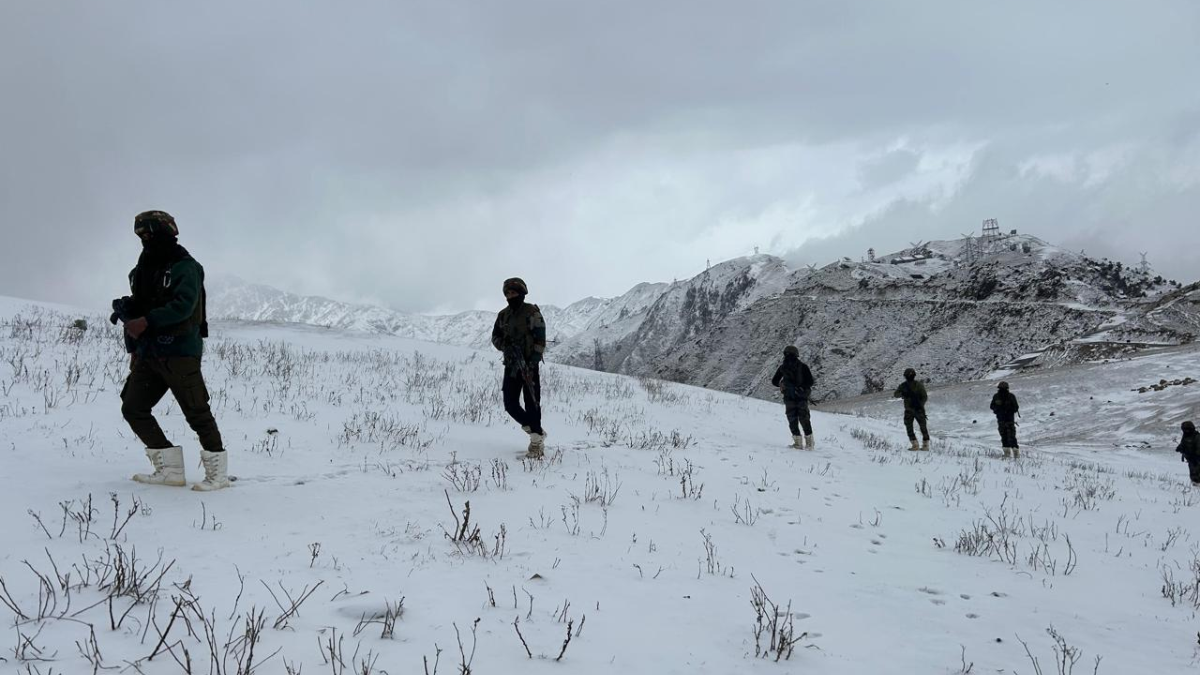
The Indian Army has intensified counter-terror operations over the past 48 hours in the Kishtwar and Doda districts of Jammu and Kashmir, expanding troop deployment and surveillance in snowbound mountain belts following fresh intelligence inputs about terrorist movement, defence sources said.
According to sources, security forces believe around 30–35 Pakistani terrorists are currently hiding in higher and mid-altitude areas of the Jammu region.
What were the security measures taken by the Indian Army?
In the last 2 days, Army units have pushed deeper into remote forested zones and ridgelines, tightening the cordon to prevent militants from exploiting winter conditions to evade detection or slip into populated areas.
The intensification comes as terrorists attempt to use heavy snowfall, extreme cold, and difficult terrain as natural cover.
With traditional local support networks weakening, intelligence agencies assess that these groups are increasingly resorting to coercion to secure food, shelter, and supplies, forcing them to keep moving through uninhabited areas to survive the winter.
How is the Indian Army countering the terrorists?
To counter this, the Army has deployed specially trained winter warfare units equipped for sustained operations in sub-zero temperatures.
Troops have strengthened their presence along snow-covered ridges and infiltration routes, maintaining constant pressure to deny terrorists safe hideouts during the harsh season.
Joint operations have been scaled up with the Jammu and Kashmir Police, Central Reserve Police Force (CRPF), Special Operations Group (SOG), Forest Guards, and Village Defence Guards (VDGs).
This coordinated approach has significantly improved real-time intelligence sharing and enabled faster, more precise action on the ground in the last 24 hours, sources said.
What is the new anti-terror doctrine the Indian Army has adopted?
The Army is operating under a “Surveillance–Swift Ops–Surveillance” doctrine, designed to prevent militants from regrouping or exploiting operational gaps.
Advanced technologies, including drone-based reconnaissance, ground sensors, and surveillance radars, are being used to detect movement, track heat signatures, and identify likely infiltration and movement corridors.
Defence officials said the current focus is on isolating and neutralising remaining terrorist groups before they can relocate closer to civilian areas.
Operations are expected to continue through the winter months to ensure terrorists are denied any opportunity to regroup or establish new safe havens in the Jammu region, reinforcing the security grid ahead of the spring thaw.