


For nearly three decades, the Indian Army’s infantry has been the spine of Kashmir’s security architecture, guarding the Line of Control (LoC), countering militancy, and enabling the return of routine life. From the 2016 surgical strikes to the 2021 LoC ceasefire reaffirmation, each phase has reshaped the region’s rhythm. Ceasefire violations have dropped sharply since 2021, infiltration attempts have been steadily foiled, and attacks within the Valley have declined.
Behind those statistics is a tangible effect: schools that stay open longer, markets that function without the constant threat of shelling, and villages that now see more tourists than troops.
This relative calm did not appear in isolation. It rests on years of continuous infantry deployment along ridgelines, night patrols through snow-bound passes, and joint operations with police that dismantled militant networks. The Army’s vigilance, often unseen, forms the baseline of whatever normalcy the Valley now experiences.
In what ways has security enabled development in harsh terrain?
Once the firing stopped along the frontier, bulldozers could move. The Border Roads Organisation has carved highways through mountains once accessible only by mule tracks. Projects such as the Bandipora–Gurez road, the Mohura–Baaz route in Uri, and the under-construction Zojila tunnel have turned military supply lines into civilian lifelines. Army engineers have thrown bridges across gorges and restored connectivity to hamlets cut off by floods.
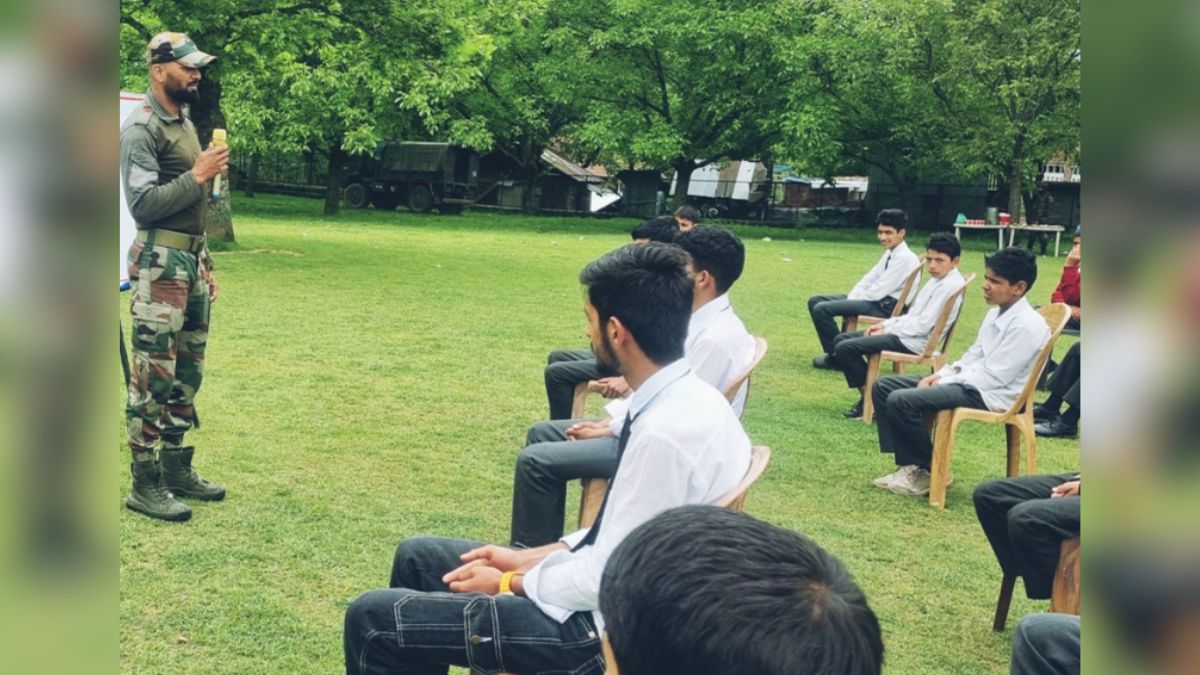
These roads have shortened the journey for traders, brought healthcare to border villages and drawn tourists deeper into the Himalayas. Schools under Operation Sadbhavana now educate thousands of students each year, while medical and veterinary camps provide services where few government doctors reach. The chain is straightforward: security allows construction crews to work; connectivity brings state institutions closer; and that presence builds confidence in the peace that the soldiers protect.
Can employment and education keep pace with the peace?
Kashmir’s challenge is no longer only about guns—it is about jobs. The same calm that enables investment also exposes the scale of unemployment among young people. Government schemes and Army-supported programmes such as the “Kashmir Super-50” coaching initiative have helped many students enter engineering and medical colleges, yet opportunity still lags behind aspiration. The risk is not a relapse into widespread violence, but quiet frustration.
That is why the security grid remains indispensable. By holding the line at the borders and keeping militancy in check within the Valley, the Army creates the breathing space in which education, enterprise and governance can function. Progress in Kashmir is incremental, often invisible, and always contingent on stability. Every road built, every classroom opened and every market revived depends first on the assurance that the silence of the hills will hold.