


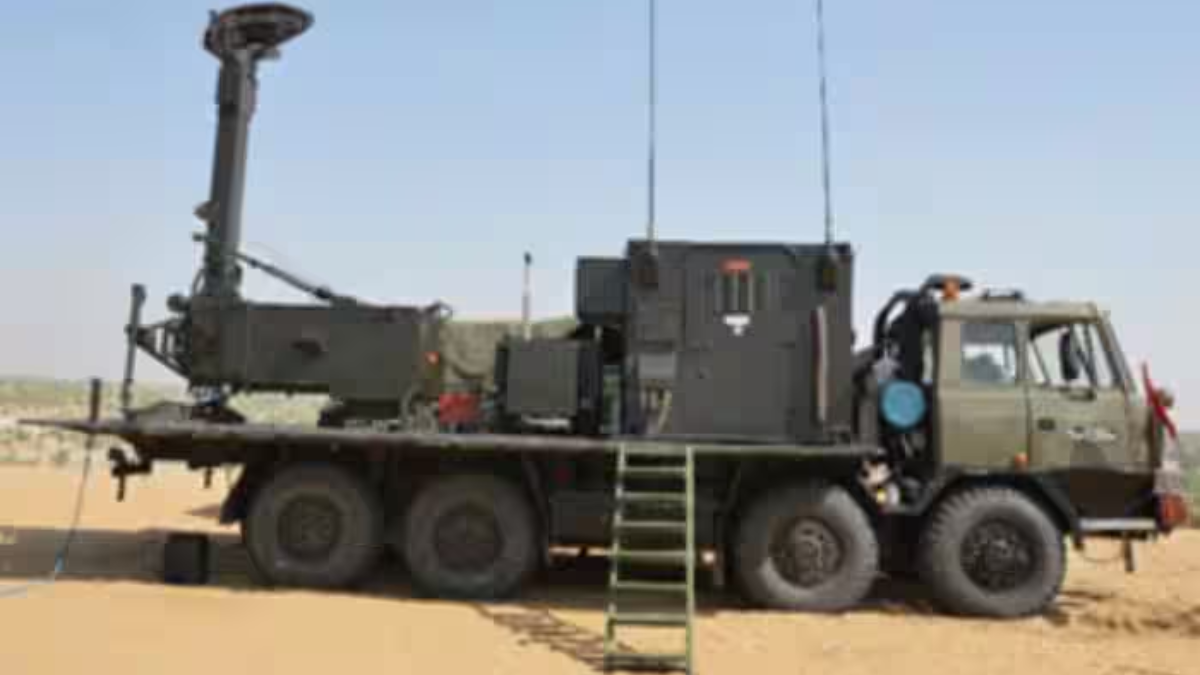
In a significant push to bolster battlefield awareness and air defence at its borders, the Ministry of Defence has initiated a fast-track process to procure specialised radars designed specifically to detect low-flying aerial threats, including small unmanned aerial vehicles (UAVs) and helicopters, at low to medium altitudes.
Under the plan, the government has issued a Request for Proposal (RFP) for acquiring 30 low-level light-weight radars (LLLRs). These systems are expected to fill persistent gaps in the Army’s existing air surveillance network by offering enhanced capability to spot and track low-signature targets that traditional, high-altitude defence radars often miss.
According to defence sources, the decision comes against the backdrop of evolving aerial threats along both the western and northern borders with Pakistan and China, where the use of small drones has grown markedly in recent years. Such platforms often fly too low and with a small radar cross-section, making them difficult to detect with legacy systems.
Officials involved in the acquisition process have emphasised that early warning from these radars will not only improve situational awareness but also give field commanders more time to deploy countermeasures, including both kinetic neutralisation and electronic warfare tactics.
The planned sensors are part of a broader effort to modernise India’s multi-layered air-defence network, an architecture that includes long-range systems as well as dedicated counter-drone and surveillance assets.