


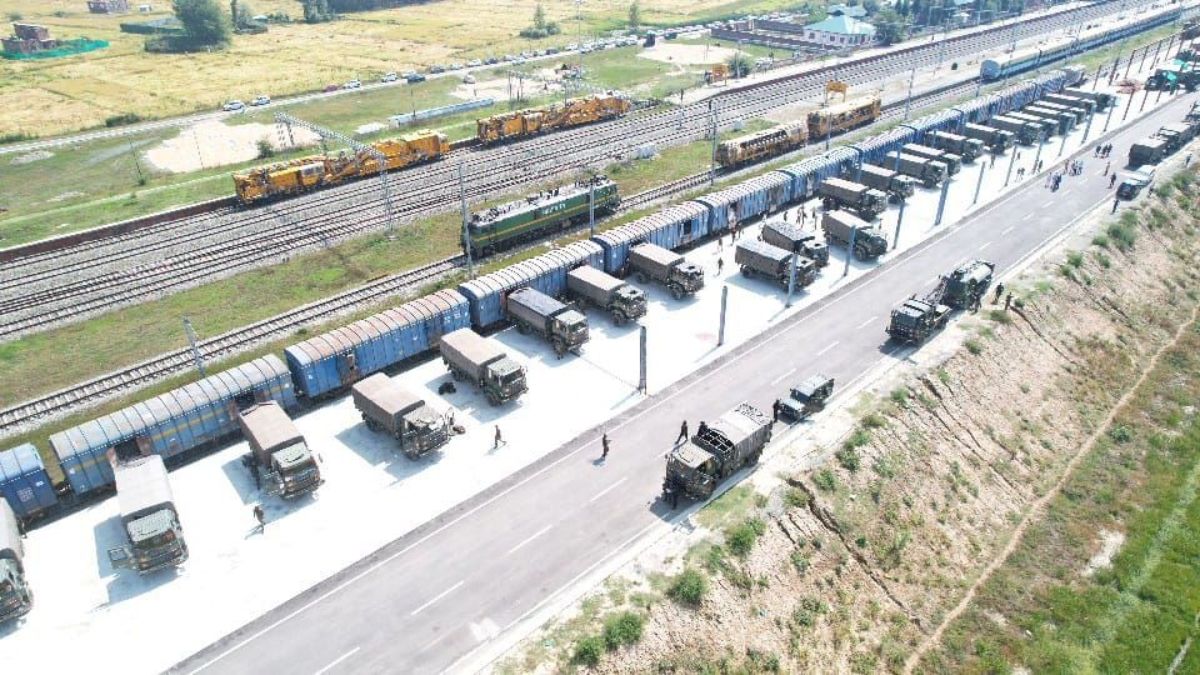
The first exclusive Army freight train reached the Kashmir Valley in mid-September, carrying nearly 750 tonnes of advance winter supplies for high-altitude posts. The same train, before returning, was loaded with apples from Pulwama to be sent across India.
Kashmir’s new rail connectivity is now serving both national security and economic needs, demonstrating how the Indian Army’s presence and infrastructure efforts continue to stabilise and develop one of India’s most sensitive regions.
How is new infrastructure changing life and security in Kashmir?
The Indian Army’s engineering wings and the Border Roads Organisation (BRO) have built and maintained much of Kashmir’s vital infrastructure. Highways, bridges, and tunnels in rugged areas of Jammu, Kashmir, and Ladakh have been constructed to enable both troop movement and civilian mobility. Projects like the Bandipora–Gurez road, the Darbuk–Shyok–Daulat Beg Oldie route, and the Zojila Tunnel have improved access to remote regions, reducing isolation and improving trade.
The newly operational Udhampur–Srinagar–Baramulla Rail Link (USBRL) represents another leap in this process. In September, the Indian Railways sent its first automobile rake to the Valley from Maruti’s Manesar plant, marking a milestone in freight connectivity. Days later, the Army ran its first dedicated freight train on the same route, ensuring winter supplies could reach frontline units before snowfall cuts off mountain passes. This dual-use infrastructure, built with defence logistics in mind, now supports economic growth — connecting Kashmiri fruit growers and manufacturers to markets nationwide.
In many sectors, Army-built or -supported infrastructure serves both military and civilian needs. Border roads used for patrols also connect schools, hospitals, and markets. The Army’s presence ensures these routes remain open and safe from sabotage. For border residents, bunkers and protective shelters built by the Army have reduced casualties during cross-border shelling. These improvements have contributed to a greater sense of security, which in turn supports normal life and commerce in vulnerable areas.
How does the Indian Army secure Kashmir while adapting to new challenges?
The Indian Army’s infantry remains central to protecting Jammu and Kashmir from both external and internal threats. Along the Line of Control (LoC), its units guard against infiltration attempts and ceasefire violations that continue sporadically despite the 2021 truce. According to recent reports, large-scale search operations were launched in late September across Rajouri and Udhampur after suspected militant activity near forward posts, underscoring the continued risk of cross-border infiltration.
This vigilance builds on two decades of experience since the Kargil War, when Pakistani troops and militants occupied strategic peaks in 1999. The Army’s response — a costly but decisive campaign to reclaim those ridgelines — reshaped India’s defence posture. Forward posts were strengthened, new roads constructed, and high-altitude warfare capability improved. Since then, operations like the 2016 surgical strikes and routine counter-insurgency patrols by Rashtriya Rifles have helped contain militant networks within the Valley.
These efforts have reduced violence and allowed governance to function even in volatile districts. The Army continues to coordinate with police and paramilitary units to conduct joint operations, ensuring civilian areas remain secure while militants are denied sanctuary.