


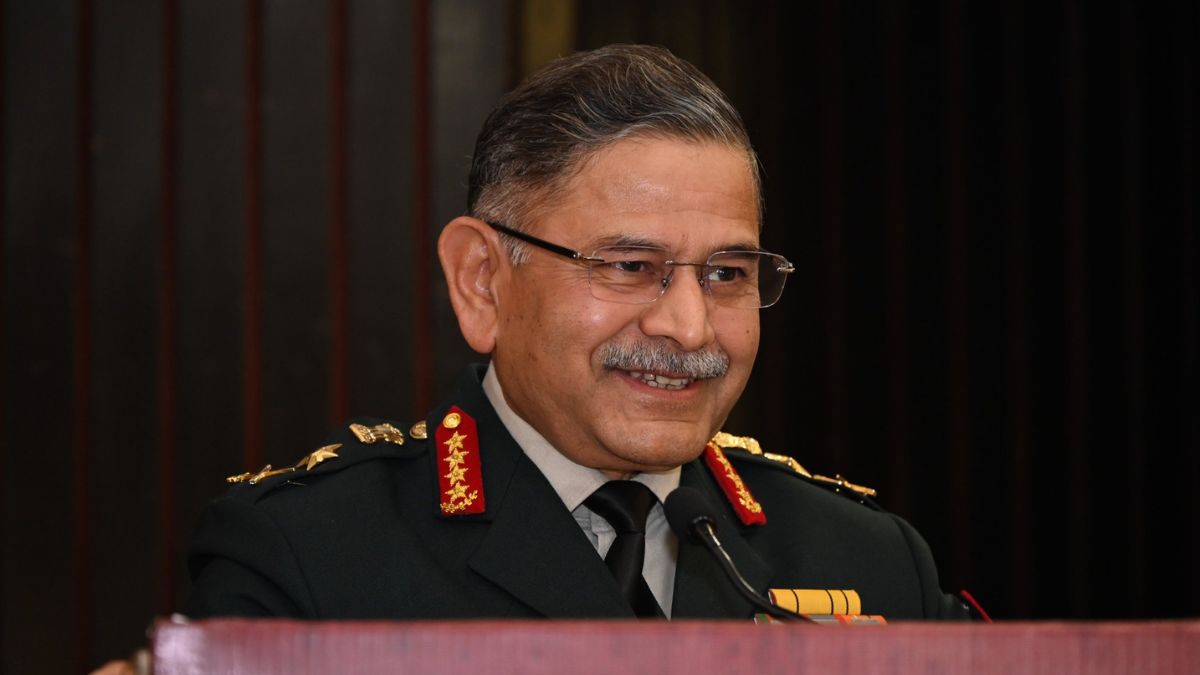
It is no secret now that the four-day military action Operation Sindoor was an immense success for India. Indian Army Chief General Upendra Dwivedi has now described it as a historic military success, underlining how the operation decisively proved India’s ability to conduct joint, swift and precision military action under real combat pressure.
Speaking at the launch of the book ‘Red Lines Redrawn: Operation Sindoor and India’s New Normal’, the Chief of Army Staff (COAS) on Thursday (January 22, 2026) said the operation dismantled long-held assumptions about India’s strategic decision-making and mobilisation timelines.
It also reflected the jointness of the Indian Armed Forces in reality, showcasing how powerful that can be.
How Operation Sindoor redefined jointness?
General Dwivedi stressed that jointness was no longer a theoretical concept debated in seminars but a battle-tested reality during Operation Sindoor. “Jointness is no longer something we aspire to do. It is something we practised under pressure, and emerged as a successful, synergistic organisation,” the Army Chief shared.
He added that the operation saw the Army, Air Force and Navy working in close coordination, delivering precision, non-escalatory strikes within a tightly controlled time frame.
Why is Operation Sindoor being called a historic success?
According to the COAS, Operation Sindoor shattered outdated perceptions about India’s military response mechanisms. “The old assumption that India requires a long time for decision-making and a long, drawn-out mobilisation cycle was quietly etched out of the window,” he said.
During Operation Sindoor, the world witnessed nine terrorist targets destroyed in just 22 minutes, with seamless coordination across the three services, a first of its kind in scale and execution for India. This also shattered the long-standing assumptions about India’s military mobilisation cycles.
Precision and narrative during the operation
General Dwivedi highlighted that credibility and truth were as critical as firepower. “The winner in the long run was the one whose narrative was based on truth and backed by credible evidence,” he noted. Televised visuals of the strikes, supported by verifiable data, reinforced India’s strategic messaging and countered adversarial propaganda during the operation.
The Army Chief also underscored the importance of the economic domain, saying government actions before, during and after the operation played a vital enabling role. However, he issued a cautionary note on long-term preparedness. “We have to be careful with our supply chains and build resilience through Atmanirbharta, which is the only solution in the long run,” General Dwivedi said.
Was India prepared for escalation scenarios?
General Dwivedi revealed that the armed forces had conducted extensive wargaming and red-team exercises to anticipate and dominate escalation scenarios. “We were fully prepared for multiple actions to dominate the complete escalation rate,” he said, signalling India’s readiness to control conflict thresholds.
The COAS said the operation marked a shift in India’s strategic posture, where swift retaliation, joint execution and controlled escalation form the new baseline.
Operation Sindoor was launched after the April 2025 Pahalgam terror attack, which killed 26 civilians. The operation targeted terrorist infrastructure in Pakistan, delivering decisive results while avoiding wider conflict.
Red Lines Redrawn: New book on Operation Sindoor
Praising Red Lines Redrawn, General Dwivedi noted that it was the first account co-authored by Army officers, an Air Force officer and a diplomat, offering a comprehensive view of the operation. He also disclosed that the plan was finalised by him on April 29–30, but deliberately kept out of public discourse until its execution.
“At 0147 hours in the MO Ops room, it was the same setting and a similar kind of organisation, the only addition was a naval colleague. Operation Sindoor was given to me on the 29th-30th of April, but it was not put out in the media,” the COAS shared.
The post-operation message, ‘Justice is Served’, went on to generate record engagement on social media.