


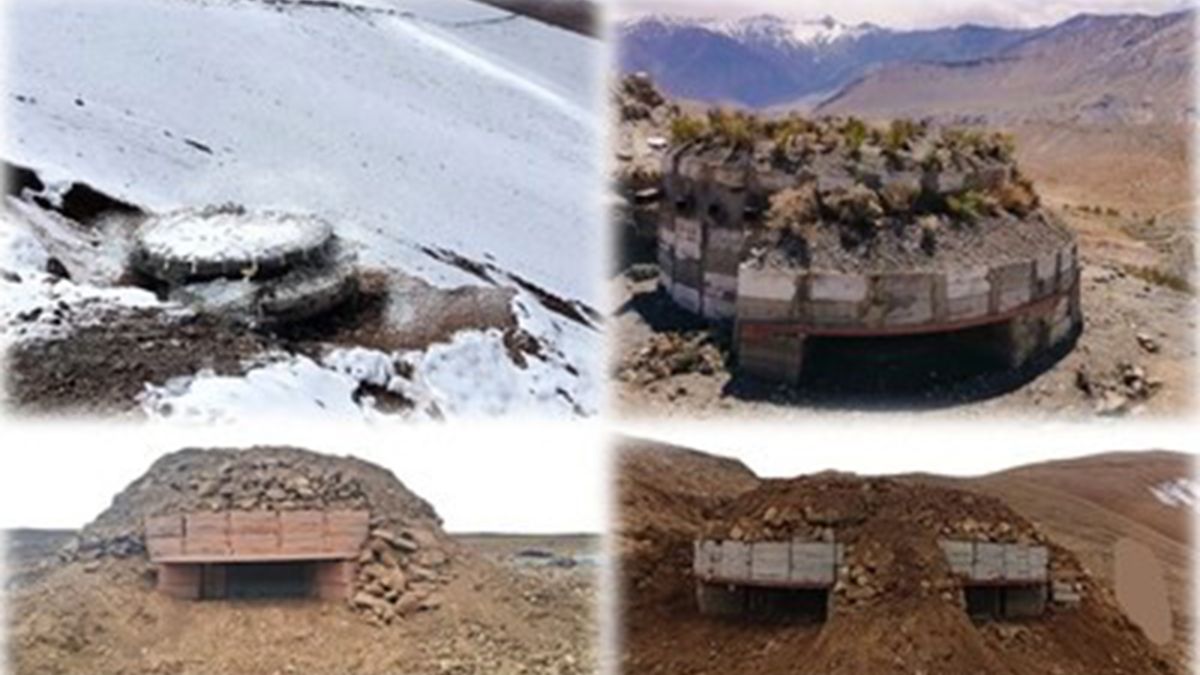
In a landmark and revolutionary achievement for India’s defence modernisation drive, over 500 impact- and blast-resistant 3D-printed bunkers have been delivered to the Indian Army by MiCoB Private Limited, a homegrown start-up specialising in rapid 3D concrete printing (3DCP).
These next-generation structures, also known as Permanent Defences (PDs), combine speed, strength, and sustainability, representing a major leap in how India prepares for border challenges and conflict-zone deployment. These 3D printed bunkers provide superior protection, comfort, and durability while meeting stringent military standards. for ballistic resistance, speed of execution and thermal insulation.
MiCoB’s 3D Printed Bunkers (3D PDs) were first successfully tested in Pokharan three years ago in 2022. The 3D PD was tested under a series of weapons. Most powerful weapon of them was T90 tank. After that, MiCoB’s 3D PDs have been tested successfully multiple times at different geo-climatic conditions.
3D-printed bunkers: What makes them revolutionary?
Traditional bunkers often take over a month to construct, limiting quick response in operational zones. MiCoB’s 3D-printing process reduces this timeline from 45 days to under seven, allowing the Army to build and deploy fortified shelters within a week giving a decisive edge during sudden escalations or high-risk operations.
The automated process also ensures uniform structural strength, enhanced precision, and reduced human exposure in hazardous conditions during construction.
How strong are these 3D bunkers in real combat conditions?
The innovation isn’t just about speed but also about survivability. The 3D-printed bunkers were tested at the Pokhran range in 2022, where they withstood direct hits from a T-90 main battle tank, proving their ability to absorb high-calibre impacts. Subsequent field trials across varied terrains, from the icy Himalayan heights to arid desert outposts, validated their resilience against extreme temperatures, heavy shelling, and harsh weather.
Designed in close coordination with the Indian Army’s engineers, each bunker provides superior protection, better insulation, and greater troop comfort, which are some critical factors in forward-deployed units. By enabling rapid fortification of sensitive zones, these structures will help the Army adapt faster to evolving threats.
The 3DCP technology also enhances sustainability, thereby reducing material waste, manpower dependency, and environmental impact, while allowing on-demand construction near border sites.
What does this mean for India’s defence innovation ecosystem?
MiCoB’s success reflects India’s Atmanirbhar Bharat (self-reliance) vision in defence technology. The delivery of more than 500 bunkers signals a shift from conventional infrastructure to digital-driven, scalable solutions designed for modern warfare conditions.
“Delivering these bunkers is not just a technological milestone—it’s about turning innovation into protection,” said Shashank Shekhar, co-founder and CEO of MiCoB. “Each structure enhances safety, comfort, and readiness in the toughest terrains.”
With proven results and rapid deployment capability, 3D-printed fortifications could soon become standard components of the Army’s defensive strategy along sensitive frontiers. By turning cutting-edge construction into a combat multiplier, India has taken a decisive step toward digitally engineered defence resilience.