


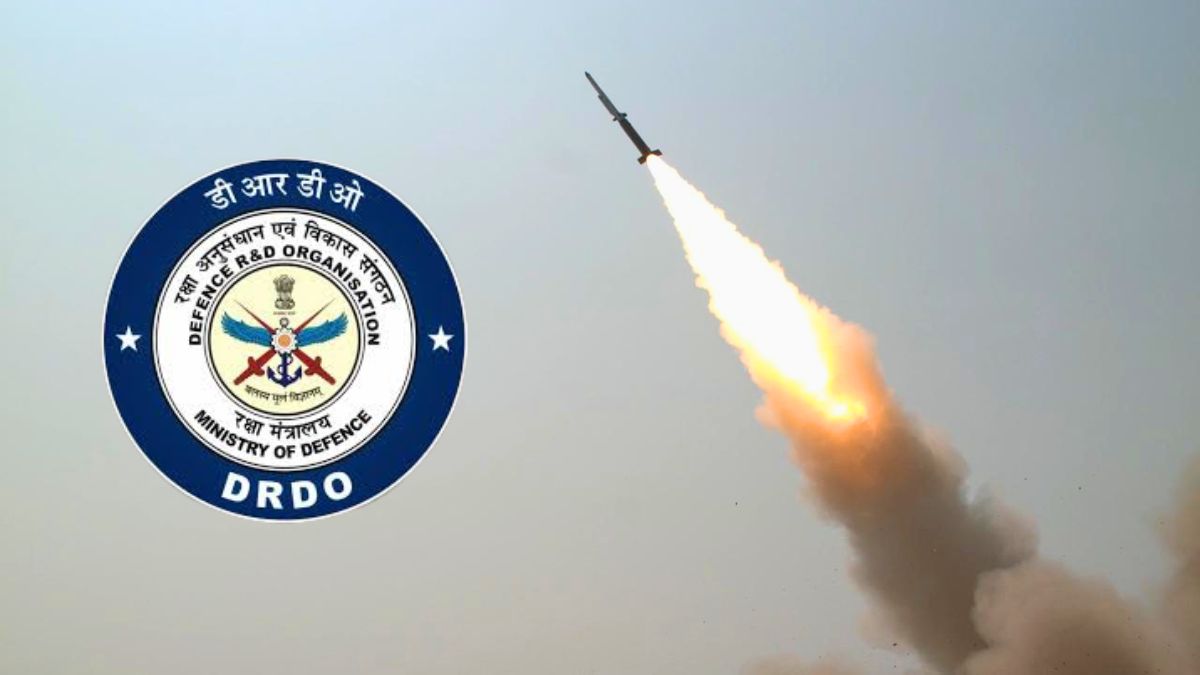
India has taken a significant step forward in advanced missile propulsion with the successful test of Solid Fuel Ducted Ramjet (SFDR) technology by the Defence Research & Development Organisation (DRDO). The demonstration was conducted at the Integrated Test Range (ITR), Chandipur, off the Odisha coast at around 10.45 am on Tuesday (February 3, 2026).
Notably, this test places India among a select group of nations capable of mastering ramjet-powered missile systems. With this success, India has crossed a critical technological threshold essential for developing next-generation, long-range air-to-air missiles.
Is ramjet technology hard to master?
A ramjet is an air-breathing engine that relies on the missile’s forward motion to compress incoming air, eliminating the need for complex rotating components found in conventional jet engines. This simplicity, however, comes with extreme engineering challenges, particularly maintaining stable combustion at supersonic speeds.
In a Solid Fuel Ducted Ramjet, solid fuel is burned in a controlled manner as atmospheric air flows through the engine, generating sustained thrust at very high velocities. Only a handful of countries have been able to perfect this balance between airflow, fuel combustion and thermal management.
How is SFDR different from traditional rocket motors?
Conventional rocket motors burn their fuel rapidly and then coast, leading to a steady loss of energy as the missile closes in on its target. SFDR-powered missiles, by contrast, can maintain high speeds for a much longer duration, especially during the terminal phase of flight.
This sustained thrust makes such missiles faster, more agile and far harder to evade, giving defending aircraft very little reaction time.
How was the test conducted?
During the Chandipur trial, the missile system was initially accelerated by a ground-based booster to reach the required Mach number. Once this threshold was crossed, the ramjet system ignited and took over propulsion, validating the seamless transition between stages.
DRDO said all key subsystems, including the nozzle-less booster, the solid fuel ducted ramjet motor, and the fuel flow controller, performed exactly as designed.
How was performance verified?
The missile’s flight was tracked using multiple sensors and instruments deployed along the Bay of Bengal coastline. Data collected during the test confirmed the successful operation of both the propulsion and control systems, marking a decisive validation of the technology.
Senior scientists from several DRDO laboratories including the Defence Research & Development Laboratory (DRDL), High Energy Materials Research Laboratory (HEMRL), Research Centre Imarat (RCI) and IT, closely monitored the mission.
How would it boost India’s air combat capability?
The strategic implications are substantial as ramjet-powered air-to-air missiles allow fighter aircraft to engage hostile targets at much longer ranges while retaining high energy at impact. This translates into a decisive advantage in beyond-visual-range (BVR) combat, enabling pilots to strike earlier and from safer distances.
In modern aerial warfare, where the first credible shot often determines the outcome, this capability is a force multiplier.
Meanwhile, the test not only puts India among an elite group of nations to possess this technology byt also reduces dependence on foreign suppliers, strengthens indigenous missile development, and reinforces the country’s ambition to become a self-reliant defence technology power.