



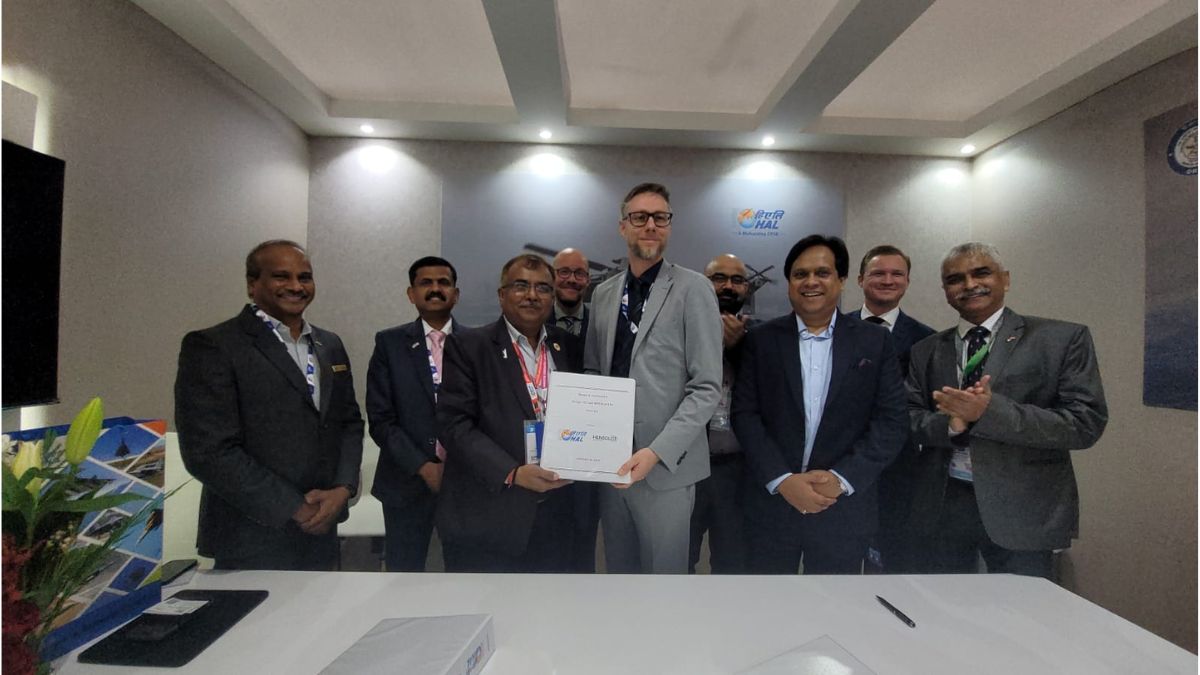
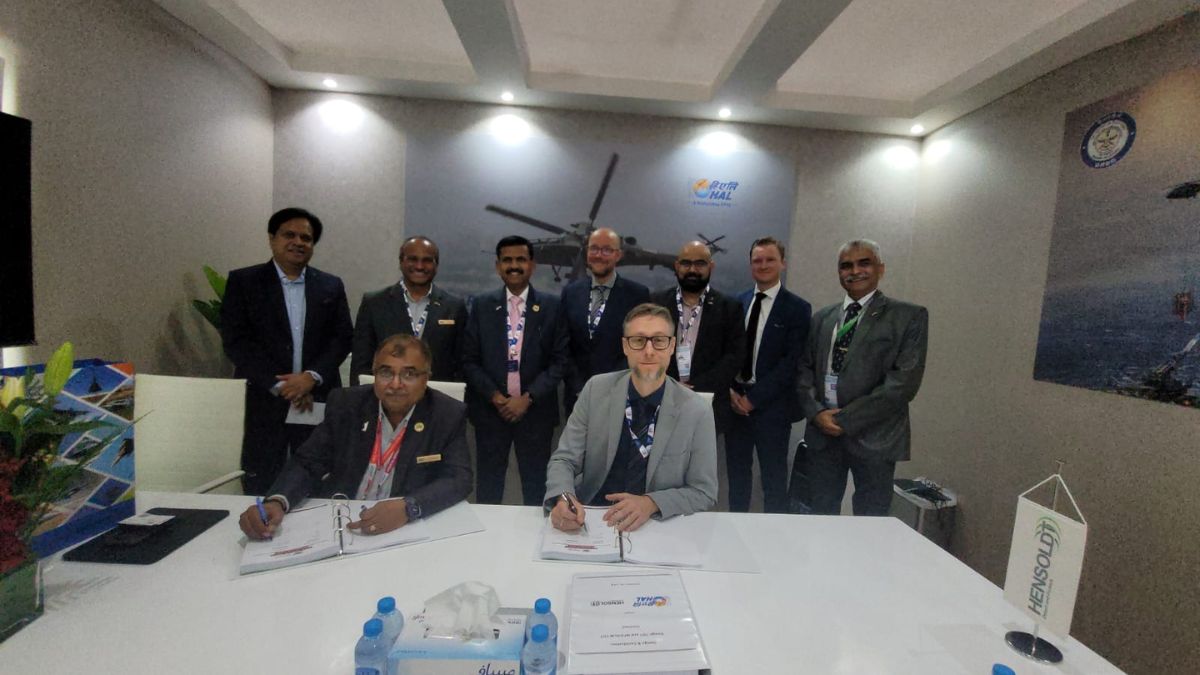
A new agreement unveiled at the Dubai Airshow 2025 is set to bring a major safety upgrade to India’s indigenous helicopter fleet, with engineers from Hindustan Aeronautics Limited (HAL) and German sensor firm HENSOLDT joining forces to co-develop an advanced obstacle-avoidance system.
The deal comes as India’s locally built helicopters — including the LCH Prachand attack helicopter and the ALH Dhruv — draw growing interest from foreign operators looking for rugged, multi-role airframes at competitive cost. New Delhi sees the partnership as strengthening both frontline capability and the broader ambitions of “Make in India” and “Make for the World”.

Why does India need a terrain-proof safety suite?
Indian military helicopters operate in some of the most punishing conditions anywhere. Crews flying in Ladakh and Siachen contend with thin air, steep gradients and snowbound surfaces that wipe away depth perception. In the Northeast, thick canopy, monsoon turbulence and sudden cloud build-up can narrow reaction time to seconds.
Further west, dust, haze and saline air over coastal belts regularly degrade visibility. Traditional tools — night-vision goggles, thermal imagers and conventional sensors — help, but they struggle to spot the thin wires, poles and abrupt terrain features that have caused fatal crashes worldwide.
The new system aims to close that gap. HAL and HENSOLDT will integrate a LiDAR-based Obstacle Avoidance System capable of scanning ahead in real time and identifying hazards that are often invisible to pilots. HENSOLDT’s SferiSense sensor, which uses a patented fibre-scanner design, projects a uniform laser pattern and can detect obstacles more than a kilometre away. Company data puts its early-warning detection probability above 99 per cent, even within the first second of scanning.
Unlike radar, LiDAR can pick up thin cables whether the helicopter is approaching them head-on or flying parallel — a long-standing challenge in low-level operations. The sensor’s returns are fed into an onboard processor that filters clutter, stabilises the signal and plots obstacles onto a 3D coordinate frame that remains accurate even when the aircraft is pitching or banking.
The package is paired with a DVE (Degraded Visual Environment) computer supplying synthetic terrain views and conformal symbology on helmet displays and cockpit screens. Pilots receive cues mapped directly onto their field of view, easing workload during brownouts, whiteouts and low-visibility approaches.
How does co-development model fit with export ambitions?
Unlike a straightforward import purchase, the programme is being pursued as a built-to-spec collaboration. Engineers from both sides will refine the parameters to match India’s varied mission profiles — high-altitude insertions, maritime patrols, jungle operations and desert flying among them.
The agreement includes transfer of technology and intellectual property rights, enabling HAL to manufacture, integrate and sustain the system domestically and, crucially, to export it.
For HAL, this offers more than an avionics upgrade. The state-owned manufacturer has been courting clients from Argentina to Mauritius, Nepal and the Philippines — countries that have evaluated Indian platforms for roles ranging from coastguard patrol to utility lift. A factory-fitted safety suite built to international standards could make these aircraft far more competitive on the global market.
For India’s armed forces, the system promises improved survivability in terrain where a moment’s misjudgment can prove catastrophic. For India’s aerospace industry, it signals another step in building technology partnerships that strengthen domestic capability while widening export horizons.