


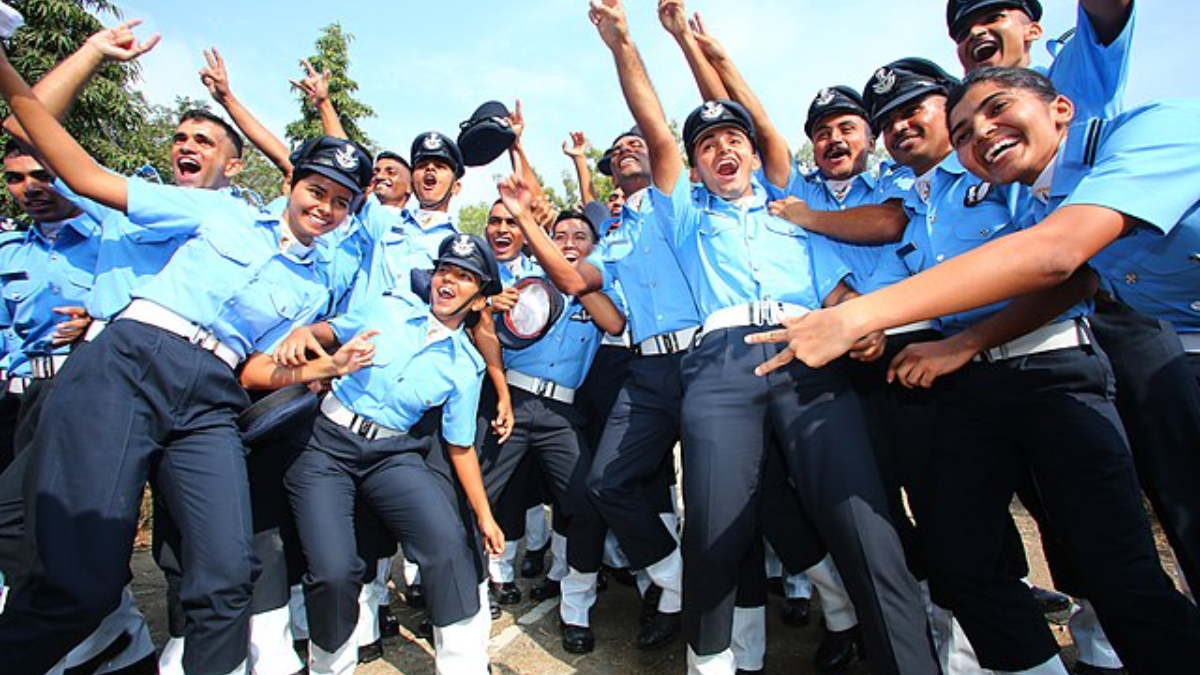
The Indian armed forces are today becoming a major career option for women, with roles from operational duties to leadership positions open to them, the Ministry of Defence said on Sunday (March 8, 2026).
On the occasion of International Women’s Day, India’s defence establishment offers an opportunity through “expanding roles and rising leadership of women” in the armed forces, it said.
“Over the past decades, their (women) integration has emerged as one of the most significant institutional transformations in India’s defence sector,” it said.
“From a historically limited presence largely confined to medical and nursing roles, women’s participation has steadily expanded through progressive policy reforms, judicial support, and sustained institutional efforts aligned with national goals of gender equity and operational inclusivity.”
“Today, women officers are increasingly undertaking commanding, strategic, and decision-making responsibilities across the Army, Navy, and Air Force, marking a new era of inclusivity, professionalism, and strengthened operational capability in India’s defence forces,” it said.
How history is witnessing a transformation
Women’s journey in India’s military began modestly in 1958 when women doctors were granted permanent commission on par with their male counterparts.
In the early decades after independence, their participation was largely confined to medical and nursing services.
However, the real breakthrough occurred in 1992. That year, the Indian Army introduced the Women’s Special Entry Scheme, enabling women to serve as officers in non-combat branches.
Simultaneously, the Indian Navy began inducting women officers, while the Indian Air Force commissioned women under the Short Service Commission in flying, technical, and non-technical branches.
These reforms marked a decisive shift in India’s military policy, laying the groundwork for expanding opportunities for women across the armed forces.
How the number of women in the armed forces grew
Over the past decade, the integration of women into the military has accelerated significantly.
“The number of women officers has risen from around 3,000 in 2014 to over 11,000, supported by expanded training opportunities and greater institutional inclusion,” the Ministry of Defence said.
Women officers are now eligible for Permanent Commission in multiple branches of the Indian Army, allowing them to pursue long-term careers and compete for leadership positions, including promotion to the rank of Colonel.
The Indian Navy has also taken major steps toward operational integration. Women officers are now deployed on board warships, serve as naval pilots, and operate in Naval Air Operations roles.
The Navy has opened almost all branches to women officers and Agniveers, except submarines, making it the first service to recruit women under the Agnipath scheme.
Meanwhile, the Indian Air Force has emerged as a pioneer in combat integration. After initially inducting women pilots in combat support roles in the 1990s, the Air Force introduced women into fighter streams on an experimental basis in 2015.
In 2022, this initiative was formalised as a permanent scheme, enabling women to serve as fighter pilots on equal footing with men.
Why do women have a career option in the armed forces now
Women cadets have also begun entering the National Defence Academy following a landmark policy decision in 2022.
By early 2026, 158 women cadets had joined the academy, marking a new era in officer training.
Women officers are increasingly representing India in operational missions, international engagements, and symbolic leadership roles.
A notable example was the 2025 tri-services all-women sailing expedition, where officers from the Army, Navy, and Air Force sailed 1,800 nautical miles to Seychelles aboard the indigenous vessel Triveni.
The mission demonstrated operational capability and joint-service coordination among women officers.
Their growing presence was also visible during the 77th Republic Day celebrations, when the Indian Air Force inducted women Agniveervayu into its ceremonial band, while Flight Lieutenant Akshita Dhankar unfurled the national flag alongside the President.
What government commitment reflects this change
The expanding role of women in the Indian Armed Forces reflects a broader commitment to gender equality and operational excellence.
As more women enter combat roles, command positions, and elite training institutions, the military is evolving into a more inclusive and capable force.
With institutional reforms continuing and opportunities widening, women are no longer just participants in India’s defence story; they are increasingly shaping its future.