


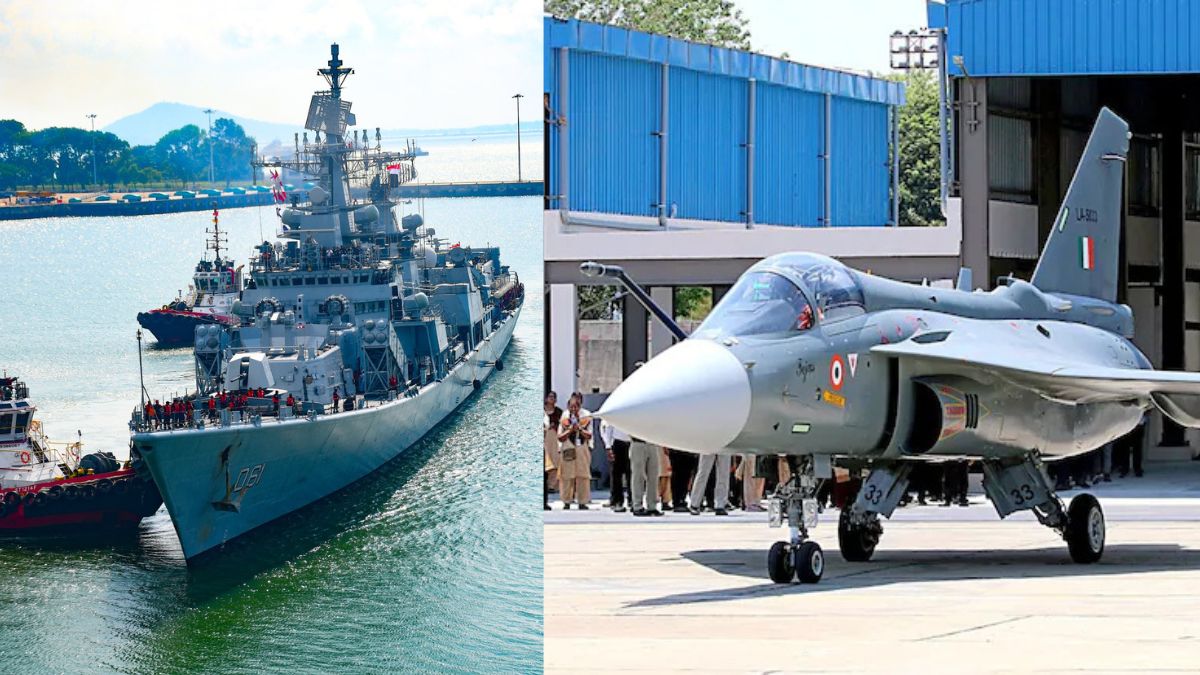
Indigenous defence production has underwent an astronomical shift in the past decade, led by Prime Minister Narendra Modi’s Atmanirbharta policies. Make in India defence production hit a record Rs 1,27,434 crore in the financial year 2023-24, marking a significant 174% surge from Rs 46,429 crore in 2014-15.
For the financial year 2024-25, the indigenous defence production number got even bigger, recording a historic breakthrough. India achieved its highest-ever defence production value of Rs 1.54 lakh crore, a milestone that reflects a decade of sustained reforms, massive investments, and an unwavering push for self-reliance.

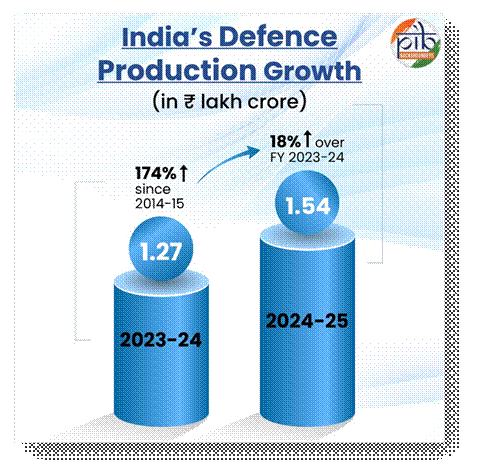
This upward ascent is only continuing. With India now firmly on course to touch the Rs 1.75 lakh crore production target this fiscal, the indigenous defence industry has moved from aspiration to global competitiveness. Much of this growth has been driven by over 16,000 MSMEs, which have emerged as the backbone of India’s manufacturing ecosystem.
How India achieved its highest-ever defence production?
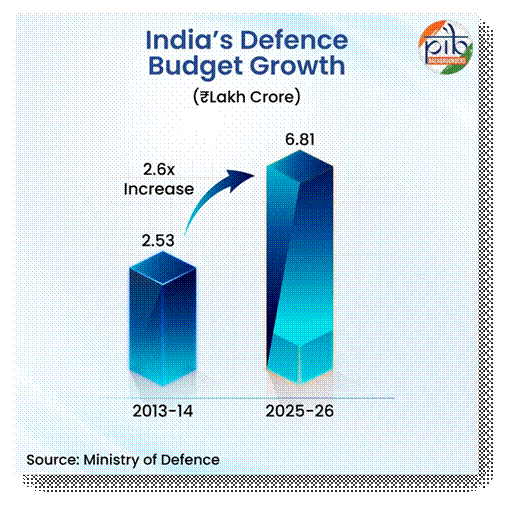
The transformation is rooted in deliberate, long-term changes. The defence budget’s expansion from Rs 2.53 lakh crore in 2013–14 by nearly 3 times to Rs 6.81 lakh crore in 2025–26 demonstrates the government’s intent to build a formidable military-industrial base. Both the public and private sectors have responded with consistent growth, aided by easier regulatory processes, indigenisation mandates, and the push for Aatmanirbharta.

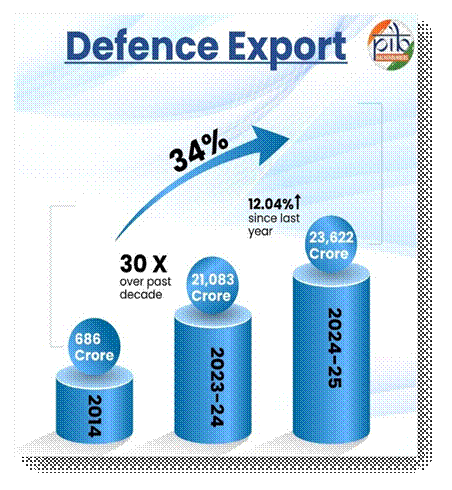
The shift is visible in India’s global footprint as well. The nation now exports defence equipment to more than 100 countries, including major partners like the United States, France and Armenia. Defence exports have soared to a record Rs 23,622 crore in 2024–25, a staggering rise from under Rs 1,000 crore a decade ago.
How are DPSUs and private firms reshaping India’s defence ecosystem?
Defence Public Sector Undertakings (DPSUs) continue to contribute the lion’s share at 77% of the total defence production. But the private sector is rapidly gaining ground, increasing its contribution from 21% in 2023–24 to 23% in 2024–25. This shift marks a notable diversification in the defence ecosystem.
Moreover, India’s defence exports climbed by 12.04% over last year, reflecting the sector’s rapidly expanding international market. With an ambitious goal of achieving Rs 3 lakh crore in production and Rs 50,000 crore in exports by 2029, India is positioning itself as a future global defence manufacturing hub.
Aatmanirbharta in defence: What policy shifts unlocked this transformation?
Before the sweeping reforms of the past decade, India faced a stagnant procurement system, excessive import dependence and minimal private sector participation. The Defence Production and Export Promotion Policy (DPEPP) changed this trajectory. It laid out an integrated roadmap for boosting R&D, fostering innovation, opening technology access, supporting MSMEs, and setting bold export targets.
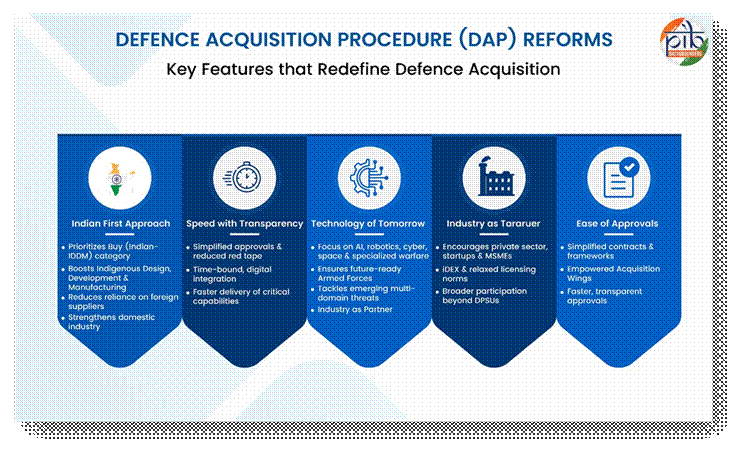
Anchored in the vision of Aatmanirbhar Bharat, the government launched a series of reforms to build a self-reliant, globally competitive defence industry. These include streamlined Defence Acquisition Procedures (DAP), liberalised FDI norms up to 74% (and 100% through government approval), and a Rs 1 lakh crore RDI Scheme to support collaborative innovation.
Some of the key features that redefine acquisition include an Indian first approach; speed with transparency; technology of Tomorrow; industry as partner; ease of approvals.

How defence corridors become the new growth arteries?
The Defence Acquisition Procedure (DAP) 2020 and Defence Procurement Manual (DPM) 2025 now form the backbone of a modernised procurement ecosystem. Together, they ensure transparency, speed and innovation in both capital and revenue procurements. Supplementing these reforms are two transformative Defence Industrial Corridors in Uttar Pradesh and Tamil Nadu.
Together, they have attracted investments worth over Rs 9,145 crore and unlocked opportunities valued at more than Rs 66,423 crore. As of October 2025, 289 MoUs have been signed, converting these corridors into fast-growing engines of manufacturing and employment.
India’s business environment for defence has also become more attractive. With 788 industrial licences issued to 462 companies, industry participation has expanded significantly. A fully digital export authorisation portal has streamlined clearances, achieving 1,762 approvals in 2024–25, a 16.92% rise from the previous year.
Defence self-reliance: Why record production is being seen as a turning point?
The Ministry of Defence sealed a record 193 contracts worth Rs 2,09,050 crore in 2024–25, the highest ever. Remarkably, 177 of these, amounting to Rs 1,68,922 crore, were awarded to the domestic industry. This marks the clearest shift yet in favour of Indian manufacturers and reflects a deepened trust in indigenous capabilities.

From industrial corridors to defence export facilitation, every reform underscores that India is not merely reducing its dependence on foreign suppliers, it is building a resilient, technology-driven defence ecosystem capable of powering national security and establishing the country as a trusted global partner in military manufacturing.
India has achieved the highest-ever growth in indigenous defence production in value terms, reflecting the success of government initiatives such as the Aatmanirbhar Bharat Abhiyan, positive indigenisation lists, and strategic partnerships with the private sector. The emphasis on Make in India and the creation of a robust R&D and start-up ecosystem have further accelerated this.