


India has restructured the role of its defence attaches abroad, asking them to focus more on arms export to nations likely to be interested in buying weapons and military systems from it.
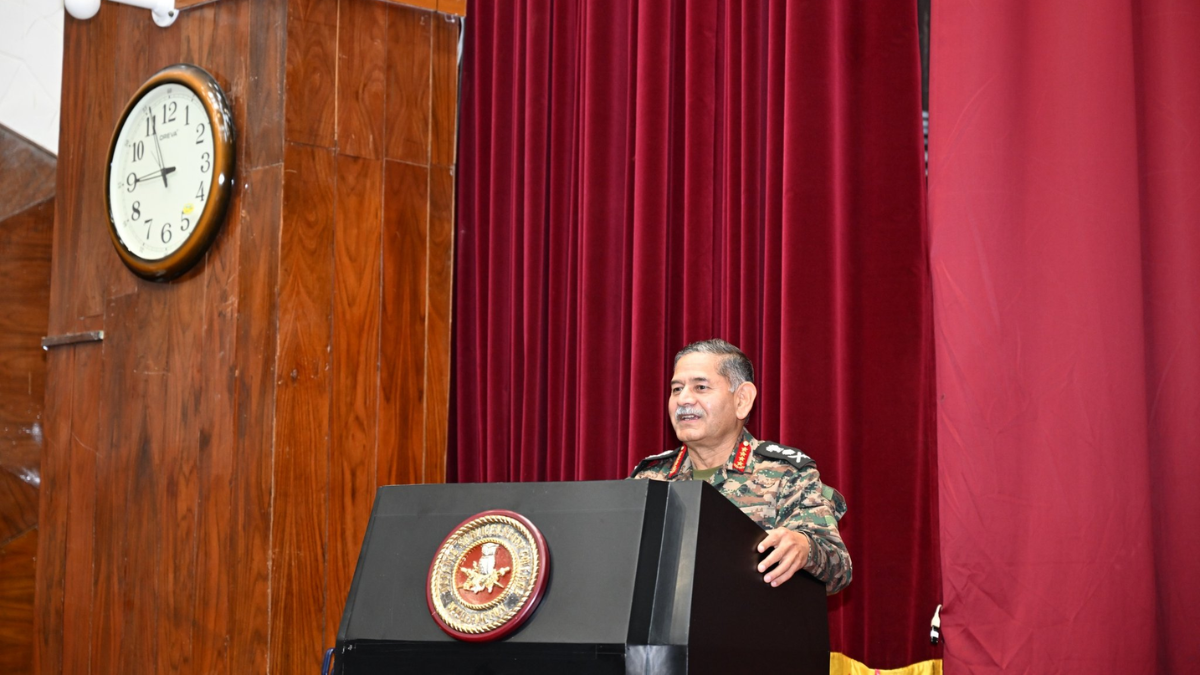
Chief of Defence Staff General Anil Chauhan, in a briefing to the Parliamentary Standing Committee on Defence, informed that the defence attaches’ role was reworked to help boost India’s arms exports.
“As far as the role of military diplomacy is concerned, it is a new thing, and to play the role of an exporter, we have reshuffled our defence attaches,” General Chauhan informed the parliamentary panel recently.
“There were a large number of attaches in the countries (from) which (we) were importing equipment. They have been withdrawn and now have been distributed to those countries where defence equipment is likely to be exported,” he added.
General Chauhan told the panel that the defence attaches were clearly instructed to represent both the Defence Public Sector Undertakings and the private sector defence firms, as India’s representative in foreign countries.
This reshuffle happened in phases and would help India meet its defence export targets, according to Ministry of Defence officials, aware of the matter. India has set a target of Rs 50,000 crore defence exports by 2030. Its defence exports had touched Rs 23,682 crore in the financial year that ended March 2025, a 12% increase over FY24.
The details of the defence attaches being reshuffled were part of the report of the Parliamentary Standing Committee on Defence tabled in Parliament last week.
The reshuffle would mean India has withdrawn defence attaches from nations such as Russia, France, Israel, and the US, which are the top four defence suppliers to New Delhi, while increasing the number of nations, such as those in Southeast Asia, Latin America, and Africa, that have shown interest in buying Indian arms.
Between 2021 and 2025, Russia was India’s top arms supplier, accounting for 40% of the nation’s weapons imports, followed by France with 29% share and Israel with 15% share in the defence supplies to India during the same period.
India, on the other hand, supplied weapons and military hardware to nearly 100 nations globally in 2024-25. India’s state-run defence companies and private firms, numbering cumulatively over 100, contributed Rs 15,233 crore and Rs 8,389 crore, respectively, in defence exports during that fiscal.
India’s arms exports included missiles, artillery guns, rockets, armoured vehicles, offshore patrol vessels, personnel protection gear, radars, surveillance systems, ammunition, defence components, military systems, and sub-systems.
India has previously exported its Advanced Light Helicopter (ALH) to a few nations and also participated in a Malaysian tender for combat aircraft with its Tejas Light Combat Aircraft.
Both these military aviation platforms have a huge potential in the export market, India has assessed, after several nations from Southeast Asia, Latin America, and Africa expressed interest in assessing capabilities.
In recent years, India has been successful in exporting its Pinaka rockets and the Indo-Russian joint venture BrahMos supersonic cruise missiles to European and Southeast Asian nations.
The Indian government had issued 1,762 export authorisations in FY25, compared to 1,507 in FY24, a growth of nearly 17%, according to official data. The number of exporting companies also increased by over 17% between the two fiscals.
SIPRI data, released earlier this month, showed that Indian arms imports fell 4% between 2016-20 and 2021-25. Yet, India continued to remain the second largest weapons importer in both five-year periods. India accounted for 8.2% of the global weapons import in the 2021-25 period, the SIPRI report said.