


India has taken a decisive leap into next-generation warfare with a breakthrough hypersonic technology milestone.
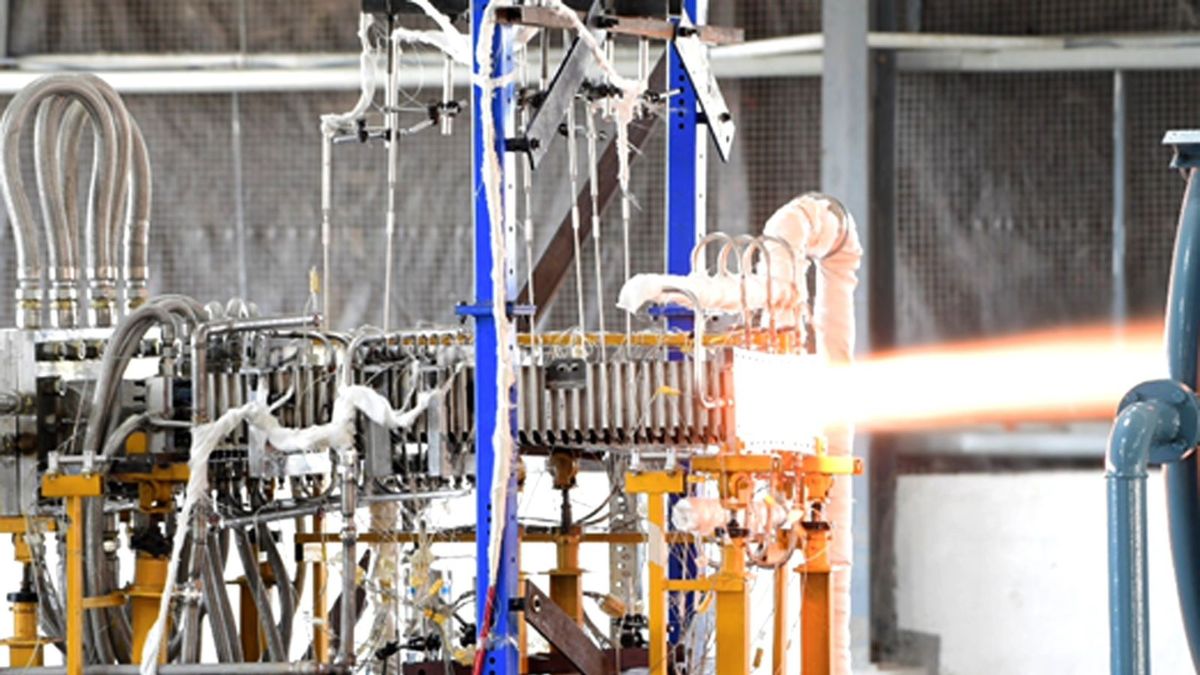
The Defence Research & Development Laboratory (DRDL), a key Hyderabad-based lab under DRDO, has successfully conducted a long-duration ground test of its full-scale actively cooled scramjet combustor, achieving an unprecedented runtime of over 12 minutes, according to a PIB statement.
What has the DRDL achieved with the test?
The test was carried out on January 9, 2026, at the advanced Scramjet Connect Pipe Test (SCPT) Facility, marking a major boost to India’s Hypersonic Cruise Missile programme.
This achievement builds on an earlier subscale long-duration test conducted in April 2025 and validates India’s ability to sustain supersonic combustion over extended periods, a critical requirement for hypersonic weapons capable of flying at over Mach 5 (6,100 km/h).
What is a Scramjet engine and its technological leap?
The scramjet engine, an air-breathing propulsion system, enables long-range, high-speed flight while remaining extremely difficult to detect and intercept.
Both the combustor and the SCPT facility were indigenously designed by DRDL and realised with support from Indian industry partners, underlining the growing maturity of India’s defence-industrial ecosystem.
India’s Defence Minister Rajnath Singh hailed the test as a “solid foundation” for India’s hypersonic ambitions, while DRDO Chairman Dr Samir V Kamat congratulated the teams for positioning India at the forefront of advanced aerospace and strategic missile technologies