


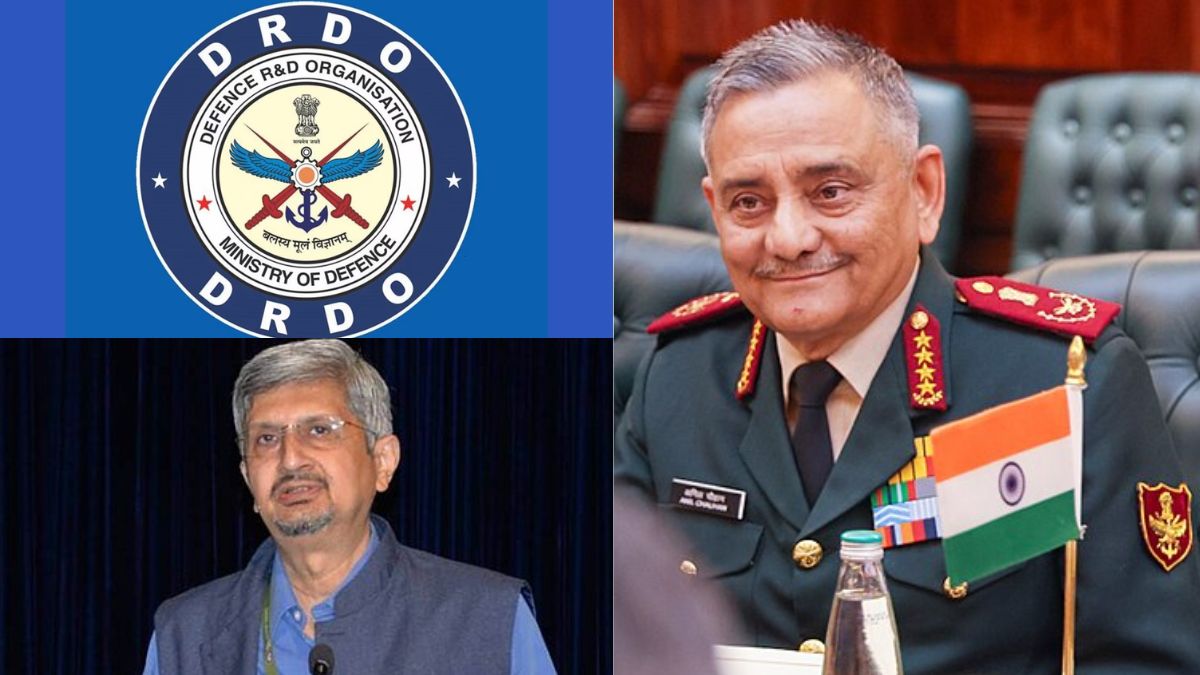
India’s Chief of Defence Staff General Anil Chauhan on Thursday (April 23, 2026) emphasised space as a strategic domain in future warfare, while DRDO Chief Samir V. Kamat called for a ‘whole of the nation’ approach to plug gaps in space capabilities in the military.
In a virtual presentation at the Indian DefSpace Symposium of the Indian Space Association, General Chauhan said, “If we fail in space, we will be forced to fight blind. However, if we dominate in space, we will fight with foresight.”
He said, “Technology is no longer just an enabler. It’s reshaping the very calculus of power. In this emerging paradigm, space is no longer a support function. It’s a strategic field that influences defence, escalation control, and war-fighting outcomes.”
As reports emerged that Iran had integrated China’s Beidou navigation satellite system to boost its missiles’ and drones’ accuracy to target the US and Israel military, the CDS said, “Space has evolved into a derivative capability, where services generated by one nation can be leveraged by multiple actors, state as well as non-state, alike.
“This fundamentally affects the application of military force, as is evident in the Iran-US-Israel conflict…This democratisation of space capability is both an opportunity and a strategic vulnerability.”
At the same event, Samir V. Kamat called for a “whole-of-nation” approach to close India’s capability gap with rivals whose space programmes are expanding at an alarming pace.
Kamat, however, stressed that catching up will be a “Herculean challenge” without greater investment and collaboration. While ISRO remains the lead agency for the civilian space programme, Kamat said DRDO has been entrusted with addressing military aspects of space after the formation of the Defence Space Agency.
Kamat made it clear that while some “space technologies can still be sourced from abroad, several areas remain restricted and require indigenous development.”