


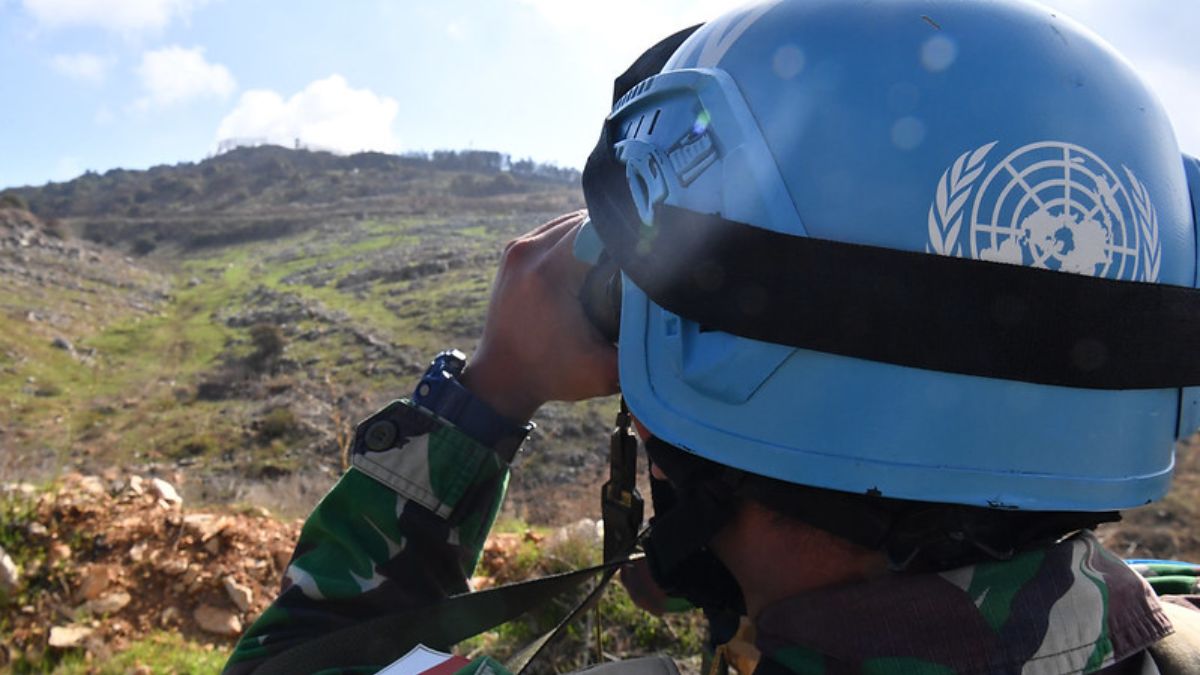
Israel might have started fighting on its eastern front last month, when it launched coordinated strikes with the US on Iran, but it has been engaged in a long-drawn fight on its Western front with Hezbollah. While many civilians have been killed in the conflict, the Israel-Hezbollah conflict took a troubling turn recently as multiple United Nations peacekeepers were killed in southern Lebanon.
It goes without saying that the deaths of UN peacekeepers in the region triggered strong international condemnation and urgent diplomatic action. As questions mount over responsibility, India and France have led calls for accountability, even as Israel has denied any involvement following an internal probe.
What led to the deaths of UN peacekeepers in Lebanon?
In a span of just 48 hours, at least three UN peacekeepers, reportedly from Indonesia, lost their lives in separate explosions across southern Lebanon. Two were killed when an explosive device destroyed their vehicle near Bani Hayyan, while another died after a projectile struck a UNIFIL position near Adchit Al Qusayr.
Several others were injured, including one critically, highlighting the growing dangers faced by UN personnel deployed in volatile conflict zones. The incidents coincided with intensified military activity following Israel’s decision to expand ground operations against Hezbollah.
What has Israel said about the incident?
Amid rising global concern, the Israel Defense Forces (IDF) conducted an internal review and categorically denied any involvement in the deadly explosion near Bani Hayyan. According to the IDF, no Israeli troops were present in the area at the time, nor had they placed any explosive devices there.
In a post on X, the IDF said, “Over the past day, the IDF completed its review of the incident yesterday, in which it was reported that UNIFIL troops were killed by the explosion of an explosive device in the Bani Haiyyan area in southern Lebanon.” It added that a “comprehensive operational examination” into the explosion in the Bani Haiyyan area concluded that “no explosive device was placed in the area by IDF troops, and that no IDF troops were present in the area at all.”
Noting that its operations in the region are directed against Hezbollah, and not against UNIFIL, the Lebanese Armed Forces or civilians, the IDF urged UNIFIL to ” avoid presence in combat zones where the IDF has issued warnings to the civilian population to evacuate for their safety.”
Why has India strongly reacted to the attacks?
India, a long-standing and one of the largest contributors to UN peacekeeping missions, issued a firm condemnation of the attacks, calling them unacceptable and urging all parties to ensure the safety of “Blue Helmets.”
At the United Nations, India emphasised that peacekeeping missions represent “multilateralism in action” and are carried out under extremely challenging conditions. Paying tribute to the fallen personnel, New Delhi also underscored the need for accountability, recalling its role in piloting UN Security Council Resolution 2589, which seeks justice for crimes against peacekeepers.
How has France and the global community responded?
France has taken a proactive diplomatic stance by calling for an emergency meeting of the UN Security Council. French Foreign Minister Jean-Noël Barrot described the attacks as “extremely serious” and “unacceptable,” demanding a full and transparent investigation.
The outrage has resonated across the international community. UN peacekeeping chief Jean-Pierre Lacroix condemned the incidents and called for an immediate halt to actions endangering peacekeepers. Spain’s Prime Minister Pedro Sánchez went further, warning that a “new red line” had been crossed.
Why are these attacks a major global concern?
UNIFIL currently comprises around 8,200 peacekeepers from 47 countries, including key contributors such as India, France, Indonesia and Spain. Any attack on such a multinational force carries significant diplomatic and geopolitical consequences, drawing multiple nations into the crisis.
The deaths underscore the increasing vulnerability of peacekeepers in modern conflicts, where frontlines are fluid and the distinction between combatants and neutral forces is often blurred.
The incidents come against the backdrop of intensifying hostilities between Israel and Hezbollah along the Lebanon border. With ground operations expanding and cross-border strikes increasing, the risk to international personnel has surged.
With France pushing for urgent UN deliberations and India reiterating the need for accountability, the focus is now on ensuring concrete measures to protect peacekeepers. Investigations into the incidents are expected to shape diplomatic responses in the coming days.