


Just a few days after Pakistan killed around 400 people in an airstrike in Kabul, Islamabad and Afghanistan have announced a temporary pause to the fighting. In a rare but fragile de-escalation, both the sides declated a halt in hostilities ahead of Eid-ul-Fitr, following mediation efforts by Saudi Arabia, Turkey and Qatar.
The ceasefire window, effective from March 19 to March 24, comes just hours after fresh Pakistani strikes on alleged Taliban positions, under its ongoing military campaign Operation Ghazab-lil-Haq. However, both sides have made it clear that the pause is conditional.
Pakistan warned it would resume operations immediately in case of any cross-border or terror attack while Afghanistan said it would “respond courageously” to any aggression.
Pakistan-Afghanistan conflict: A temporary pause
“In view of the upcoming Islamic festival of Eid-ul-Fitr, upon its own initiative as well as on the request from the brotherly Islamic countries” of Saudi Arabia, Qatar and Turkiye, Pakistan has decided to announce a temporary pause amidst ongoing Operation Ghazab-lil-Haq, Pakistan’s Information Minister Ataullah Tarar said.
Afghan government spokesman Zabiullah Mujahid later stated that the security and defence forces of the Islamic Republic of Afghanistan, on the occasion of Eid al-Fitr and at the request of Saudi Arabia, Turkey and Qatar announce the temporary suspension of the defensive operations. He, however, said that Kabul “will respond courageously to any aggression in the event of a threat.”
Kabul strike fallout: 400 dead in Pak-led strikes
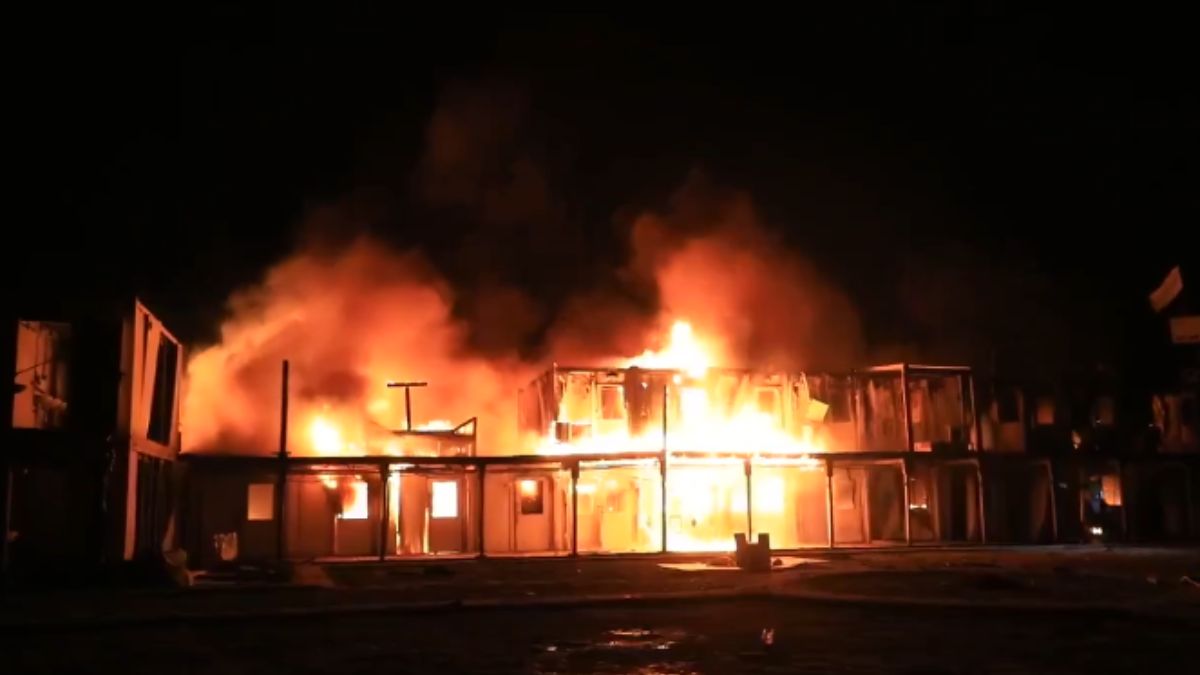
The pause follows one of the deadliest incidents in recent months, with Afghanistan accusing Pakistan of killing at least 400 people in an airstrike on a drug rehabilitation centre in Kabul. Afghan officials termed the attack a “despicable act against humanity”. A mass funeral was held for victims amid widespread outrage
Pakistan, however, has strongly denied targeting civilians, claiming that the site was a weapons depot storing drones and ammunition, noting that the explosions seen were due to secondary blasts from stored weapons. Islamabad also questioned the placement of a civilian facility near alleged militant infrastructure, intensifying the war of narratives.
Operation Ghazab-lil-Haq: Pakistan’s offensive against Afghanistan
Pakistan launched Operation Ghazab-lil-Haq on February 26, targeting what it calls terrorist sanctuaries along the 2,600-km border. According to Pakistani officials, 707 Afghan Taliban fighters killed, over 900 injured. It also says that they have destroyed 225 posts while captured 44, and conducted 81 airstrikes inside Afghanistan.
Military operations have been concentrated in areas like South and North Waziristan, with Pakistan claiming to have foiled infiltration attempts, destroyed militant hideouts. The campaign is aimed at dismantling networks linked to the Tehreek-i-Taliban Pakistan (TTP).
India-Pakistan war of words on Kabul strikes
The crisis has also triggered a sharp diplomatic face-off between India and Pakistan. After the Pakistani strikes killed 400 people in Kabul, India condemned the act in the strongest form, calling it “barbaric”, and a “blatant assault on Afghanistan’s sovereignty”. Further, India accused Pakistan of “dressing up a massacre as a military operation”.
Pakistan, on the other hand, responded by rejecting India’s remarks as “baseless and misleading”, accusing New Delhi of “hypocrisy” and supporting militant groups. The exchange reflects widening regional fault lines, with tensions spilling beyond the immediate conflict zone.
Indian Army preparing for hybrid warfare
Amid the volatile regional environment, the Indian Army has outlined a major push to enhance its preparedness for modern, hybrid warfare, combining traditional combat with emerging technological threats. According to a Parliamentary panel report, the Army is focusing on kinetic strength (conventional warfare), high operational readiness along borders, advanced weapons, precision munitions and surveillance systems.
The Army further informed that validation of concepts in theatre-level exercises have enhanced rapid mobilisation and combined arms synergy.
On the non-kinetic front, the Army has strengthened cyber defence and electronic warfare units, deployment of counter-drone systems and electronic countermeasures, along with the use of AI, data analytics and indigenous tech for battlefield awareness.
The Army is also undergoing structural transformation to adapt to evolving conflicts by raising Rudra Brigades, Bhairav Battalions, Shaktimaan Regiments.