


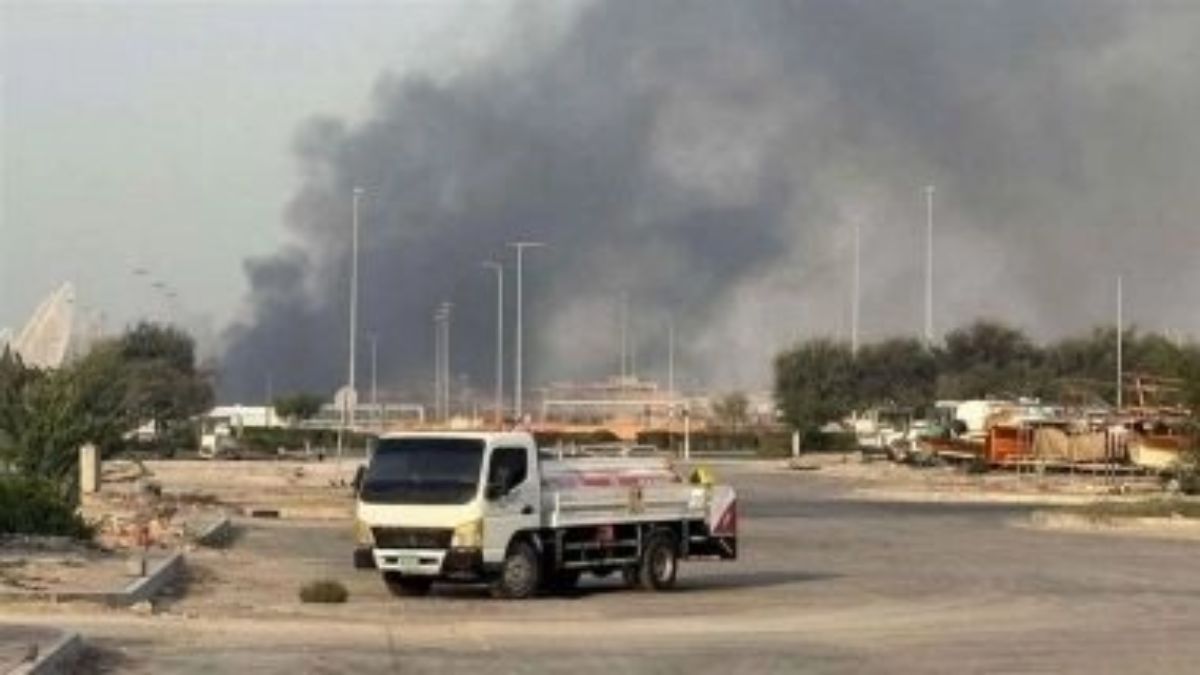
As the West Asia conflict continues to widen and the Strait of Hormuz remains under severe disruption, the impact of the war is increasingly spilling into civilian spaces across the Gulf. In the latest incident, debris from an intercepted aerial threat in Abu Dhabi has left multiple foreign nationals injured, including several Indians.
Authorities in the UAE confirmed that falling debris from a successfully intercepted projectile caused injuries in Abu Dhabi’s Ajban area on Friday (April 3, 2026). Confirming the incident, the Abu Dhabi Media Office said that 5 individuals of Indian nationality sustained some injuries while among the seven Nepali nationals injured, one remains in serious condition.
“As part of the ongoing follow-up to the previously reported incident in the Ajban area caused by falling debris following the successful interception by air defence systems, authorities confirm that the incident has resulted in minor to moderate injuries sustained by 6 individuals of Nepali nationality and 5 individuals of Indian nationality, and one major injury sustained by an individual of Nepali nationality,” it said.
UAE missile interception: What was the source of the aerial threat?
While UAE authorities have not officially disclosed the origin or nature of the intercepted projectile, the attack occurred against the backdrop of ongoing Iranian strikes targeting Gulf states as part of the broader conflict involving the US and Israel. The region has seen a steady escalation, with drones and missiles targeting key infrastructure, including energy facilities and commercial zones.
The incident came hours after a fire broke out at a gas facility in the same area, reportedly triggered by the falling debris.
Notably, this isn’t an isolated incident as several such incidents have happened over the last few days, since the war started. On March 26, one Indian national was among two killed after debris from an intercepted missile fell on Sweihan Street in Abu Dhabi. Days later, 5 Indians were injured near Khalifa Economic Zones Abu Dhabi (KEZAD) following another interception.
How is the West Asia conflict impacting the Gulf?
The Gulf region is increasingly feeling the ripple effects of the war. Since the conflict began, multiple energy installations have been targeted, commercial and civilian infrastructure has faced collateral damage, key shipping routes, especially the Strait of Hormuz, have been severely disrupted.
Moreover, the escalation is not limited to the UAE. Earlier this week, Amazon’s cloud computing facility in Bahrain was reportedly damaged in an Iranian strike. Bahrain’s Interior Ministry confirmed a fire at a company facility, though details remained limited.
It is worth mentioning here that the latest incidents follow a warning posted by the Revolutionary Guard on a Guard-affiliated Telegram channel, which declared 18 US tech companies to be “legitimate targets” over their alleged involvement in American and Israeli strikes on Iranian soil.
“From now on, for every assassination, an American company will be destroyed,” the post read. The Guard also said attacks would begin at 8.00 pm Tehran time on Wednesday (April 1, 2026) while warning employees at those companies to immediately vacate their workplaces to protect their lives.
What does it mean for India and the global community?
With millions of Indian nationals living and working across the Gulf, these developments carry serious implications. The repeated injuries and fatalities involving Indian citizens highlight the direct human cost of the conflict beyond battle zones, vulnerability of expatriate communities, and the need for heightened diplomatic and safety coordination.
India’s Ministry of External Affairs has stated that it is in touch with other countries to ensure the safety of citizens. Several evacuations have also been conducted over the past few weeks.