


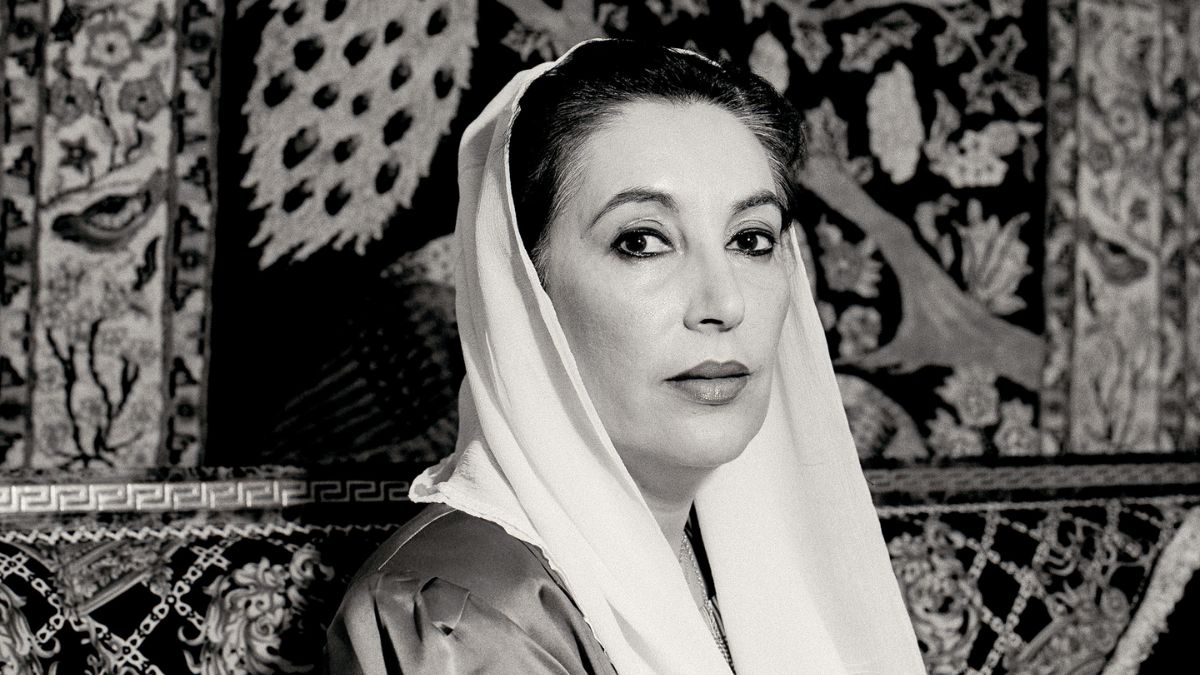
When Benazir Bhutto boarded a flight back to Pakistan in October 2007, she was returning to a country she had once led twice — and one that had repeatedly pushed her out.
Bhutto, the daughter of executed prime minister Zulfikar Ali Bhutto and the most prominent civilian political figure of her generation, had spent nearly eight years in exile. Her governments in the 1990s were cut short amid corruption allegations, presidential dismissals and sustained pressure from Pakistan’s powerful military establishment. By the time she left the country in 1999, General Pervez Musharraf had seized power in a coup, and civilian politics had once again been subordinated to military rule.
Her return, negotiated through a fragile political arrangement as Musharraf sought a controlled transition back to civilian governance, was supposed to signal a reset.
By the time Benazir returned from exile in 2007, she represented something the establishment had always found intolerable: an independently popular civilian leader with mass appeal, international legitimacy, and a clear intent to reassert political authority over security institutions. Unlike many politicians who could be pressured, co-opted or marginalised, Benazir had survived imprisonment, exile and repeated dismissals from office. She had already outlived one military dictator and was preparing to contest power at a moment when General Pervez Musharraf’s regime needed civilian cover without surrendering real control. Her return threatened to upset a carefully managed transition in which the military sought to remain the ultimate arbiter behind the scenes.
From the moment she announced her return, Bhutto warned publicly and privately that she was being targeted. She said intelligence agencies had informed her of multiple assassination plots involving suicide bombers and gunmen, and she formally wrote to Musharraf naming senior officials she believed would be responsible if she were killed. These warnings were not born of paranoia. On the very day she arrived in Karachi, a massive suicide attack on her convoy killed more than 140 people, narrowly missing her.
Yet despite this, the security architecture around Bhutto remained inconsistent and inadequate.
On December 27, 2007, Bhutto was assassinated after addressing an election rally in Rawalpindi — a garrison city that houses the headquarters of the Pakistani army and sits at the heart of the country’s security establishment. She was shot and then killed by a suicide bomber as she stood through the sunroof of her vehicle, waving to supporters. The attack took place in one of the most heavily policed areas of Pakistan.
In the hours and days that followed, the focus of the state’s response raised as many questions as the attack itself.
A United Nations commission later concluded that Bhutto’s death was “avoidable” and that Pakistani authorities failed to provide adequate security despite clear and credible threats. The report criticised federal, provincial and local officials for treating the danger as a political inconvenience rather than an urgent security crisis. Even more damaging was what happened after the assassination: the crime scene was rapidly washed down on the orders of senior police officials, destroying forensic evidence and severely compromising any meaningful investigation.
The commission stopped short of accusing the military or intelligence services of direct involvement. But it documented systematic obstruction, non-cooperation by intelligence agencies, and a deliberate narrowing of the investigation toward low-level militant suspects. The question of who enabled the conditions for the attack — and who benefited from its outcome — was never pursued to its logical end.
Bhutto herself had framed the danger in political terms. She argued that extremist groups wanted her dead because she opposed militancy, but she also suggested that elements within the state viewed her return as destabilising. Her campaign threatened to alter the balance of power at a moment when the military was attempting to manage a transition without surrendering real control.
Bhutto’s assassination was the logical outcome of a system that has repeatedly demonstrated the capacity and willingness to let democratic leadership perish when it becomes inconvenient for the military.
But it is the aftermath of her killing reveals the true benefit reaped by the establishment. The PPP returned to power, but without its most defiant leader. Under Asif Ali Zardari, the party abandoned confrontation in favour of accommodation. There was no sustained push to hold the military or intelligence agencies accountable for the security failures and investigative obstruction identified by international inquiries. Musharraf was allowed to resign and exit the country. The fundamental imbalance between civilian authority and military power remained untouched. In effect, Benazir’s death achieved what years of political engineering had failed to secure: a compliant civilian leadership that governed without challenging the core prerogatives of the armed forces.
The fate of Zulfikar Ali Bhutto, Mir Murtaza Bhutto and Benazir herself delivered a brutal lesson that no party operating in Pakistan can ignore. Resistance leads to elimination; survival requires submission. The ideological erosion of the PPP after 2007 was therefore not a moral failure or personal weakness, but the outcome of sustained coercion. A party that once mobilised against military dictatorship was reshaped into one that accepted the military’s supremacy as a political fact of life.
Seen in this light, Benazir Bhutto’s assassination fits squarely within a historical pattern in which Pakistan’s establishment removes leaders who combine popular legitimacy with political independence. Sometimes this is done through coups, sometimes through courts, sometimes through exile — and sometimes through lethal violence followed by strategic silence. The method changes, but the objective remains constant: preventing any civilian figure from converting mass support into genuine authority over the state.
What her assassination ultimately reveals is the brutality of Pakistan’s power structure, and its confidence. The military does not need to openly rule to dominate politics. It can allow elections, tolerate civilian governments and even permit transitions — as long as those in power understand the limits imposed on them. Benazir Bhutto did not accept those limits. Her death, and the political order that followed, stands as a stark reminder that in Pakistan, democracy is permitted only so long as it does not threaten the guardians of the state.