


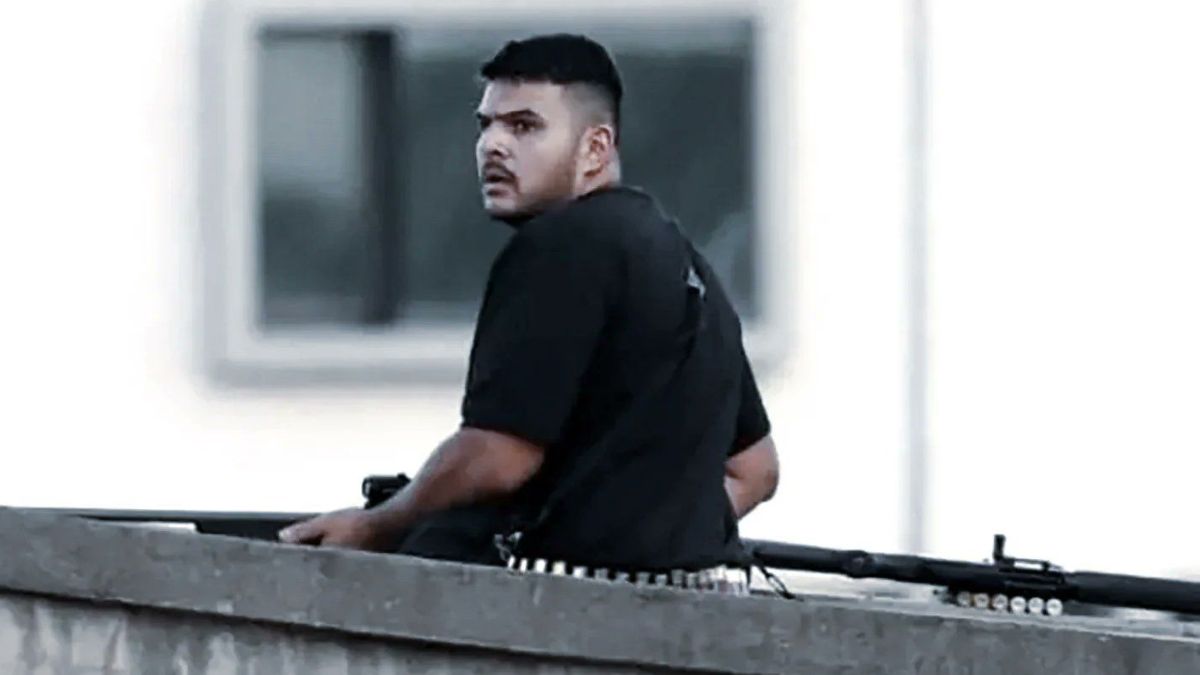
Australia was jolted by its deadliest mass shooting in nearly three decades when gunmen opened fire at a Jewish Hanukkah celebration at Bondi Beach in Sydney. The attack killed at least 15 people, including a child. Australian Prime Minister Anthony Albanese swiftly declared the incident a terrorist attack targeting the Jewish community.
Australian police identified the alleged attackers as a father–son duo: Sajid Akram, 50, who was shot dead at the scene, and his 24-year-old son Naveed Akram, who was critically injured and taken into custody. Marking a major development in the case, it has now emerged that while Naveed is an Australian citizen by birth, his father Sajid had immigrated to Australia from Hyderabad in Telangana in 1998.
What’s even more striking here is the fact that he continued to hold an Indian passport. Security sources told ThePrint that Sajid had completed a B.Com degree in Hyderabad before moving abroad in search of employment. He later married a woman of European origin and settled permanently in Australia.
Bondi Beach shootings: Attackers’ background traced to India
Following the attack, Australian authorities reached out to Indian agencies seeking background information. Telangana Police confirmed that Sajid hailed from the Old City area of Hyderabad and still had family there, including two brothers. However, officials stressed that he maintained only limited contact with his relatives over the past 27 years.
During these nearly three decades, Sajid had made just six visits to India, primarily for family and property-related matters. Indian police underlined that Sajid had no criminal or adverse record during his time in India and that there was no indication of radicalisation linked to Telangana or any local influence.
Why is Sajid’s Philippines travel under scrutiny?
A critical turn in the investigation came with the revelation that the father and son had travelled to the Philippines just weeks before the Bondi Beach attack. Philippine immigration authorities told Reuters that the duo arrived in Manila on November 1, 2025, travelled onward to Davao in the country’s south, and departed together on November 28.
Sajid travelled on an Indian passport, while Naveed used an Australian passport. Officials have not confirmed whether the men received training or direct support, but investigators are probing the purpose of the trip. Southern Philippines has long been known to host Islamic State-linked networks.
Sydney’s Bondi Beach shootings: An ISIS-inspired attack?
At a press conference, New South Wales Police Commissioner Mal Lanyon confirmed that investigators recovered two homemade ISIS flags and improvised explosive devices from the vehicle used in the attack, which was registered in Naveed’s name. Australian Federal Police Commissioner Krissy Barrett said early indications suggest the attack was inspired by Islamic State ideology.
“These are the alleged actions of those who have aligned themselves with a terrorist organisation, not a religion,” Barrett said, stressing the distinction between extremist violence and faith.
However, authorities have declined to reveal details about the duo’s associations, potential handlers, or activities during their time in the Philippines. Police have described the case as complex and ongoing, cautioning against premature conclusions as they piece together the radicalisation pathway of both men.
Meanwhile, the Bondi Beach shooting has reignited concerns about lone-actor and family-based radicalisation, cross-border extremist influence, and the targeting of Jewish communities worldwide. As investigators in Australia, India, and the Philippines coordinate closely, the case underscores how modern terror networks can exploit global mobility.