


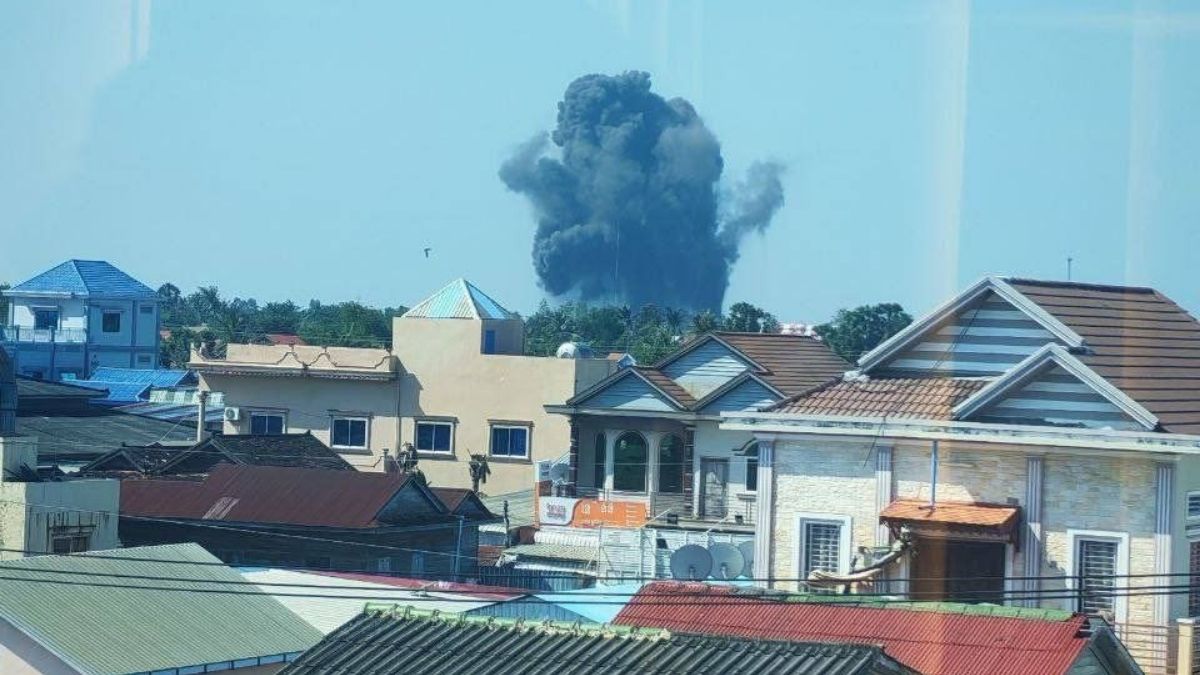
Fighting between Thailand and Cambodia intensified sharply this week, with both sides launching some of their heaviest attacks since the July 2025 border war. According to reports in the Khmer Times and Bangkok Post, Thai F-16 fighter jets struck multiple Cambodian villages on Wednesday (December 10, 2025), while Cambodian forces retaliated by firing rockets at a Thai hospital in Surin province.
The Khmer Times said Thai jets bombed Slor Kram village in Banteay Meanchey province and conducted further strikes near Preah Vihear Temple, a UNESCO World Heritage Site. Thailand also used artillery, drones, and ground fire across several border points.
Thailand’s Second Army Region told the Bangkok Post that Cambodia fired six rockets at Phanom Dong Rak Hospital, already damaged earlier this year in July, forcing an emergency evacuation of staff and patients.
Thailand-Cambodia conflict: How widespread are the clashes?
The Thai military reported fighting at 12 border locations on Wednesday alone. It accused Cambodian forces of firing nearly 5,000 rockets on Tuesday and using suicide drones in Ubon Ratchathani and Si Sa Ket provinces. The death toll has mounted rapidly, as 4 Thai soldiers have been killed while 68 injured.
On the Cambodian side, there have been 61 soldier casualties, according to Thai military estimates. Cambodia has not released its own casualty figures.
Thai troops also uncovered Cambodian landmines and improvised explosive devices in reclaimed territory in Sa Kaeo province. Attempts to retake another area resulted in five more Thai soldiers injured.
Is diplomacy failing in Thailand-Cambodia clashes?
The clashes erupted only weeks after Thailand suspended a peace deal signed in Kuala Lumpur in late October, a pact personally witnessed by US President Donald Trump. Thailand halted the agreement in November 2025 after a landmine blast injured two Thai soldiers.
Speaking in Pennsylvania on Wednesday, Trump said he would attempt to “stop a war of two very powerful countries,” referring to Thailand and Cambodia. He claimed he had previously resolved eight conflicts in ten months because of the authority vested in the US presidency.
Civilians bearing the heaving cost of war and destruction
Humanitarian pressure is mounting on both sides of the border. Nearly 180,000 Thai civilians have been moved out of the conflict zone, news agency AFP reported, with thousands sheltered in Surin University’s evacuation centers.
Cambodian authorities, on the other hand, said 55,000 civilians have been relocated so far, though numbers continue to rise. The total number of displaced people is 101,129, including infants, children, pregnant women, the elderly and people with disabilities, Cambodian Defence Ministry’s Undersecretary of State and Spokesperson Lt. Gen. Maly Socheata said.
Evacuation centers are overcrowded, but Thai authorities are providing food, medical support, and temporary accommodation. Army bands have been deployed for morale-building as evacuations continue.
Are either side seeking talks?
According to Thai Prime Minister Anutin Charnvirakul, Bangkok has received no communication from Phnom Penh regarding negotiations. He said Thailand “will support all military operations as planned” to ensure national security.
Cambodian Senate President Hun Sen, who remains an influential power figure, said Cambodia withheld retaliation on Monday but has now “begun firing back to defend its territory.” He stressed that Cambodia wants peace but “is forced to fight.”
Thailand-Cambodia war: A conflict rooted in history
Border disputes between Thailand and Cambodia date back decades, driven by competing claims over colonial-era maps and sensitive sites such as Preah Vihear Temple. The region witnessed devastating clashes as recently as July, when fighting displaced nearly 200,000 people and caused dozens of military and civilian casualties.
With fresh hostilities now spreading across the frontier, fears are growing that the region may be slipping toward another prolonged conflict, despite international calls for restraint and renewed diplomacy.