


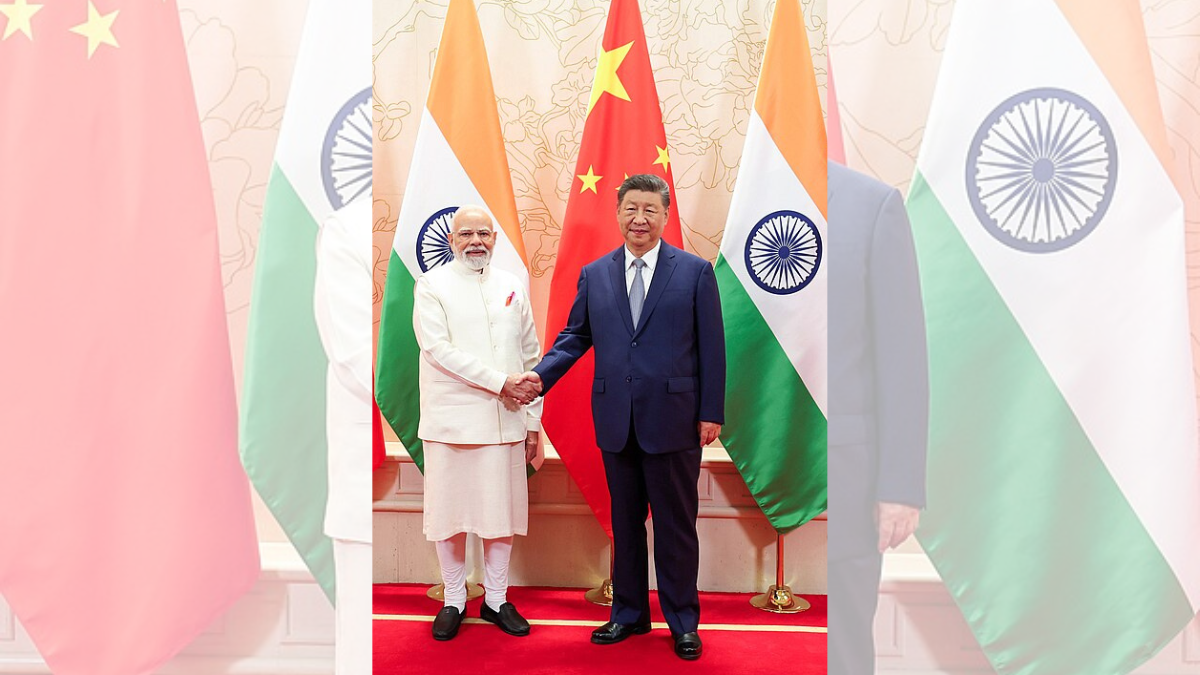
China on Thursday (December 25, 2025) strongly pushed back against a recent US Pentagon report that claimed Beijing was using easing tensions along the disputed India–China border to prevent closer strategic ties between New Delhi and Washington, accusing the United States of distorting China’s defence policy and interfering in bilateral relations.
What did China say about the US report?
Responding to questions at a regular press briefing, Chinese Foreign Ministry spokesperson Lin Jian said China views its relationship with India from a “strategic and long-term perspective” and firmly rejected suggestions that Beijing was attempting to exploit border disengagement to shape India’s external alignments. “The border issue is a matter between China and India,” Lin said, adding that Beijing “objects to any country passing judgment on this issue.”
The remarks came days after a US Defence Department-linked assessment stated that China “probably seeks to capitalize on decreased tension” along the Line of Actual Control (LAC) to stabilise ties with India while simultaneously preventing the deepening of US–India strategic cooperation. The report characterised China’s October 2024 disengagement agreement with India as a calculated move rather than a genuine reduction in rivalry.
Why did China push back on the US report?
Beijing’s sharp response underscores its sensitivity to US assessments of its regional strategy, particularly as India and China attempt a cautious diplomatic reset following years of military standoff and political strain. Chinese officials insist that recent progress on border management reflects bilateral consensus rather than geopolitical manoeuvring aimed at third countries.
“The improvement and development of China–India relations serve the fundamental interests of the two countries and peoples,” Lin said, reiterating that normalisation efforts should not be viewed through the lens of great-power competition. He accused Washington of selectively interpreting China’s actions to advance its own strategic agenda in the Indo-Pacific.
What was the US assessment of China-India relations?
The Pentagon report had argued that Beijing sought temporary stabilisation on its western frontier to avoid pushing India closer to the United States at a time when China remains focused on the US–Taiwan theatre. It also linked China’s broader regional posture, including its close military partnership with Pakistan and expanding footprint in South Asia, to a strategy of constraining India’s rise.
China, however, dismissed such interpretations, maintaining that its defence policy is “defensive in nature” and that it remains committed to peaceful coexistence and dialogue with neighbouring countries. Chinese officials have consistently argued that the border issue should not define the overall relationship with India and that progress made since the October 2024 disengagement reflects mutual efforts to manage differences.
How have China-India ties improved in the last year?
The Chinese reaction also comes amid renewed high-level engagement between New Delhi and Beijing. Following the Xi Jinping–Narendra Modi meeting on the sidelines of the BRICS summit last year, the two sides initiated regular diplomatic and military-level talks focused on confidence-building measures, border stability, and limited people-to-people exchanges.
Despite this, mutual distrust persists, with India remaining wary of China’s long-term intentions, particularly given Beijing’s growing ties with Pakistan and its assertive stance on sovereignty claims. US assessments have continued to frame these dynamics as part of a broader Chinese “grey-zone” strategy aimed at applying pressure without triggering open conflict.
What was China’s intent in rejecting the US report?
By publicly rejecting the Pentagon’s conclusions, China appears intent on reinforcing its position that India–China relations are an independent bilateral matter, not a variable in US strategic calculations. Analysts say Beijing’s rebuttal is also aimed at reassuring New Delhi that engagement with China does not come at the cost of strategic autonomy.
As geopolitical competition in the Indo-Pacific intensifies, China’s response signals that it will continue to contest US narratives about its intentions, particularly when they touch on sensitive relationships such as those with India, while projecting its border diplomacy as pragmatic and non-aligned.