


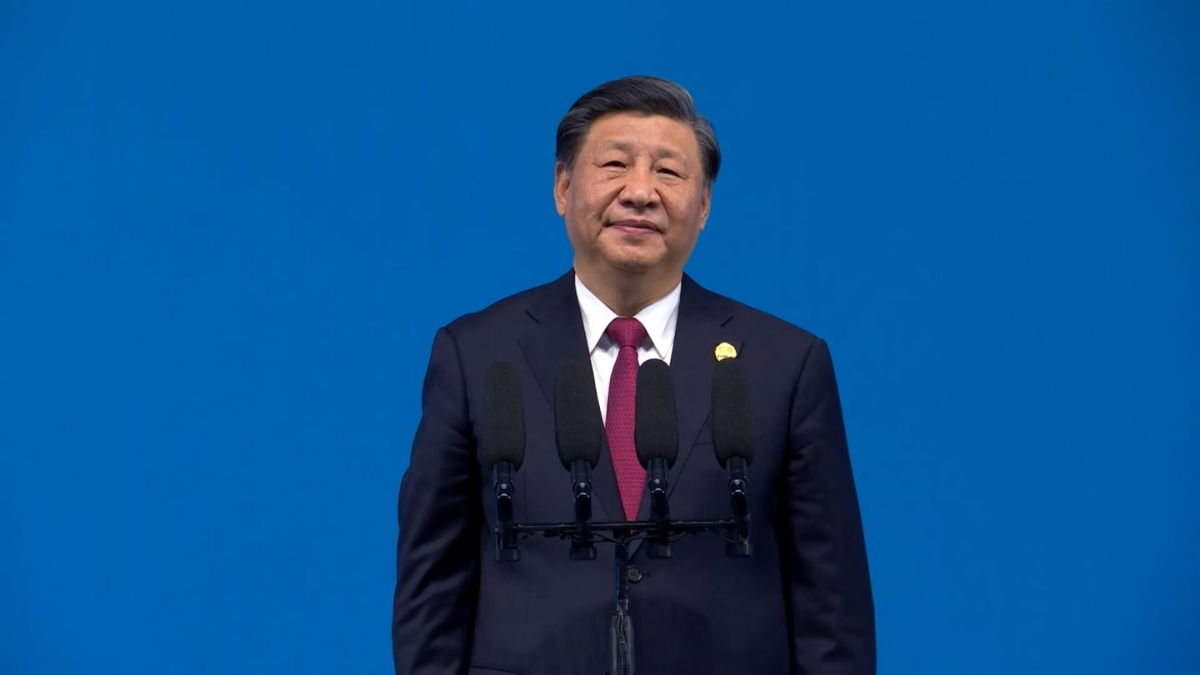
On April 19, 2024, Chinese President Xi Jinping presided over a ceremony in Beijing that marked one of the most significant reorganisations of the People’s Liberation Army in nearly a decade. The Strategic Support Force, established in 2015 to consolidate China’s space, cyber, electronic, and psychological warfare capabilities, was dissolved after less than nine years and replaced by three distinct arms–the Information Support Force (ISF), the Aerospace Force, and the Cyberspace Force. The move signalled Beijing’s assessment that the centralised SSF model had run its course and that China’s information warfare ambitions required a new architecture.
The PLA’s Information Support Force was established with a mandate focused on building and operating the PLA’s network information systems. Offensive cyber operations–previously housed in the SSF’s Network Systems Department–passed to the separately constituted Cyberspace Force. The reorganisation did not simply rename an existing body; all three new entities report directly to the Central Military Commission, bypassing the intermediate command layer the SSF had occupied.
PLA doctrine has increasingly centred on what military theorists call “systems destruction warfare,” a concept that prioritises disabling adversarial command-and-control networks while keeping China’s own information infrastructure intact. The ISF contributes to that doctrine primarily through hardening and integrating the PLA’s own networks, while the Cyberspace Force carries the offensive cyber mandate. Where the Strategic Support Force centralised space, cyber, electronic, and psychological warfare under a single strategic umbrella, the reorganisation distributes these functions across three distinct arms, each reporting directly to the Central Military Commission.
That restructured architecture has concrete operational consequences. Future ISF training is expected to require coordination between cyber teams, electronic warfare units, and physical repair crews operating in parallel during multi-vector attack scenarios, reflecting the force’s mandate to maintain and restore Chinese information systems under fire.
The ISF also works alongside the Cyberspace Force, and the two capabilities are not entirely separate in Chinese military thinking. Electronic warfare, in PLA doctrine, feeds into a broader “information confrontation” logic: degrade what the enemy can sense, communicate, and decide before it can act. Analysts at RAND and the Center for Strategic and International Studies have documented PLA exercises drilling these scenarios precisely over recent years, with increasing technical depth.
China’s military now formally lists the ISF alongside the Aerospace Force, the Cyberspace Force, and the Joint Logistics Support Force as four arms distinct from the four traditional service branches–Army, Navy, Air Force, and Rocket Force. These are not support units in the conventional sense; each carries an independent operational charter within its domain. The PLA Daily has published selective accounts of ISF activities, though coverage remains tightly managed and low on technical specifics.
Behind all of this is a deadline as much as a direction. China’s formal target of accelerating military modernisation by 2027, which is the PLA’s centenary year, gives the ISF’s development a schedule, representing the first step in a longer roadmap that runs through 2035 and 2049. Enhanced information warfare capability is a deliverable on that timetable, not a long-term research horizon. For adversaries whose warfighting architecture depends on networked systems, 2027 is the figure that gives this restructuring its real strategic weight.