


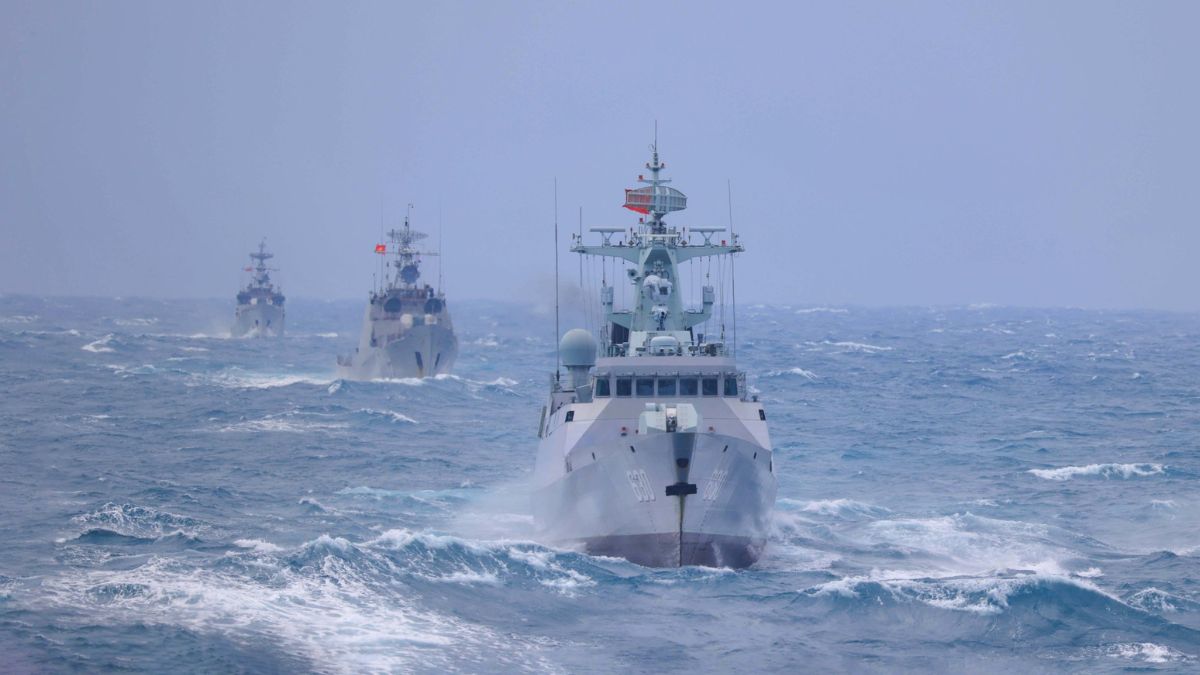
Story: China has mounted its largest maritime show of force in years, deploying more than 100 naval and coast guard vessels across strategic waters from the Yellow Sea to the western Pacific, according to international media reports citing regional security officials.
The scale of this operation, surpassing even last December’s mass deployment that put Taiwan on alert, marks a significant escalation in Beijing’s military signalling during a volatile diplomatic moment in East Asia.
Is this the most active military exercise season?
Although the People’s Liberation Army (PLA) has issued no formal announcement of major drills, multiple officials say China is deep into what is traditionally its most active season for military exercises.
The surge comes amid a renewed diplomatic crisis with Japan and heightened tensions with Taiwan, placing regional defence establishments on edge even as many continue to assess the operations as “routine.”
How did China mobilise 100 warships at once?
At one point this week, more than 100 Chinese naval assets were at sea, with over 90 still active as of Thursday morning. Intelligence assessments indicate that China’s formations have spread across a vast expanse from the southern Yellow Sea through the East China Sea, across the South China Sea, and into the western Pacific.
Taiwan’s National Security Bureau chief Tsai Ming-yen confirmed that four PLA naval formations are currently operating in the Pacific and under close Taiwanese surveillance.
Why is the naval mobilisation timing deliberate?
The timing appears deliberate. Beijing began stepping up deployments after November 14, 2025, when it summoned Japan’s ambassador to protest Prime Minister Sanae Takaichi’s comments suggesting Tokyo could respond militarily if China attacked Taiwan.
Japan’s Self-Defense Forces have refrained from confirming a spike in activity but noted China’s long-term goal of expanding operations deeper into maritime and air spaces—consistent with Beijing’s naval modernisation drive.
How did Chinese frustration grow over Taiwan?
Chinese frustration with Taiwan is also mounting. President Lai Ching-te’s recent announcement of an additional $40 billion in defence spending angered Beijing, which views Taiwan as part of its territory.
Yet despite the wider mass deployment, intelligence reporting suggests the number of PLA vessels operating directly around Taiwan has not increased significantly.
How did China carry out mock attacks?
Officials familiar with the operations say several Chinese ships have conducted mock attacks on foreign vessels and practiced access-denial tactics, skills essential to blocking outside intervention during a Taiwan contingency. While some regional officials view the scale as a “big outing,” they currently assess the risk of imminent conflict as low.
Taiwan’s Presidential Office insists it maintains real-time awareness of the security environment and is coordinating closely with international partners to deter destabilising actions. “We can ensure there are no concerns for national security,” spokesperson Karen Kuo said, emphasising Taipei’s vigilance.
Still, Beijing’s deployment, characterised by one official as “far beyond China’s national defence needs”, is widely seen as a calculated test of regional reactions.
With China, Japan, and Taiwan locked in a tense political moment, the unprecedented naval spread underscores how quickly East Asia’s security landscape can shift, even under the guise of routine exercises.