


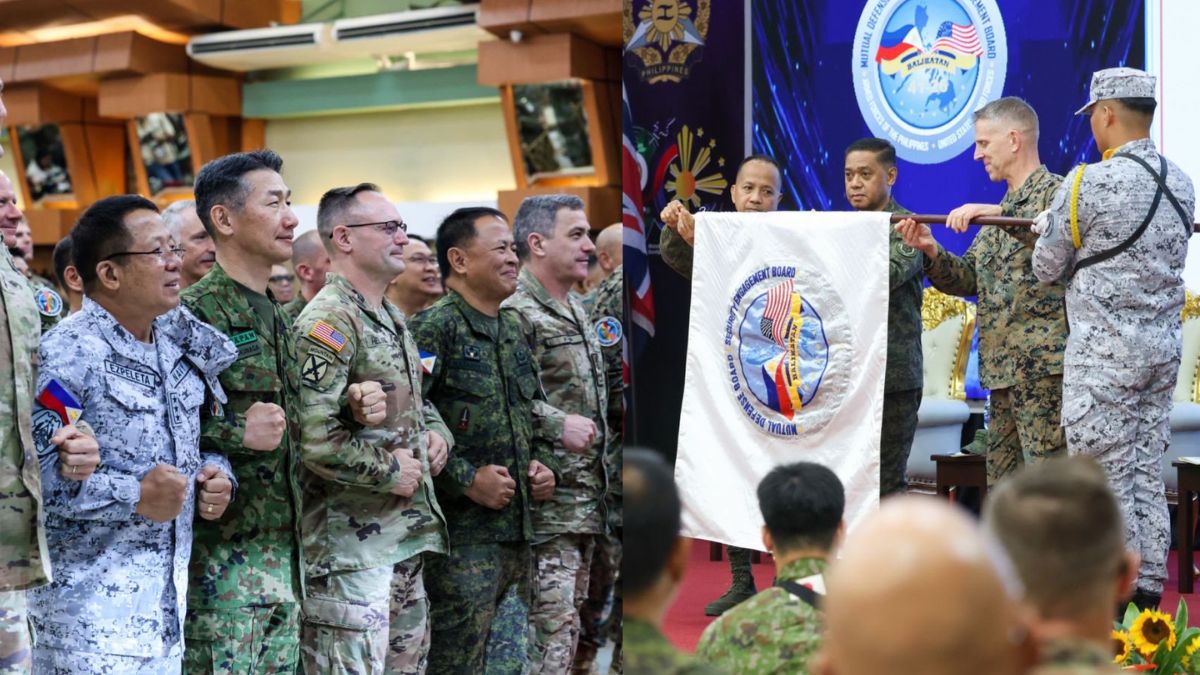
As thousands of troops from the United States, the Philippines and Japan launch expanded military drills in the Indo-Pacific, China has responded with fresh naval deployments and sharp warnings, underscoring rising regional tensions at a time of global geopolitical strain.
China has deployed a group of warships for drills in the western Pacific Ocean, even as the US and the Philippines began their annual “Balikatan” military exercises with Japan’s first major participation. The timing is significant as the drills come just as over 17,000 troops kicked off the 19-day exercise from April 20 to May 8, alongside forces from Australia, New Zealand, France and Canada.
According to the People’s Liberation Army (PLA) Eastern Theater Command, a Chinese naval task group led by the Type 052D destroyer Baotou transited between Japan’s Amami Oshima and Yokoate islands before carrying out training operations.
Beijing has described its exercises as routine, aimed at testing far-seas operational capabilities, insisting they are not directed at any specific country. However, the overlap with the multilateral drills has amplified strategic signalling on all sides.
What warning has China issued to the US and its allies?
China on Monday (April 20, 2026) warned against military cooperation that could undermine trust and deepen division in the region. “What the Asia-Pacific region most needs is peace and tranquility, and what it least needs is the introduction of external forces to create division and confrontation,” Foreign Ministry spokesperson Guo Jiakun said.
“The world has seen enough damage done by unilateralism and abuse of military might. The last thing the Asia-Pacific needs is division and confrontation. No military cooperation should be conducted at the expense of peace, stability and trust in the region,” he added, while also cautioning that countries “persisting in tying themselves together on security will only lead to setting themselves on fire and backfiring.”
What makes this year’s Balikatan drills different?
This year’s Balikatan, or ‘shoulder-to-shoulder’, exercises mark a significant expansion in scope and participation. For the first time, members of Japan’s Self-Defense Forces are taking part in live-fire drills, with Tokyo contributing around 1,400 personnel. Japan is also set to deploy a Type 88 cruise missile to sink a target ship off northern Paoay.
The drills will include operations in areas facing the Taiwan Strait and near the disputed South China Sea, adding to their strategic sensitivity.
US exercise spokesman Colonel Robert Bunn said the drills reflect “our commitment to a free and open Indo-Pacific.”
How are China-Japan tensions shaping the situation?
Tensions between China and Japan have been steadily escalating, and recent developments have added further strain. China’s military said it had deployed naval and air forces to monitor the Japanese destroyer JS Ikazuchi as it transited the Taiwan Strait, a move Beijing criticised as provocative.
Guo Jiakun urged Tokyo to exercise caution, warning against “flaunting its military might everywhere and undermining regional stability.”
On April 17, China formally protested Japan’s actions, calling the presence of a Japanese Self-Defence Forces vessel in the Taiwan Strait “provocative.”
Relations between the two Asian countries have been tense since last year, when Japanese Prime Minister Sanae Takaichi said Tokyo could deploy its military if China used force against Taiwan. In response, Beijing has taken measures affecting Japan’s imports of dual-use goods and tourism.
What does China’s naval expansion signal?
The latest drills highlight China’s growing naval activity beyond the First Island Chain, which stretches from Japan through Taiwan to the Philippines.
While Chinese warships frequently pass near Japan’s south-western islands, this marks the first announced transit through the Yokoate Waterway, closer to mainland Japan than the commonly used Miyako Strait.
In June 2025, Japan reported spotting two Chinese aircraft carriers operating simultaneously near its remote islands for the first time. The PLA had also conducted joint naval and air patrols in the East China Sea on April 18 to test coordinated combat capabilities, further signalling its readiness in contested waters.