


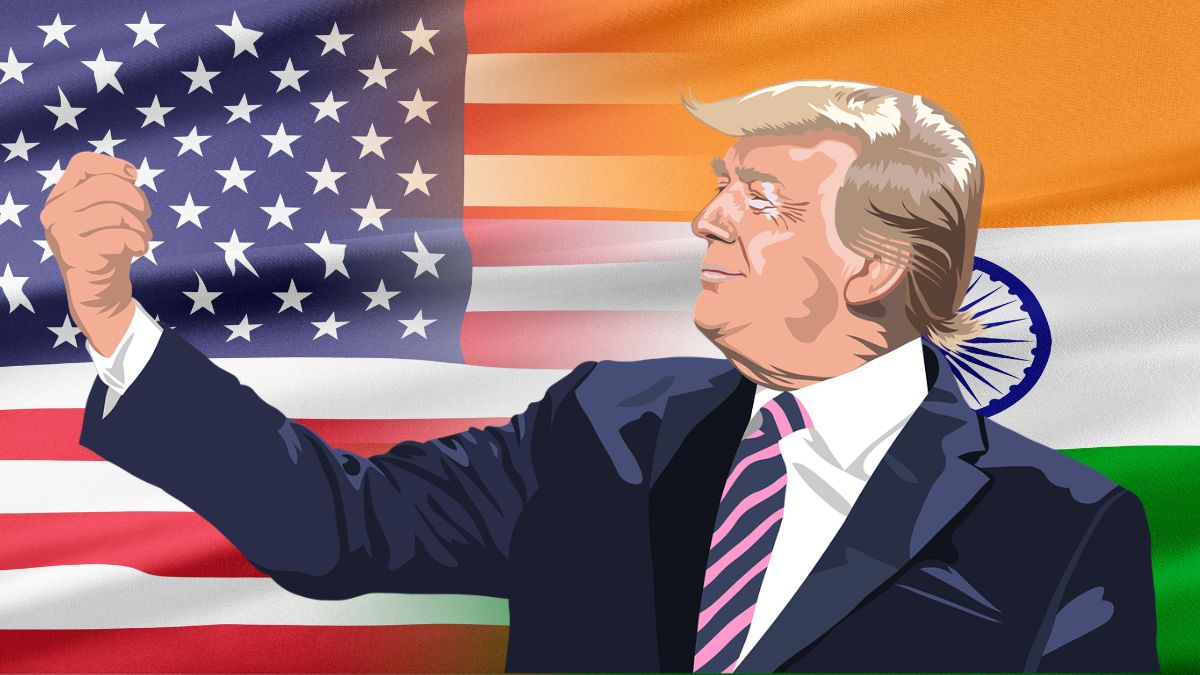
In what could mark a turning point for strained India–US trade ties, President Donald Trump has suggested that Washington may soon ease tariffs on Indian goods, signalling a possible thaw after months of economic tension between the two democracies. The major announcement comes as both countries near a trade deal.
Though no official announcement has been made, Trump’s remarks have raised expectations that a tariff rollback could be imminent, a move seen as part of a broader effort to reset relations with New Delhi.
It is worth recalling here that the US had imposed steep tariffs on a wide range of Indian goods in response to New Delhi’s continued purchases of Russian crude oil. The overall 50% tariff, the highest among all of America’s trading partners, came into effect on August 27, 2025.
US tariffs on India: What prompted Trump’s change in tone?
Speaking to reporters at the White House, US President Trump said the United States was “re-evaluating” its tariff stance toward India, acknowledging that New Delhi had significantly reduced imports of Russian oil. “We’ve seen positive changes from India — and when countries act responsibly, we respond positively,” Trump said, hinting that a trade deal may be “closer than ever.”
He further underscored that they are working on a “very good deal with India. The tariffs will come down very substantially. It will happen at some point.”
Trump’s latest statement represents a striking shift in tone from his administration’s earlier position, which saw tariffs on several Indian exports raised from 25% to 50% amid concerns that India’s energy and defence ties with Moscow were indirectly supporting Russia’s war in Ukraine.
How did the India-US trade standoff unfold?
Formal trade talks between the two nations began in February 2025, but stalled after Washington’s tariff escalation in August 2025, following five rounds of negotiations. The move froze progress on what was intended to be a comprehensive bilateral trade agreement, straining one of Washington’s most strategically vital economic relationships in Asia.
For India, the higher tariffs hit sectors ranging from textiles and pharmaceuticals to agricultural goods, prompting officials in New Delhi to accuse Washington of “punitive trade diplomacy.”
Could this signal a major reset in bilateral ties?
President Trump’s remarks have sparked optimism in both capitals. Indian officials, speaking on background, said a fresh round of talks could resume soon if Washington follows through with tariff relief. The development comes at a time when both countries have maintained close cooperation on defence and technology, despite trade frictions.
The potential tariff rollback suggests a broader recalibration of Washington’s approach toward India, especially as the US seeks to strengthen strategic partnerships in the Indo-Pacific to counterbalance China’s influence. While the US has not yet made a formal announcement, Trump’s comments represent the clearest signal yet of a conciliatory turn.
India-US trade deal: How’s the progress been so far?
Commerce Minister Piyush Goyal recently shared that Prime Minister Narendra Modi’s government would not compromise with the interests of the farmers and the dairy workers of India while working out a trade deal with the US.
“We’re making a deal with India, a much different deal than we had in the past. So right now, they don’t love me, but they’ll love us again,” Trump told journalists at the Oval Office in White House. He added, “We’re getting a fair deal, just a fair trade deal. We had pretty unfair trade deals.”