


Over the past few years, there has been a lot of friction between India and China on the border front. Whether it is the 2017 Doklam standoff or the deadly 2020 Galwan Valley clash, New Delhi and Beijing ties have been surfing rough waters. However, late in August 2025, PM Narendra Modi met Chinese President Xi Jinping, after which both the leaders reaffirmed that they were development partners and not rivals.
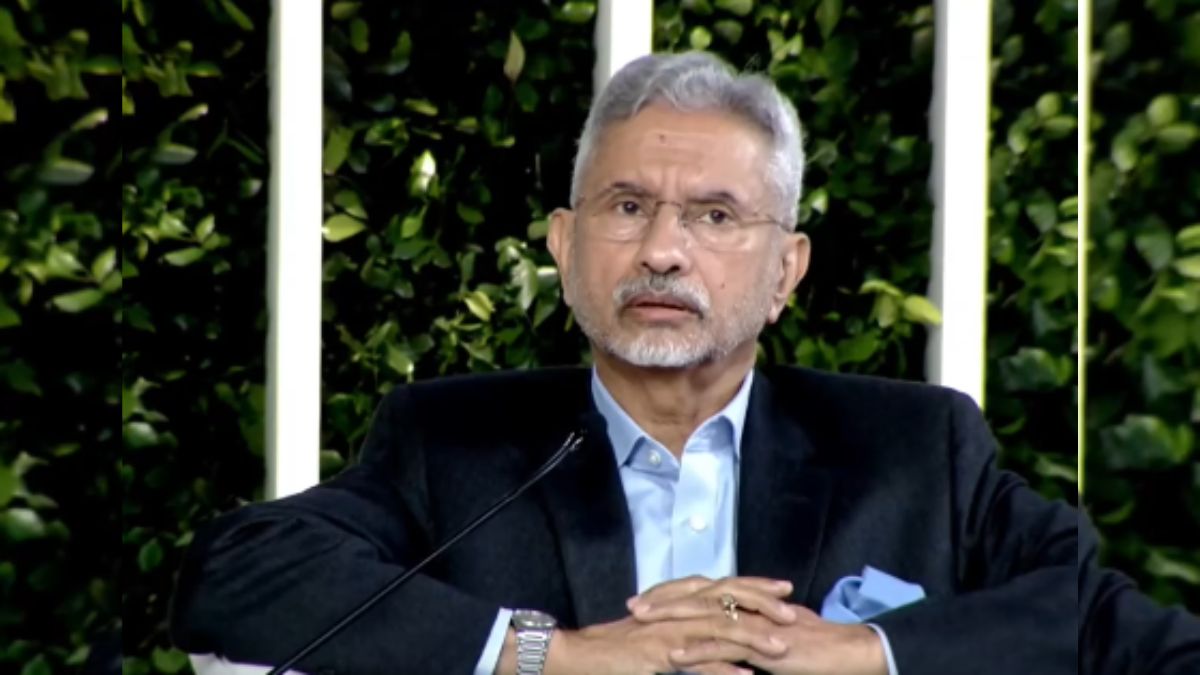
Echoing a similar view, External Affairs Minister Dr. S Jaishankar stated that peace along the Line of Actual Control (LAC) remains the foundation of India’s relationship with China. The foreign minister underlined that border regions between India and China have remained calm following last year’s diplomatic engagement between PM Modi and Xi.
Jaishankar on Saturday (December 6, 2025) asserted that border areas between India and China have stayed calm, recalling PM Modi’s October 2024 meeting with Chinese President Xi. “After October 24 last year, we agreed on the last remaining border issues at that time,” he told NDTV CEO and Editor-In-Chief Rahul Kanwal at the Hindustan Times Leadership Summit (HTLS).
“Since then, the border areas have mostly been stable, and normal patrolling has mostly resumed smoothly,” Jaishankar noted.
India-China relations: Peace key to maintain ties
The EAM went on to state that they key point which we made, that peace and tranquility in border areas is a prerequisite for good relations, is being maintained and built upon. Jaishankar also said the clashes in Galwan Valley were not the only problem in the India-China relationship.
“There are also issues with trade, investment, competition, subsidies, fairness, and transparency. These are real challenges too. We are trying to handle some of them. Some are easier; some are harder. For example, direct flights to China have stopped. This did not happen because of the Galwan clashes but because of COVID.”
Additionally, there were issues about trade, investment, competition, subsidies, and transparency between India and China and the government is still trying to work on these. Notably, direct flights between India and China were resumed in October 2025 after a five-year suspension.
Economic side of India-Russia relations
At the summit, the External Affairs Minister also reflected on the economic side of India and Russia ties, saying, “Even Russia’s relations with China, the US, or Europe have had their ups and downs. Many of our relationships with these countries have had similar experiences.”
He explained that in any relationship, it is normal for some areas to improve while others may lag behind. “For Russia, for various reasons, they saw the West and China as their main economic partners. We probably saw it the same way. So the economic side of the relationship has not kept up. You can see this in the numbers.”
Whether it is Russia or China, the foreign minister’s remarks made on thing clear that India’s foreign policy and moves will be shaped by national interests and not external pressure. The most recent example of the same is continued US pressure on New Delhi to stop buying oil from Russia.
India, however, stressed that our oil import policies prioritise consumer interests amidst a volatile energy market.