


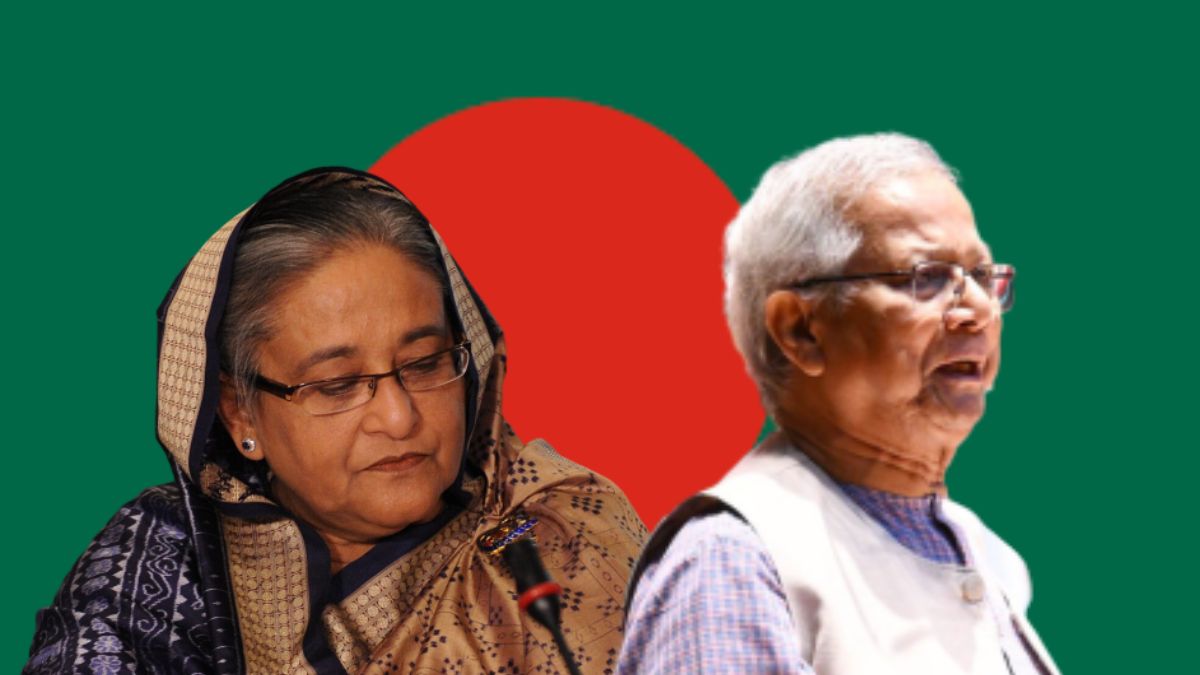
Former Bangladesh prime minister Sheikh Hasina has accused the interim government led by Muhammad Yunus of fuelling anti-India hostility and allowing extremist elements to gain influence, warning that bilateral ties with New Delhi have suffered due to a breakdown of law and order in Bangladesh.
Speaking on December 22, 2025, Hasina said extremist groups have been “emboldened” under the Yunus-led interim administration, while reiterating that India has been Bangladesh’s most dependable partner for decades.
What did Sheikh Hasina say about anti-India sentiment?
Sheikh Hasina blamed the interim government for worsening relations with India, alleging that hostile rhetoric and actions against New Delhi have gone unchecked. She accused the Yunus administration of issuing anti-India statements, failing to rein in extremist groups, and allowing radical elements to influence foreign policy.
Hasina said India’s concerns over the safety of its diplomats and personnel in Bangladesh are justified, arguing that any responsible government would act decisively to protect diplomatic missions rather than, in her words, shielding “hooligans”.
How did she describe India–Bangladesh ties?
Hasina described India as Bangladesh’s most reliable partner, with ties rooted in history, geography, and shared sacrifices. She said the current tensions between the two countries are temporary and would ease once legitimate governance and law and order are restored in Bangladesh.
According to her, the strain in relations reflects the instability created after the fall of her government, rather than any structural shift in bilateral ties.
What did she say about law and order under the interim government?
Referring to recent violence, Hasina said the killing of Sharif Osman Hadi symbolised a wider collapse of law and order since her removal from office. She warned that violence has become routine, destabilising Bangladesh internally and causing concern among neighbouring countries.
“When you cannot maintain basic order within your borders, your credibility on the international stage collapses,” she said, describing it as the reality of what she termed “Yunus’s Bangladesh”.
What is her position on the Osman Hadi killing and subsequent unrest?
Sharif Osman Hadi, a polarising figure known for his anti-India rhetoric and prominence during the 2024 student uprising, was shot by masked gunmen in Dhaka on December 12 and later died at a hospital in Singapore on December 18, 2025.
Following his death, Bangladesh witnessed widespread protests, arson, and political violence. Media reports said offices of major newspapers and cultural organisations were attacked, while clashes intensified across several regions.
Hasina said the violence following Hadi’s killing reflected the interim government’s inability to maintain basic security.
How does this link to wider political violence?
Amid the unrest, Bangladeshi media reported that Muhammad Motaleb Sikdar, a senior leader of the student-led National Citizen Party (NCP), was shot in the head by unknown assailants in Khulna district on December 22. Police confirmed he was hospitalised and investigations were ongoing.
The incident is the latest in a series of violent attacks linked to political tensions ahead of Bangladesh’s scheduled elections in February 2026.
What did Hasina say about foreign policy and regional rhetoric?
Hasina criticised remarks by radical figures regarding India’s Siliguri Corridor, often referred to as the “Chicken’s Neck”, calling such statements reckless and irresponsible. She said no serious leader would threaten a neighbour critical to Bangladesh’s trade and regional stability.
She also rejected the legitimacy of the interim government to reshape Bangladesh’s foreign policy, insisting that such decisions require a popular mandate.
“Once Bangladeshis can vote freely again, our foreign policy will return to serving our national interests,” she said.
What is India’s position on the situation?
India has dismissed allegations linking it to the violence and has called on Bangladesh’s interim government to ensure internal law and order and hold peaceful elections. New Delhi has reiterated that it expects the safety of its missions and personnel to be guaranteed in line with diplomatic norms.
As Bangladesh heads towards elections, rising violence, anti-India rhetoric, and political instability continue to place strain on bilateral relations and raise concerns across the region.