


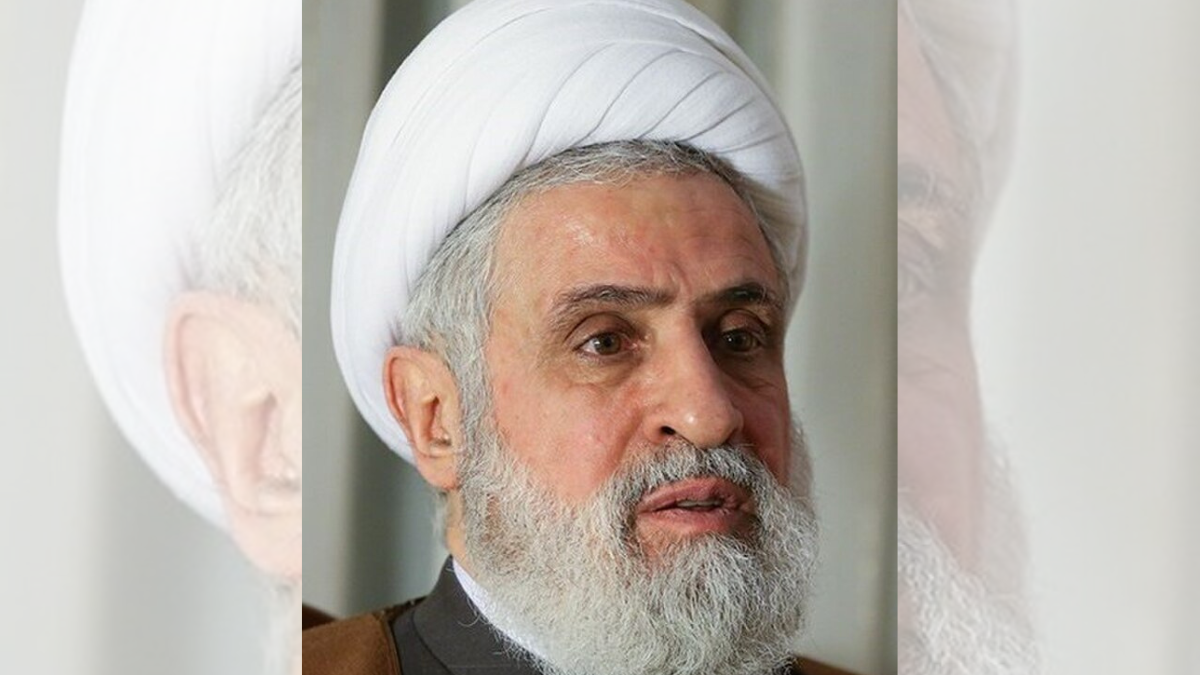
Lebanon’s political and security tensions deepened on Friday (November 28, 2025) after Hezbollah’s deputy leader Naim Qassem warned that a new war with Israel “is possible,” even as the Lebanese Army intensified its presence along the southern border, dismantling long-standing Hezbollah positions in an unprecedented show of state authority.
Qassem’s televised remarks came days after Israel assassinated senior Hezbollah military commander, Haytham Ali Tabtabai, in a November 23 airstrike on Beirut’s southern suburbs.
The killing has sparked fears of renewed confrontation, with Israel hinting at a broader air campaign to force Hezbollah to give up its arsenal, a demand the group has repeatedly rejected.
What did the Hezbollah leader say about Israel war?
Qassem said Hezbollah retained “the right to respond” and would choose the timing of any retaliation. He acknowledged that another conflict could erupt, stating–“Do you expect a war later? It’s possible sometime. Yes, this possibility is there, and the possibility of no war is also there.”
He added that Lebanon must prepare a national strategy to confront Israel based on “its army and its people.”
The Hezbollah leader also expressed hope that the upcoming visit of Pope Leo to Lebanon could “help bring peace and end Israeli aggression,” even as the United States and Israel continue pressuring Beirut to accelerate Hezbollah’s disarmament.
How did Israel react to Qassem’s remarks?
Shortly after Qassem’s speech, Israeli military spokesperson Avichay Adraee criticised the Lebanese Army’s ongoing operations as “inadequate,” alleging that Hezbollah was still manipulating local forces to preserve its weapons.
Hezbollah maintains it will not disarm until Israel ceases its strikes and withdraws from five strategic hilltops it captured during the 2023–24 war.
How is the Lebanese Army stepping up border patrols?
In a rare move underscoring Beirut’s commitment to reassert state control, the Lebanese Army conducted a media tour on Friday (November 28, 2025) across rugged terrain south of the Litani River, an area once dominated by Hezbollah and previously inaccessible to state forces and UN peacekeepers.
Since last year’s ceasefire, the army has deployed nearly 10,000 troops to the border region, shut down 11 smuggling routes, and taken control of former Hezbollah posts.
In Zibqin Valley, once a launch point for rockets and a hub of tunnels, journalists observed Lebanese soldiers occupying locations previously used by the militant group.
What was the scene at the Lebanon border with Israel?
One of the tunnels, stretching nearly 100 meters inside a mountain, contained remnants of a makeshift medical clinic, ventilation systems, power lines, water tanks, and stockpiles of canned food.
It was also the site of a deadly explosion in August that killed six army experts attempting to dismantle munitions in an arms depot.
Brig. Gen. Nicolas Thabet, commander of the sector south of the Litani, said the army is operating “in one of the most dangerous parts of the Middle East.” He confirmed that troops now man 200 posts and 29 checkpoints, running 24-hour patrols in coordination with UNIFIL.
What did the Lebanese Army claim about Israeli actions?
Since the ceasefire, officers reported 5,198 Israeli violations, including 657 airstrikes, and the destruction of nearly 14,000 housing units in the region.
They said troops have uncovered 74 tunnels, 175 rocket launchers, and 58 missiles since September, when the Lebanese government voted for a US-backed plan to disarm Hezbollah, a plan Hezbollah rejects.
Despite Israel’s near-daily airstrikes and accusations that the group is rebuilding capabilities, Hezbollah has claimed only one attack on an Israeli military post since last November.
As concerns mount over another possible confrontation, Lebanon now finds itself balancing external pressure, internal political divisions, and a volatile security environment, with the risk of a new war looming over the region.