


As a nation, Bangladesh is not just about geographical borders, its armed forces, or its economy. Bangladesh’s sovereignty is more rooted in its history.
Bangladesh is also about the people’s collective memory of how this nation was born through a liberation movement triggered by the genocide and atrocities on the Bangla-speaking people, and the war in 1971.
But now, when a state whitewashes, forgets, relativises, and dilutes what was perpetrated on its people by Pakistan, it is more of a dishonour of the survivors and martyrs of 1971.
It completely ruins the republic’s foundations and erodes the strategic autonomy it once enjoyed in the face of growing volatility in the region.
The 1971 liberation war of Bangladesh defined the political will of the people. It was not just a struggle against genocide by Pakistan, the mass violence against Bangla-speaking people, the effort to erase the cultural significance of Bangladeshis, or domination by the Pakistanis.
Bangladesh’s national identity was shaped by the Pakistani military’s genocide, and the collusion of the local Islamic hardline collaborators, represented by forces such as Jamaat-e-Islami.
All attempts previously or by the present interim administration to suppress this national identity and history of Bangladesh, be it for religious, ideological, or political reasons, portend a dangerous future where long-term national interests would be given up for present-day tactical political advantages.
Within Bangladesh, this amnesia for the nation’s history actually insults the survivors of the 1971 genocide and the families of victims. These are the actual stakeholders who continue to remain unrecognised and denied justice.
Ignoring the Pakistani atrocities of 1971 and whitewashing them only illegitimises the war crime tribunals, apart from weakening the Bangladeshi state and institutional commitments to bring the perpetrators to account. It also breaches the social contract between the Bangladeshi state and its people.
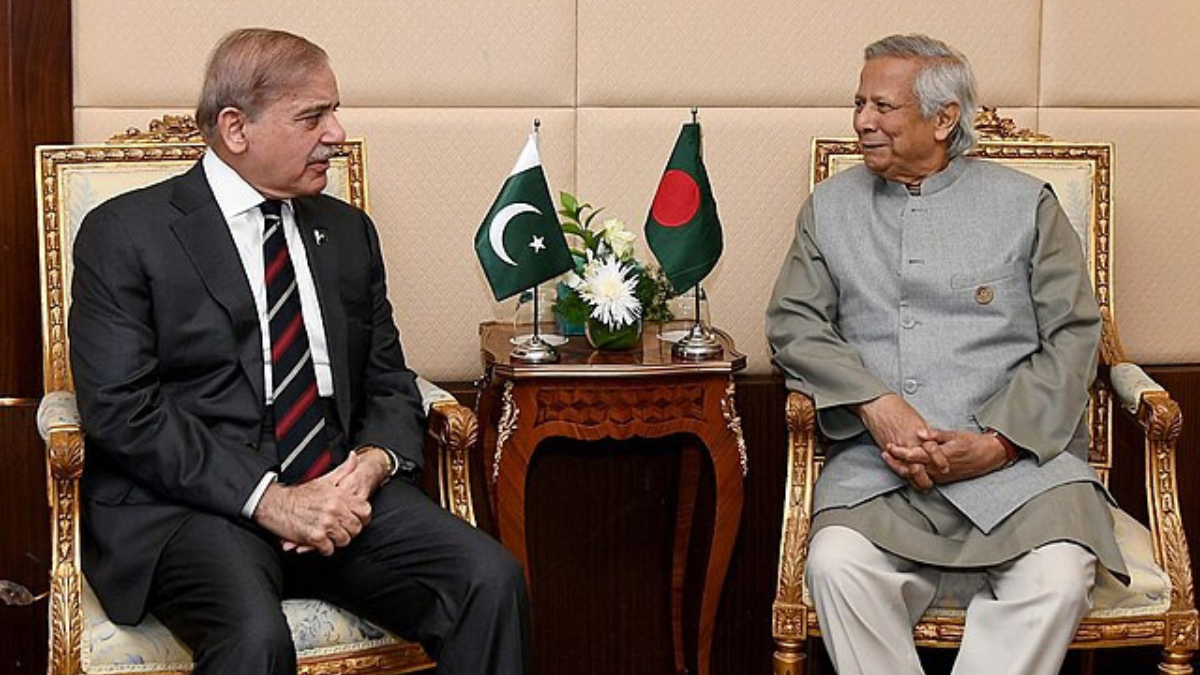
The present interim administration would risk alienating the people who provide legitimacy to Bangladesh’s sovereignty when it is indifferent to their sentiments regarding the 1971 genocide. Bangladesh’s national cohesion and unity may be threatened by the selective memory being imposed on them by the Yunus administration.
From a strategic perspective, ignoring the 1971 liberation war and the reasons for the freedom movement splits Bangladesh’s foreign policy framework wide open. The suppression of facts of Pakistan being the raison d’etre for Bangladesh’s liberation and the violence perpetrated by the Pakistani state and military normalises the historically turbulent relationship between the two nations.
Bangladesh does not need to be perpetually hostile to Pakistan, but not being realistic in its diplomatic ties is a cause for concern for the people. Erasing uncomfortable truths about its history would only make the nation vulnerable to Pakistani machinations to rewrite narratives and to spread falsehoods to suit their narrow political ambitions.
The regional security dimension to the Pakistan-Bangladesh relationship is the former’s unresolved conflicts in the region, particularly with India. Pakistan has a track record of using Islamic networks and terror proxies in South Asia to score goals.
If Bangladesh allows history to be forgotten and Pakistan’s accountability for the crimes it committed, this creates an opportunity for Dhaka to be dragged down the slippery slope of strategic contests, even just by association. This only threatens Bangladesh’s carefully built ties with its neighbours, exposing itself to border instability and undermining its regional interests, such as peace and economic integration.
In the 21st century, sovereignty is equated with global standing, and Bangladesh has earned itself a place and respect through its development gains, participation in United Nations peacekeeping, and principles that hinge on humanitarian interests.
If the interim government weakens its position on the 1971 war crimes, the natural corollary would be that its moral authority to speak out against genocides and human rights violations is lost. When Dhaka is not willing to raise its voice on the trauma of its birth, then it would lose its credibility to take up similar issues elsewhere in the world or to defend itself from similar external pressures.
There is no dilemma for Dhaka to choose between remembrance and reconciliation. The probable way forward for Bangladesh is to align its history and collective memory with the foreign policy choices of the present and the future. This would mean safeguarding its history education, memorials for the martyrs, resisting any external pressures to dilute Pakistan’s accountability, and the determined pursuit of its national interests.