


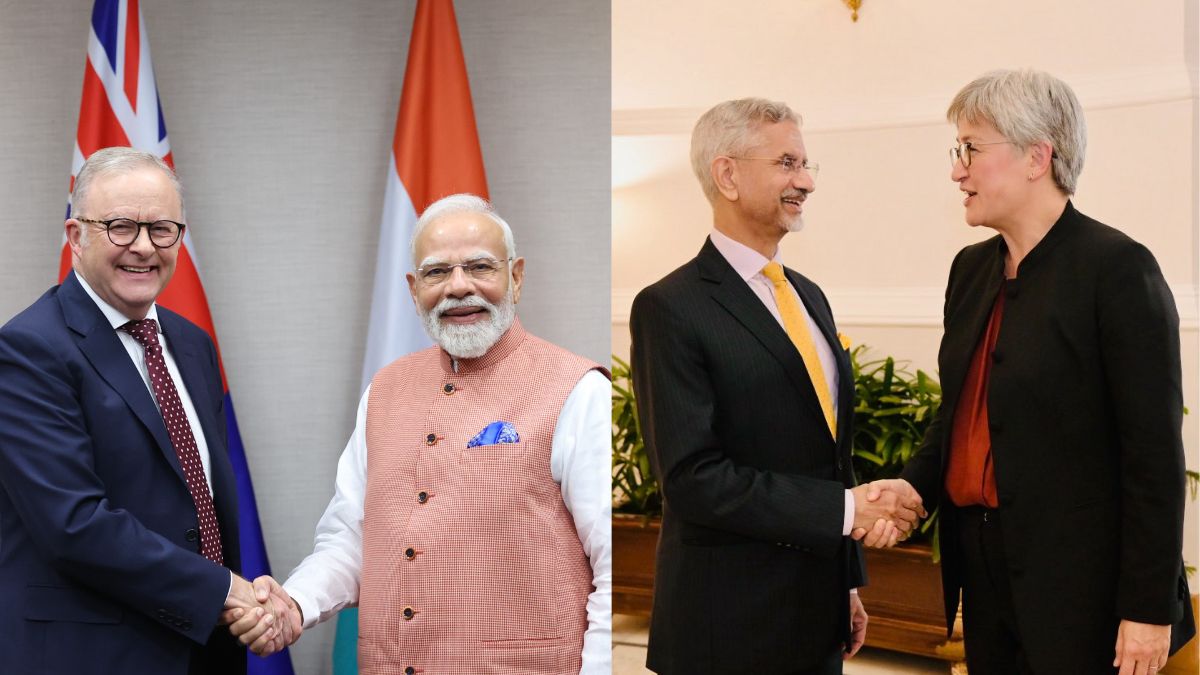
Australia and India signalled a renewed phase of diplomatic energy this week, with parallel engagements unfolding in New Delhi and Johannesburg. While foreign ministers Penny Wong and S. Jaishankar met for the annual Framework Dialogue in the Indian capital, Prime Minister Narendra Modi held a bilateral meeting with his Australian counterpart Anthony Albanese on the margins of the G20 Summit in South Africa.
Together, the conversations suggested a relationship moving with unusual consistency across defence, technology, economic ties and emerging people-to-people partnerships.
Why did Penny Wong’s New Delhi visit signal a deepening of ministerial ties?
Australian High Commissioner Philip Green described Wong’s trip as one of the most substantive fixtures in the bilateral diplomatic calendar. “The 16th Foreign Minister’s Framework Dialogue is the major set-piece beat,” he said, emphasising that Wong and Jaishankar typically spend hours reviewing “all of the issues bilaterally, regionally and globally.”
Wong’s equation with Jaishankar has become a quiet anchor of the partnership. According to Green, she has met India’s external affairs minister 26 times, more than any other foreign counterpart since taking office.
The conversations ranged from strategic technologies and cyber governance to defence cooperation and trade. But one unexpected theme took centre stage: sport. Wong announced three new exchange initiatives enabling Indian and Australian athletes and coaches to train in each other’s high-performance environments, including Australia’s Institute of Sport. Green characterised the move as a deeper investment in people-to-people links at a time when India’s sporting ambitions are rapidly expanding.
Wong later visited the Australian embassy in Delhi, meeting specialists working in cyber security and emerging technologies—sectors that both countries increasingly view through the prism of Indo-Pacific stability.
How did the Modi–Albanese meeting in Johannesburg reinforce the wider strategic picture?
While ministers met in Delhi, Modi and Albanese held talks in Johannesburg as leaders gathered for the G20. Albanese began by offering condolences over the recent terror attack in Delhi and a fatal bus accident involving Indian nationals in Saudi Arabia.
“We have much to discuss, and our relationship is very strong,” he said, signalling Canberra’s desire to widen economic and security ties. Albanese added that defence cooperation would remain “very important going forward,” a reflection of the countries’ shared concerns over Indo-Pacific security dynamics.
The two leaders have grown accustomed to frequent contact as they navigate overlapping interests—from critical minerals and maritime security to supply chains and education mobility. Their Johannesburg meeting, though brief, aligned with the diplomatic momentum generated in Delhi.
What does this dual engagement reveal about the trajectory of India–Australia relations?
The week’s twin engagements illustrated the widening scope of the Comprehensive Strategic Partnership signed in 2020. What began as a defence-heavy cooperation architecture now stretches into critical technologies, cyber security, renewable energy, and education mobility. Sport, introduced prominently during Wong’s visit, is becoming an unexpected cultural bridge.
Green said both sides share “a vision for a peaceful, stable and prosperous region”, language echoed by Wong, who described the partnership as “closer and more consequential than ever”.
With ministerial discussions in Delhi complemented by leader-level talks in Johannesburg, India and Australia appear intent on sustaining a diplomatic rhythm that reaches across continents. As both countries contend with shifting regional power balances, the relationship is being recast not only as strategic but as steadily indispensable.