


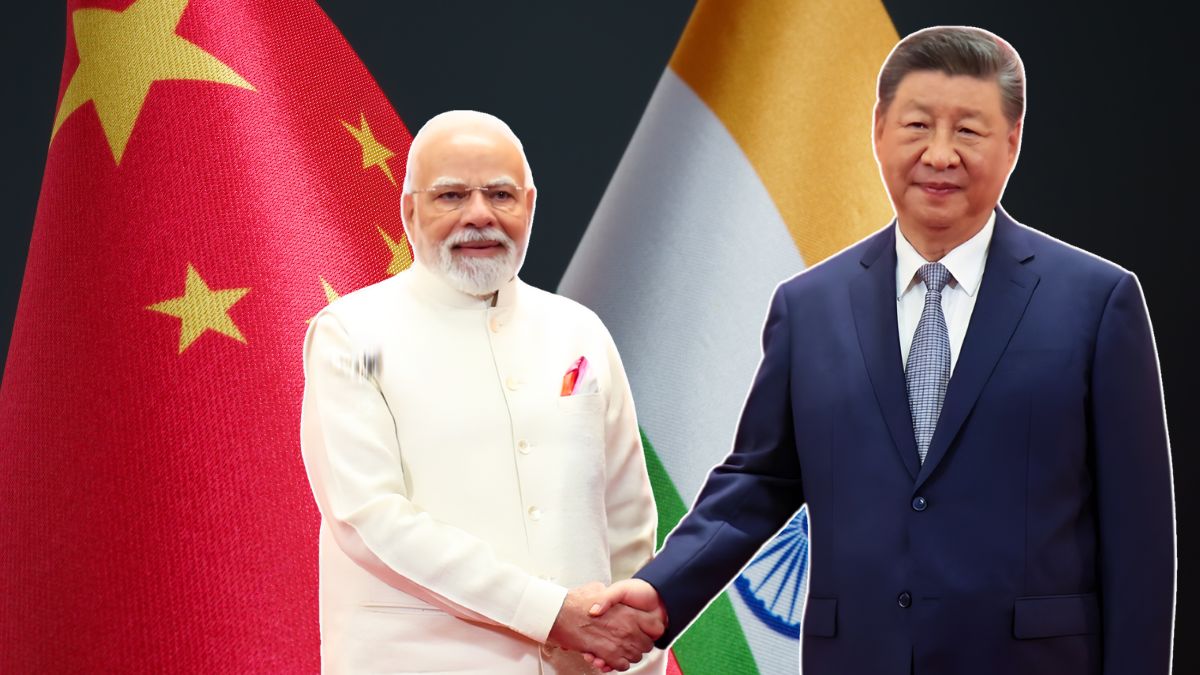
It was after around seven years that Prime Minister Narendra Modi met Chinese President Xi Jinping in China earlier this year in August. Both the countries have been battling strained ties since the deadly 2020 Galwan Valley clashes. However, positive signs seems to cropping up, indicating a betterment in India-China ties.
After the high stakes Modi-Xi meeting, India in November 2025 resumed tourist visa for Chinese citizens after 5-year suspension. The fresh move followed some sequence of steps taken earlier this year and now in yet another significant recalibration of its China policy, New Delhi has dismantled key bureaucratic hurdles to fast-track business visas for Chinese professionals.
The decision comes amid broader efforts by New Delhi to stabilise ties with Beijing after years of post-2020 freeze following the eastern Ladakh standoff. Senior officials confirmed that visa approval timelines have been cut to under four weeks after India removed an additional layer of administrative scrutiny, news agency Reuters.
India visas for Chinese professionals: How is this good news for India’s economy?
The easing of visa restrictions is expected to provide an immediate boost to India’s manufacturing ecosystem, particularly electronics, telecom and solar energy, sectors heavily dependent on Chinese machinery and technical expertise.
According to estimates by the Observer Research Foundation, stringent visa curbs led to production losses of nearly $15 billion over four years for Indian electronics manufacturers. Major Chinese firms such as Xiaomi had repeatedly flagged disruptions caused by the inability to bring in skilled personnel.
Industry leaders have welcomed the move, calling it critical as India scales up production of finished goods, components and sub-assemblies under its manufacturing push, as per the report by Reuters.
How PM Modi–Xi Jinping meeting set the tone
The policy shift follows Prime Minister Modi’s meeting with Chinese President Xi earlier this year, his first visit to China in seven years, on the sidelines of the SCO summit in Tianjin. Both leaders agreed to stabilise relations, enhance dialogue and explore avenues for pragmatic cooperation.
That meeting has since translated into tangible steps, including the resumption of direct flights between India and China for the first time since 2020, and now, streamlined business visa processing. Officials said the visa reform reflects India’s intent to operationalise the “common understandings” reached by Modi and Xi.
Diplomatic engagement gains momentum
Reinforcing this trend, senior foreign ministry officials from both countries recently held fresh consultations in Beijing, affirming positive momentum in relations.
India’s Joint Secretary (East Asia) Sujit Ghosh and China’s Director-General Liu Jinsong reviewed the state of ties and committed to implementing outcomes from the Modi–Xi meeting. Ghosh later met Chinese Vice Foreign Minister Sun Weidong, who described the leaders’ interaction as providing strategic guidance to elevate relations to a new level.
India reiterated its willingness to resume institutional dialogue, expand cooperation and manage differences maturely.
India-China ties: Strategic recalibration amid global trade pressures
The warming of India-China ties comes against a challenging global backdrop, including punitive 50% tariffs imposed by United States President Donald Trump, citing New Delhi’s purchase of Russian oil, which have forced India to reassess its diplomatic and economic priorities.
The visa easing was recommended by a high-level committee headed by former Cabinet Secretary Rajiv Gauba, which is also examining ways to soften investment restrictions on China to improve investor sentiment. Government officials stressed that India is proceeding carefully, but pragmatically.
“We are cautiously easing some rules around restrictions on China, which we hope will improve the overall business environment,” one official told Reuters. For India, the move is more about growth, supply-chain resilience and strategic autonomy, than its ties with China.