


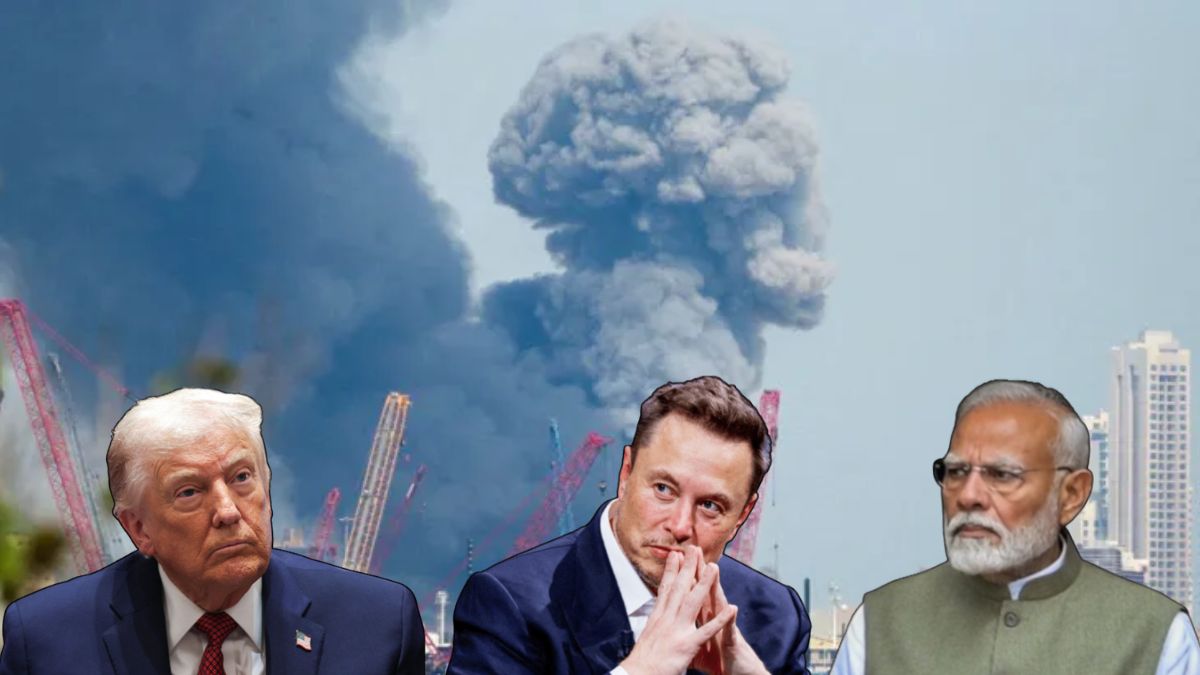
India on Saturday (March 28, 2026) denied Tesla and X chief Elon Musk had joined a telephonic conversation between US President Donald Trump and Indian Prime Minister Narendra Modi earlier this week, after an American publication reported he did so.
Meanwhile, Modi spoke to Saudi Arabian Crown Prince Mohammed bin Salman regarding the raging West Asian war, and the two leaders agreed to support freedom of navigation through the Strait of Hormuz.
In Florida, Trump used uncharitable remarks to describe his love-hate relationship with the Saudi Prince, in an indication of the current dynamics of the relationship between the US and Saudi Arabia.
India Denies Musk Was In Trump-Modi Phone Call
In New Delhi, India’s Ministry of External Affairs issued a clarification to a New York Times (NYT) report that Musk was present on the phone call between Trump and Modi, categorically noting that the conversation was only between the US President and the Indian Prime Minister.
“We have seen the (NYT) story. The telephone conversation on March 24 was between Prime Minister Narendra Modi and President Donald Trump only. As has been stated earlier, it provided the opportunity for exchange of views on the situation in West Asia,” the MEA said in a statement.
Earlier, White House Press Secretary Karoline Leavitt, on Friday (March 27), said that Trump shares a strong relationship with Modi, describing a recent interaction between the two leaders as “productive”. Leavitt said, “President Trump has a great relationship with Prime Minister Modi, and this was a productive conversation.”
On Friday, the NYT reported that the Tesla CEO joined the phone call between Modi and Trump on Tuesday (March 24). It said Musk’s involvement in the phone call marked an unusual instance of a private citizen participating in a conversation between two nations’ leaders.
The report also speculated that Musk’s participation in the phone call could be a signal of the improving relations with Trump, after their fallout last year.
Modi Calls Saudi Prince over West Asia Conflict
In New Delhi, Modi called up Mohammed bin Salman to discuss the ongoing conflict in West Asia, and they agreed on the need to ensure freedom of navigation through the Gulf region.
Modi also reiterated India’s condemnation of the missile and drone attacks on Saudi Arabia as part of the West Asian war between Iran and the US-Israel combine, resulting in destruction and damage to the regional energy infrastructure.
“Spoke with Crown Prince and PM of Saudi Arabia, HRH Prince Mohammed bin Salman, and discussed the ongoing conflict in West Asia,” Modi posted on X.
Modi said he and the Saudi Prince agreed on the need to ensure freedom of navigation and keep shipping lines open and secure.
“Thanked him for his continued support for the welfare of the Indian community in Saudi Arabia,” he said.
This was the second telephonic conversation between Modi and Mohammed bin Salman since February 28, when the latest West Asian war began after the US-Israel airstrikes on Iran.
Trump’s Love-Hate Ties with Saudi Prince
Speaking at an event in Florida, Trump claimed the Saudi Prince was effectively “kissing my a**” after the strong US resurgence under his presidency, indicating the love-hate relationship that he had with Mohammed bin Salman.
Recounting his supposed conversation with the Saudi Prince, Trump said the de facto ruler of Saudi Arabia had not expected a strong US comeback.
“He didn’t think this was going to happen… he didn’t think he’d be kissing my a**… he thought it’d be just another American president that was a loser… but now he has to be nice to me,” Trump said, regarding the conversation with the Saudi Prince.
Despite the uncharitable remark, Trump praised Mohammed bin Salman as “a fantastic man” and “a warrior.” Saudi Arabia “can be very proud” of the Prince’s leadership, he said.
Trump’s comments were made in the context of the ongoing US-Israel war on Iran, which has unsettled West Asia and destabilised the energy markets.
Western media reports suggested Mohammed bin Salman had actively engaged Trump in private conversations, when he encouraged the US to continue the West Asian war, describing it as a “historic opportunity” to weaken Iran.
The reports suggested that the Saudi Prince had pushed for more aggressive measures to target Iranian energy infrastructure. However, Riyadh had publicly denied its ruler had advocated for continuing the war any longer, maintaining that it sought a “peaceful resolution” to the conflict, while strengthening defence against Iranian military strikes against Saudi Arabia.