


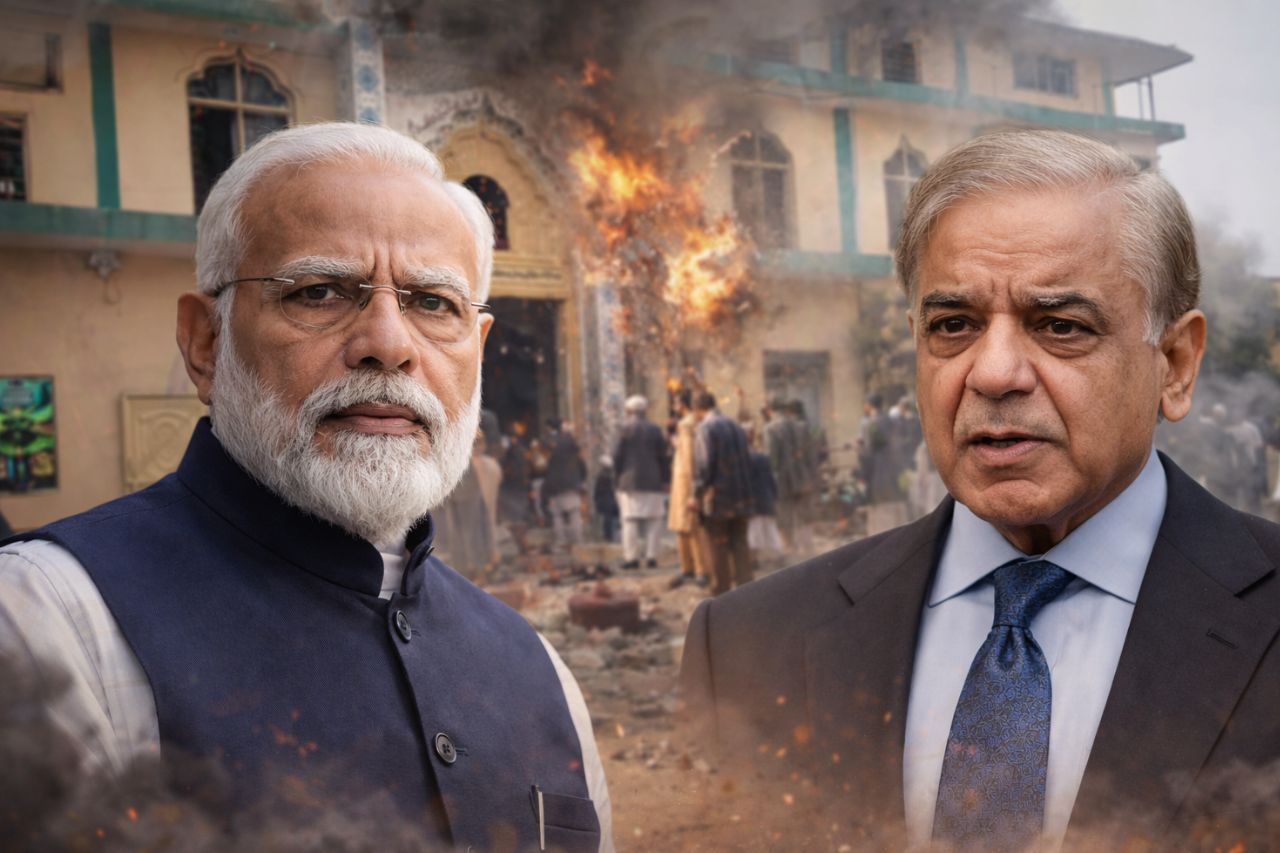
India on Friday (February 6, 2026) strongly rejected Pakistan’s allegations linking New Delhi to a deadly suicide bombing at a mosque in Islamabad, calling the claims “baseless, pointless and unfortunate” amid mounting tensions between the two neighbours.
At least 31 people were killed and 169 others injured when a suicide bomber detonated explosives inside a Shia mosque during Friday prayers in Pakistan’s capital earlier in the day.
The attack took place at the Khadijah al-Kubra mosque-cum-imambargah in the Tarlai area of Islamabad, according to local police.
The powerful blast ripped through the packed place of worship, triggering scenes of panic and drawing widespread condemnation.
In a statement, India’s Ministry of External Affairs (MEA) described the attack as “condemnable” and expressed condolences to the families of those killed.
“The bombing at an Islamabad mosque earlier today is condemnable and India condoles the loss of life it has caused,” the MEA said.
However, New Delhi took strong exception to Pakistan’s attempt to blame external actors for the attack.
“It is unfortunate that, instead of seriously addressing the problems plaguing its social fabric, Pakistan should choose to delude itself by blaming others for its home-grown ills,” the statement added.
India categorically rejected “any and every such allegation,” calling them “as baseless as they are pointless.”
The sharp response came after Pakistan Defence Minister Khawaja Asif alleged, without presenting evidence, that India and Afghanistan were linked to the attack.
In a post on social media, Asif claimed that investigations had shown the attacker had travelled to and from Afghanistan, asserting that “collusion between India and Afghanistan” was being exposed.
India has consistently denied Pakistan’s accusations of sponsoring or supporting terrorism, countering that Islamabad has a long record of deflecting blame for its internal security failures.
New Delhi has repeatedly urged Pakistan to focus on dismantling extremist networks operating within its borders rather than levelling allegations against neighbouring countries.
The latest exchange underscores the persistent mistrust and hostility that define India-Pakistan relations, particularly on issues related to terrorism.
While Pakistan frequently accuses India of fomenting unrest within its territory, India maintains that Pakistan itself is the epicentre of regional terrorism, citing attacks traced to groups based on Pakistani soil.
The mosque bombing has also renewed scrutiny of sectarian violence in Pakistan, where Shia communities have often been targeted by extremist groups.
Such attacks highlight deep-rooted internal challenges facing Pakistan, including radicalisation and sectarian militancy, which continue to undermine its security landscape.
As investigations into the Islamabad blast continue, India has reiterated its position that accountability must begin at home.
New Delhi’s response signals that it will firmly push back against what it views as politically motivated allegations, even as it condemns acts of terror and expresses solidarity with civilian victims across borders.