


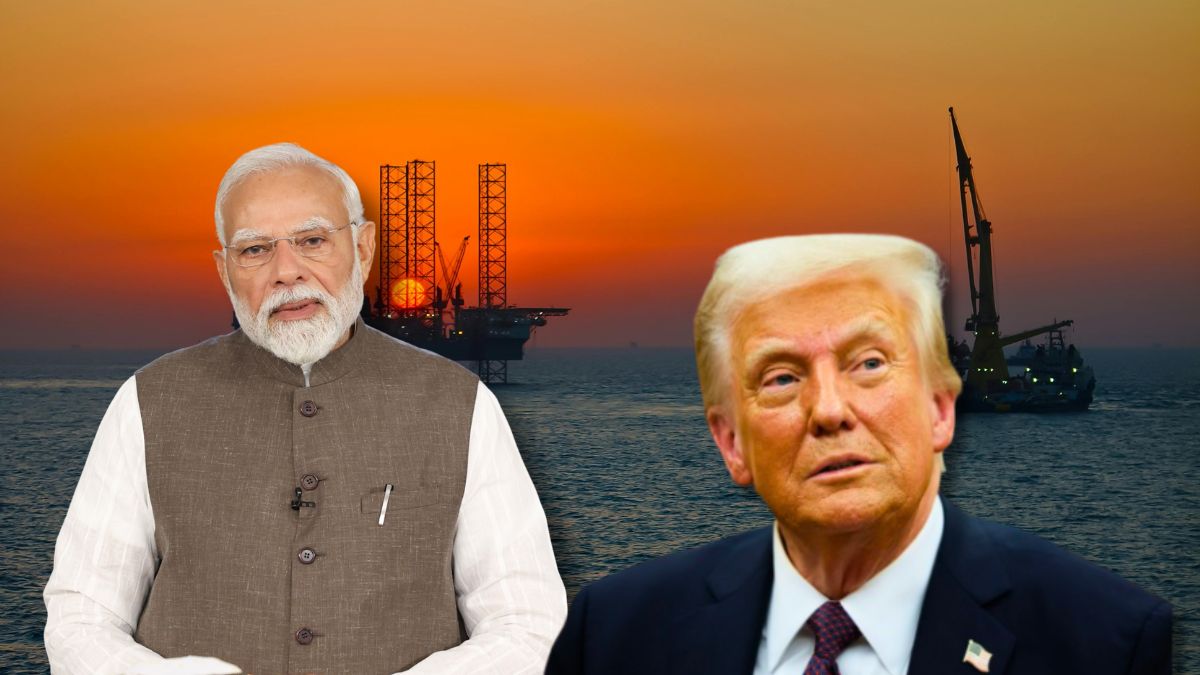
In November 2025, US President Donald Trump had announced sanctions on Russian oil giants Lukoil and Rosneft, aimed at pressuring the country to end the war in Ukraine. Due to this, India’s imports of Russian crude fell to about 1.1 million barrels per day in January 2026, the lowest since November 2022.
However, in view of the ongoing tensions in West Asia, the United States on Friday (March 6, 2026) gave a 30-day waiver to Indian refiners to buy cheap oil from Russia, to which New Delhi given a rather tough rejoinder. Amid rising tensions in West Asia, India confirmed that it will continue importing crude oil from Russia.
This came even after the US granted a temporary 30-day sanctions waiver allowing oil shipments already at sea to be delivered. New Delhi made it clear that its energy purchasing decisions are driven purely by national interest, and it doesn’t need to seek anybody’s permission.
How is Iran war impacting the oil supply, energy markets
The ongoing Iran-US-Israel conflict has sent shockwaves through global energy markets, raising fears of supply disruptions through the Strait of Hormuz, one of the world’s most critical oil shipping routes. Nearly one-fifth of global oil supply passes through the narrow waterway, making any escalation in the region a major concern for energy-importing nations such as India.
With missile strikes, drone attacks and military deployments across the Gulf, shipping activity in the region has come under strain, pushing global oil prices sharply higher. However, the Indian government says the country’s energy supply remains secure despite the geopolitical turbulence.
India continuing to buy Russian oil?
“India purchases oil from wherever the most competitive and affordable rates are available,” the government said in a statement. It emphasised that India does not require permission from any country to import Russian crude, noting that purchases from Moscow have continued throughout the Russia–Ukraine war despite Western objections.
Since 2022, Russia has emerged as India’s largest crude oil supplier, mainly due to discounted prices and strong demand from Indian refineries.
This came after US Treasury Secretary Scott Bessent said the “Treasury Department is issuing a temporary 30-day waiver to allow Indian refiners to purchase Russian oil” to enable oil to keep flowing into the global market. He called India “an essential partner of the United States”.
How much Russian oil is India importing?
Government sources say Russian oil now accounts for a significant share of India’s import basket. In February 2026, India imported roughly 1.04 million barrels per day from Russia, representing about 20% of the country’s total crude imports.
By comparison, Russia accounted for just 0.2% of India’s imports in early 2022, highlighting how dramatically India’s energy sourcing has shifted in recent years. Officials argue that this diversification has strengthened India’s energy security, especially during periods of global instability.
Is India’s energy supply really safe?
According to the government, India currently holds more than 250 million barrels of crude oil and petroleum products across its reserves and supply chain. This stockpile provides a buffer of roughly seven to eight weeks of consumption, helping protect the country against short-term disruptions in global supply.
India’s refining capacity of 258 million metric tonnes per year also exceeds domestic demand, enabling the country to remain a net exporter of refined petroleum products. Authorities say this position strengthens India’s resilience during global energy shocks.
What is India doing about the Strait of Hormuz risk?
New Delhi has been actively diversifying crude oil import sources, expanding from 27 countries earlier to around 40 suppliers today. This strategy allows India to shift supplies from alternative geographies if shipping through the Strait of Hormuz becomes restricted.
The government is also closely monitoring maritime security developments in the Gulf region and preparing contingency plans to maintain uninterrupted energy supplies.
What about LPG and refinery operations?
Authorities have dismissed reports that Mangalore Refinery and Petrochemicals Limited (MRPL) is shutting down due to supply concerns. “MRPL refinery is fully operational and well stocked with adequate crude supplies,” government sources said.
On the LPG front, the government has instructed refineries to increase production to maintain stable domestic availability. Further, India has also strengthened energy cooperation with the US, signing a one-year deal to import around 2.2 million tonnes of LPG from the US Gulf Coast in 2026.
Officials say the additional supply, combined with domestic production, ensures the country remains in a comfortable position regarding LPG availability.
Why are oil prices rising globally?
Global crude prices surged sharply in recent days, jumping nearly 8.5% in a single day and rising almost 30% over the past week. The spike followed comments by US President Donald Trump, who said the Iran conflict would only end with Tehran’s “unconditional surrender.”
The intensifying conflict has heightened fears that shipping disruptions in the Gulf could restrict oil flows, further pushing energy prices higher. For India, one of the world’s largest oil importers, managing these risks while ensuring stable supplies remains a top strategic priority.