


External Affairs Minister S. Jaishankar held a telephone call with Israeli Foreign Minister Gideon Saar on Thursday evening, exchanging views on the ongoing West Asia conflict and its widening repercussions. Earlier in the day, he met UAE Minister of State for International Cooperation Reem Al Hashimy to discuss the latest developments in the region. Jaishankar also took to social media to thank the UAE government for its care of the Indian community caught in the conflict zone.
A day earlier, Jaishankar also received a call from UAE Foreign Minister Sheikh Abdullah bin Zayed Al Nahyan as tensions in West Asia continued to escalate. The two ministers discussed the conflict’s impact on regional stability, its potential consequences for the global economy, and the growing threat to energy security. The two ministers discussed the conflict’s impact on regional stability, its potential consequences for the global economy, and the growing threat to energy security.
The flurry of high-level engagement was accompanied by New Delhi’s public statement on the crisis, with the Ministry of External Affairs declaring attacks on regional energy infrastructure “deeply disturbing” and demanding they cease immediately. The Ministry of External Affairs (MEA) spokesperson Randhir Jaiswal, addressing a media briefing, articulated New Delhi’s position in unusually direct terms.
“Right from the very beginning, we have called for avoiding targeting of civilian infrastructure, including energy infrastructure across the region. Recent attacks against energy installations in different locations are therefore deeply disturbing and only serve to further destabilise an already uncertain energy scenario for the whole world. Such attacks are unacceptable and need to cease,” he said.
The statement came in the wake of an Israeli strike on Iran’s South Pars gas fields, which triggered a wave of Iranian retaliatory strikes on energy facilities across the Gulf, including Qatar’s Ras Laffan LNG hub—a facility that supplies nearly 40 percent of India’s liquefied natural gas requirement. The escalation sent Brent crude futures surging to $112 per barrel on Thursday. Oil prices have now risen approximately 50 percent since the US-Israel-Iran war broke out on February 28.
This signals that India—a major energy importer with a large diaspora spread across the Gulf—is prioritising regional stability and energy security over any alignment with individual parties to the conflict. Jaishankar’s discussions with the Israeli Foreign Minister Gideon Saar covered the conflict’s broader regional and global implications. Israeli FM Saar described India as a “special strategic partner” during the call. Jaishankar also met UAE Minister of State for International Cooperation Reem Al Hashimy, where the safety of India’s substantial diaspora in the region featured prominently on the agenda. He expressed gratitude to the UAE government for its care of the Indian community amid the ongoing crisis.
Prime Minister Narendra Modi, meanwhile, engaged in a separate round of outreach, holding discussions with the Sultan of Oman, French President Emmanuel Macron, and the Malaysian Prime Minister—reflecting New Delhi’s effort to coordinate with a broad coalition of voices calling for restraint.
The disruption to Ras Laffan has placed India’s energy security calculus under acute pressure, and officials in New Delhi are watching the situation closely. India imports a significant share of its crude oil and LNG from the Gulf region, making the stability of energy infrastructure there a matter of direct economic consequence for domestic fuel prices and supply chains.
India Sharpens Diplomatic Stance on West Asia Crisis, Condemns Strikes on Energy Infrastructure
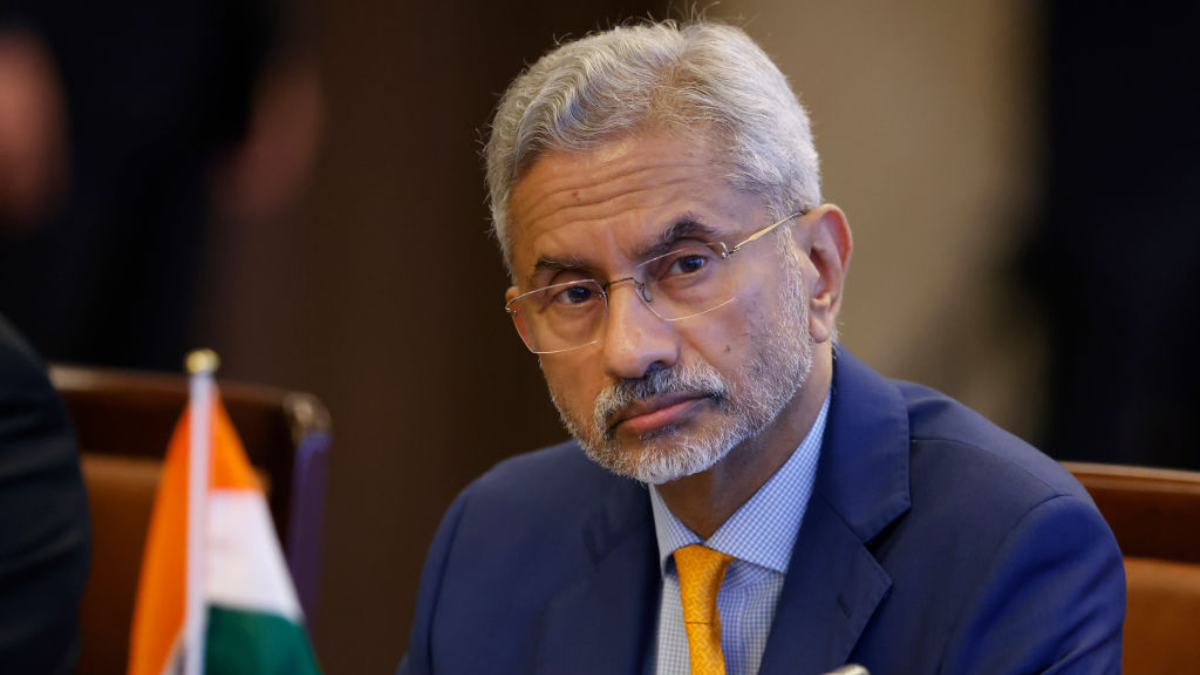
External Affairs Minister Dr. S. Jaishankar. Image credit: All India Radio