


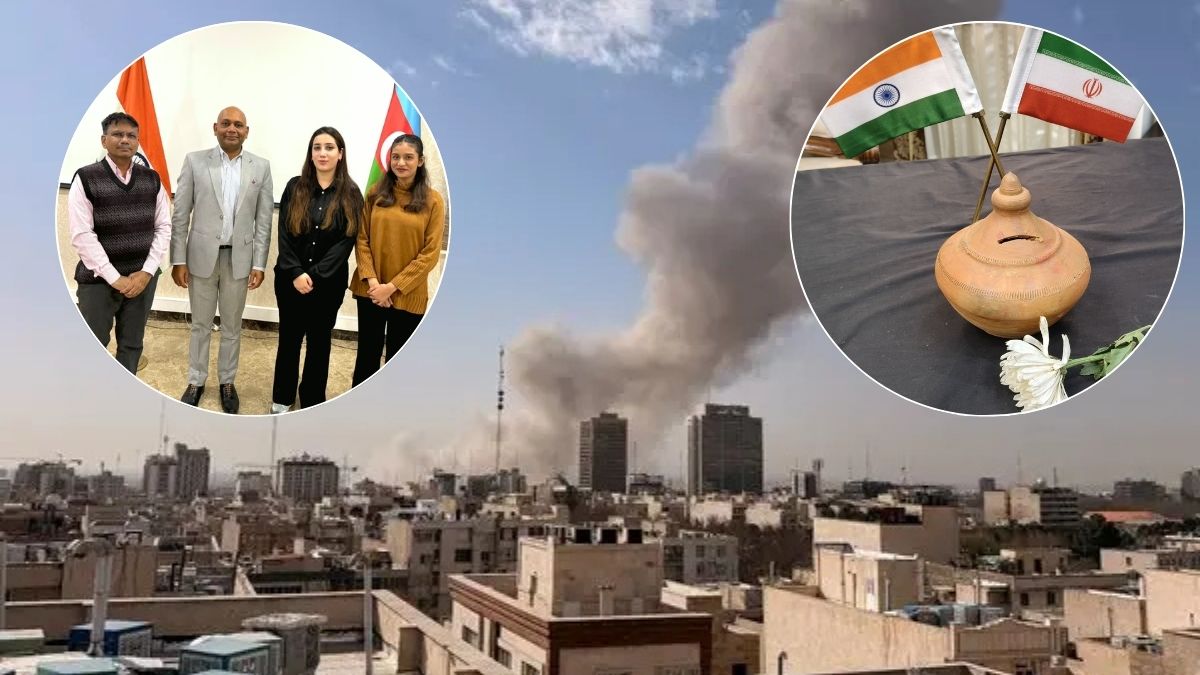
As the West Asia conflict enters a prolonged and increasingly volatile phase, India has ramped up measures to safeguard its citizens across the region. From coordinated evacuations through partner nations to real-time diplomatic engagement and crisis monitoring, New Delhi is navigating a complex security environment where risks continue to evolve rapidly.
In one of the most significant evacuation efforts since the crisis began, India has successfully moved over 200 of its nationals out of Iran via Azerbaijan. The transit route through Baku has emerged as a critical corridor, enabling safe and swift movement of stranded Indians amid escalating hostilities.
The Indian Embassy in Azerbaijan confirmed that more than 215 citizens have been evacuated so far, with Ambassador Abhay Kumar personally engaging with evacuees to assess their well-being. The availability of direct flights from Baku to major Indian cities like New Delhi and Mumbai has further streamlined the return journey, reducing logistical bottlenecks.
Following this, India expressed deep appreciation to Azerbaijan for facilitating these evacuations, underlining the importance of international cooperation in times of crisis.
What risks are Indians facing on the ground?
Despite evacuation efforts, the risks remain stark. The conflict has already claimed the lives of at least eight Indian nationals across the region. The latest casualty was reported in Kuwait, where an Indian worker was killed in an Iranian strike on a desalination plant.
The Indian Embassy in Kuwait, without disclosing the details of the Indian national, posted on X, “Embassy of India in Kuwait expresses its deepest condolences at the tragic demise of an Indian national due to an attack on a desalination facility in Kuwait yesterday. The Embassy is closely coordinating with the Kuwaiti authorities to render all possible support and assistance.”
Earlier incidents include fatalities in the UAE, Saudi Arabia, Oman, and aboard merchant vessels caught in the conflict’s crossfire. These incidents highlight the widening geographical spread of the war and its impact on civilian infrastructure and maritime routes. With nearly 10 million Indians living and working in West Asia, the scale of the challenge remains immense.
What is India doing to protect seafarers and workers?
The Ministry of External Affairs has placed special emphasis on the safety of Indian seafarers, many of whom operate in high-risk zones such as the Persian Gulf and the Strait of Hormuz. Officials confirmed that Indian missions are in constant touch with crew members and shipping stakeholders to ensure timely assistance.
At a recent inter-ministerial briefing, MEA officials reiterated that the safety, security and welfare of Indian nationals remain the government’s top priority. Continuous monitoring and rapid response mechanisms have been activated to address emergencies as they arise.
Indian embassies across the region are working round the clock, providing logistical support, emergency assistance and real-time advisories to citizens. This proactive diplomacy is helping India maintain operational flexibility in a fluid and unpredictable conflict environment.
How significant is India’s response now?
The developments come as the West Asia war enters its second month, with no clear signs of de-escalation. The expanding conflict footprint, including attacks on critical infrastructure and maritime assets, has heightened concerns over civilian safety.
India’s swift evacuation efforts and diplomatic coordination underscore its ability to respond decisively to global crises while protecting its diaspora. The operation also reflects lessons learnt from past evacuations, with a stronger emphasis on multi-country coordination and rapid execution.