


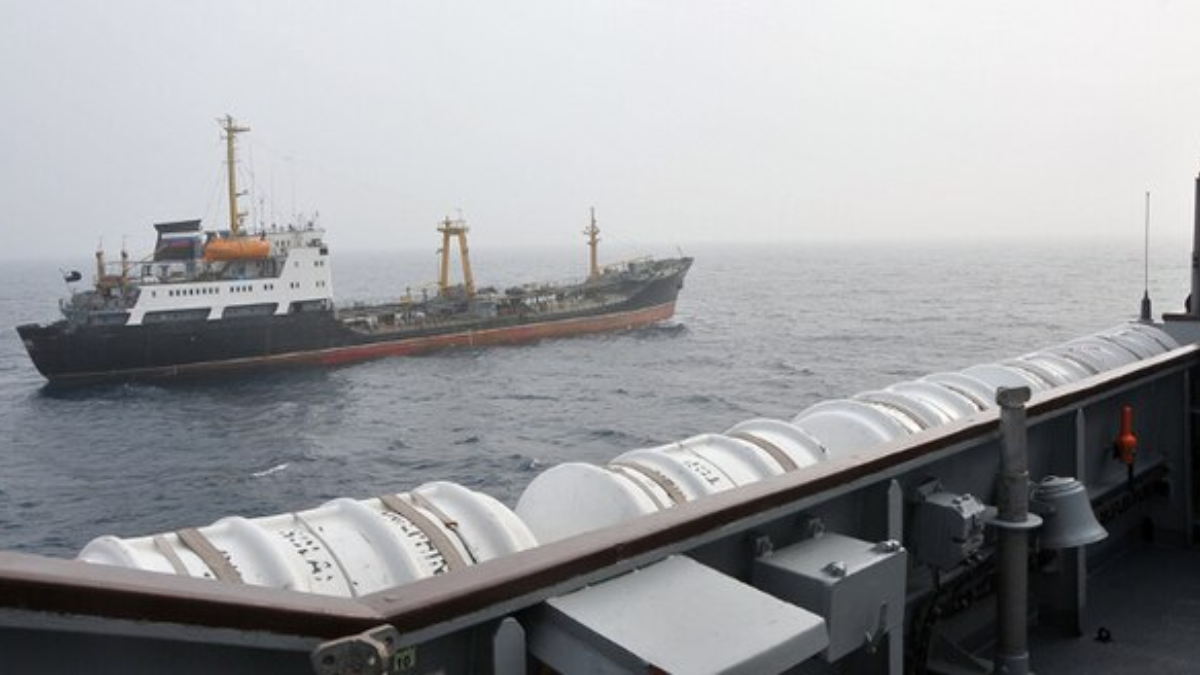
Two of India’s LPG carriers have crossed the Strait of Hormuz, currently under Iranian blockade due to the West Asian military conflict, even as an Iranian envoy confirmed that his nation had provided safe passage to India-bound vessels through the maritime choke point.
Two Indian-flagged Shipping Corporation of India (SCI) LPG carriers, Shivalik and Nanda Devi, that traversed through the Hormuz Strait, are headed to Indian ports, according to Indian government officials who are aware of the development.
Officials said the vessels sailed through the war-torn region under a “careful operation” with cooperation from Iran and other nations in West Asia following a series of talks by Indian political leadership with those countries in recent days.
India negotiated the safe passage of over two dozen Indian-flagged merchant vessels currently stuck at ports on either side of the Hormuz Strait, they said.
External Affairs Minister Dr. S. Jaishankar had four phone conversations on February 28, March 5, March 10, and March 12 with his Iranian counterpart Abbas Araghchi, while Prime Minister Narendra Modi spoke to Iranian President Masoud Pezeshkian on Thursday (March 12, 2026).
Modi expressed deep concern over escalating hostilities and the loss of civilian lives to Pezeshkian during their conversation “The safety and security of Indian nationals, along with the need for unhindered transit of goods and energy, remain India’s top priority,” the Indian Prime Minister posted on his X handle.
Shivalik was carrying around 40,000 metric tons of LPG, while Nanda Devi was loaded with commercial supplies, even as 28 Indian-flagged ships were stuck at ports in the region..
The West Asian military crisis unfolded following the US-Israel airstrikes on Iran on February 28 that killed the Iranian Supreme Leader Ayatollah Ali Khamenei, triggering the war. Tehran retaliated with its own airstrikes on American and Israeli military assets in the entire West Asian region.
The war broke out a day after another cargo vessel bound for India had crossed the narrow passage between Iran and Oman that is critical for global oil supplies and energy security.
Another Indian-flagged oil tanker, Jag Prakash, carrying gasoline from Oman to Africa, also set sail from east of the Strait of Hormuz, according to the Ministry of Shipping’s Special Secretary Rajesh Kumar Sinha, who addressed a media briefing on Friday (March 13, 2026).
Jag Prakash had loaded gasoline at Oman’s Sohar Port and would deliver it at Tanzania’s Tanga Port on March 21, Sinha said, giving details.
The West Asian military conflict has led to around 23,000 Indian seafarers onboard cargo vessels currently in the Gulf region being stuck there, after Iran announced it now controlled the Hormuz Strait and would not allow maritime traffic to pass as a retaliatory measure to the US-Israel attacks.
In response to the US-Israel attacks on its territory, Iran has launched its own strikes on some cargo vessels passing through the Hormuz Strait, in which Indian crew members were killed and many were injured in the last two weeks.
A Thai-flagged cargo vessel heading to Kandla port in Gujarat was hit by a projectile from an unidentified source on Wednesday (March 12) shortly after it led a United Arab Emirates port.
Sinha told during his media briefing that four Indian-flagged vessels that were stuck on the eastern side of the Hormuz Strait in the Gulf of Oman had set sail to India on Thursday (March 12).
There were three Indian vessels with 76 Indian sailors on the eastern side of the Hormuz, while another 24 Indian-flagged vessels with 677 sailors were on the western side, he added.
Meanwhile, Iran’s Ambassador to India, Mohammed Fathali, on Friday (March 13) confirmed that his nation would provide safe transit to India-bound cargo vessels through the Hormuz Strait, as the two nations enjoyed long-standing bilateral ties and shared interests.
To a specific question on the safe passage to India-bound vessels, Fathali answered: “Yes. Because India and I are friends. You can see that (safe passage) in the future, and I think that after two or three hours. Because we believe that. We believe that Iran and India are friends.”
He added, specifying the mutual responsibility between Iran and India, “Suffering of the people of India is our suffering and vice versa. And for this reason, the government of India helps us, and we should help the government of India because we have a common fate and common interests.”
India is dependent on the cargo transit in the Hormuz Strait to meet 40% crude oil, 50% LNG, and a whopping 90% LPG of its energy imports.