


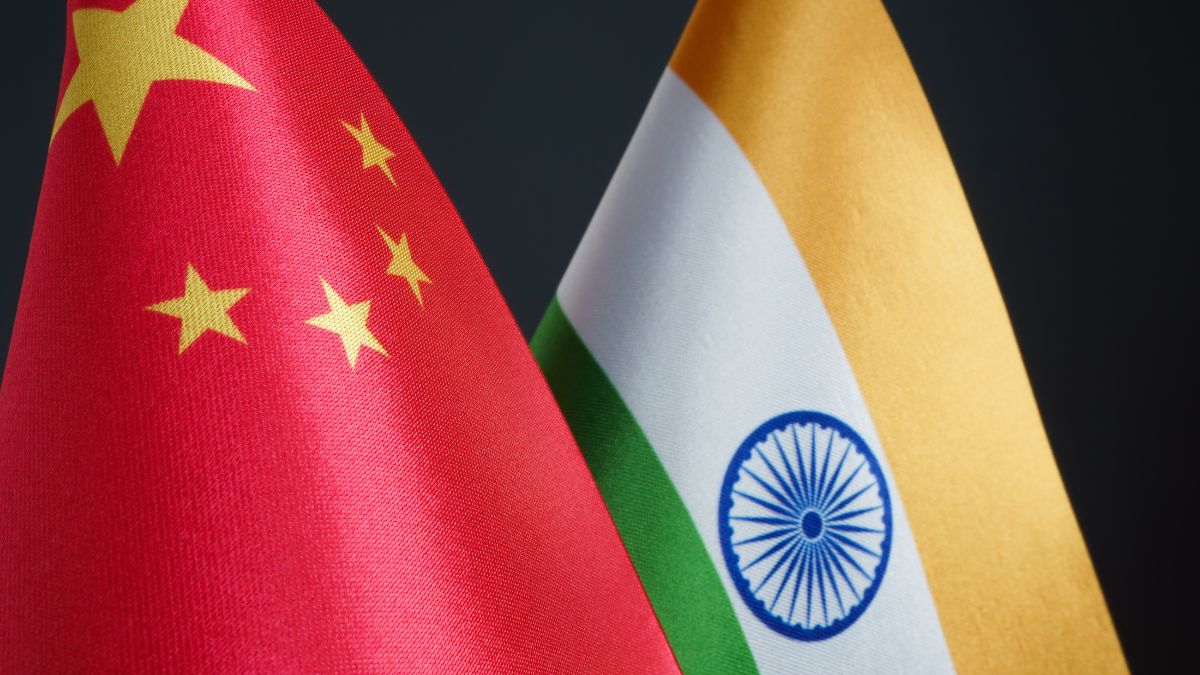
Days after India announced some relaxation in business visa rules for Chinese professionals, Beijing has taken a similar step towards normalising ties, signalling a cautious but meaningful reset in relations after a five-year chill. China has also simplifed visa procedures for Indian nationals, marking the latest move aimed at rebuilding economic and people-to-people links between Asia’s two largest powers.
The Chinese embassy in New Delhi announced that from December 22, Indian citizens will be able to apply for Chinese visas online, eliminating the need for an initial in-person visit to the embassy or consular offices. While final approval will still require a physical visit, the change significantly reduces friction in the travel process.
From border standoff to economic re-engagement
The visa move comes against the backdrop of a gradual thaw since the deadly Galwan Valley clash in 2020, which had pushed India-China bilateral relations to their lowest point in decades. Although political mistrust remains, both sides have steadily restored functional engagement.
The easing of visa rules follows the resumption of direct flights between India and China in October 2025, ending a five-year suspension. Together, the return of air connectivity and streamlined travel rules suggest a shared recognition that prolonged disengagement carries high economic costs for both sides.
China eyes India’s booming travel market
The simplified visa process is also a strategic economic play. India’s outbound travel market, valued at $21.6 billion last year, is projected to nearly triple to $61.7 billion by 2033, according to MarketsandMarkets, as reported by South China Morning Post. By lowering barriers for Indian travellers, China is positioning itself to capture a larger share of this fast-expanding segment.
Before relations soured, Indian tourism to China was on a strong upward trajectory. In 2019, around 142,000 Indian nationals visited China, a 19% rise from the previous year, before travel collapsed amid the pandemic and rising political tensions.
“Generally speaking, China is relaxing its visa controls, and for China-India the megatrend is to have more engagement with each other,” said Victor Gao, vice-president of the Centre for China and Globalisation in Beijing. “Granting more flexibility to Indians to visit China would be highly appreciated.”
Why easier visas matter for Indians
For Indian travellers, simplified visa regimes are particularly attractive. Indians face stringent visa requirements in many parts of the world, making destinations with easier access more competitive.
“Any country that simplifies visa requirements for Indian nationals usually benefits significantly from tourism,” said Jayant Menon, senior fellow at the ISEAS–Yusof Ishak Institute in Singapore. “This is because of the difficulty Indians face travelling to most countries globally.”
Industry voices echoed this sentiment. Pradip Putatunda, president of the Indian Recreation Club in Hong Kong, said faster visa processing would directly translate into higher travel demand. “People are willing to go to China for business and for travel purposes. I’m 100 per cent sure it will be helpful,” he said.
How Modi-Xi meeting boosted ties
Since the meeting between Prime Minister Narendra Modi and Chinese President Xi Jinping in August 2025, the bilateral relations are witnessing a big reset on many fronts. After the high stakes rendezvous, PM Modi had told Jinping that he is committed to improving bilateral ties.
Both the leaders noted the need to strengthen people-to-people ties through direct flights and visa facilitation, building on the resumption of Kailash Manasarovar Yatra and tourist visa. On economic and trade relations, they recognised the role of their two economies to stabilise world trade.
China eases visa rules for India: Business, supply chains
Beyond tourism, analysts see the visa move as a facilitator of growing business engagement. Despite political tensions, trade between the two economies has surged. China’s exports to India hit a 10-year high of $113.46 billion in the April 2024–March 2025 financial year, according to the Indian embassy in Beijing, while India exported $14.24 billion to China.
As India seeks deeper integration into global supply chains, engagement with China remains difficult to avoid. “To join global supply chains, India’s businesspeople can’t avoid creating engagement with China,” Menon noted. Victor Gao underscored the broader economic logic behind the rapprochement.
“If travel is made easier, the two countries can benefit a lot,” he said. “These two economies are complementary to each other.”